Yunus mentions 'Seven Sisters' and 'China, Bhutan' in his farewell speech amid fractured India-Bangladesh ties: What this means

&imwidth=600&imheight=450&format=webp&quality=medium "Yunus mentions 'Seven Sisters' and 'China, Bhutan' in his farewell speech amid fractured India-Bangladesh ties: What this means")
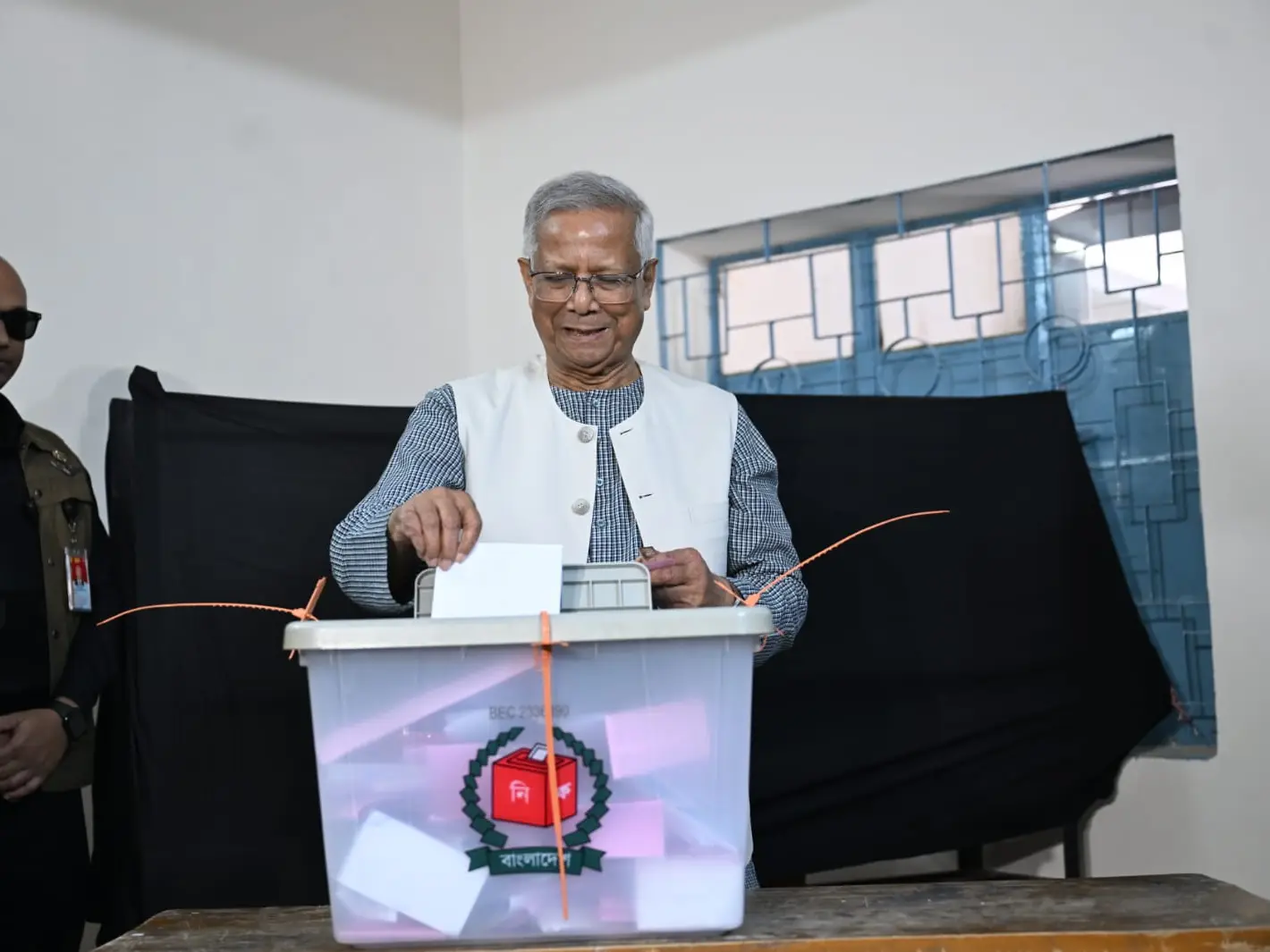
Muhammad Yunus Photograph: (AFP)
Muhammad Yunus, in his farewell speech, highlighted a regional economic vision linking Bangladesh with Nepal, Bhutan, and India’s northeastern states. His remarks may strain ties with India as he steps down following BNP’s election victory and transition of power.
Ahead of the swearing-in of new Bangladesh PM Tarique Rahman, the outgoing interim leader Muhammad Yunus delivered a farewell speech in which he invoked India’s northeastern “seven sisters” states alongside Nepal and Bhutan. He mentioned the northeastern Indian states while speaking about a sub-regional economic vision. In a televised speech, Yunus said that Bangladesh's foreign policy under his 18-month tenure restored three core pillars - sovereignty, national interest, and dignity - and declared that the country was “no longer submissive” or guided by other nations’ directives. Yunus has also said that he is prepared to hand over power swiftly and “with pride” after the election process concludes. On August 8, 2024, Yunus was appointed Chief Adviser of the interim government.
Yunus faces criticism over his interim administration’s handling of minority safety. “Today, the interim government is stepping down. But let the practice of democracy, freedom of speech, and fundamental rights that has begun not be halted,” he said. Recalling the day Hasina was forced to flee, he said, “That was the day of great liberation. What a day of joy it was. Bangladeshis across the world shed tears of happiness. The youth of our country freed it from the grip of a demon.” He continued, “Our open sea is not only a geographical boundary, it is an open door to engage with the world economy for Bangladesh. This region along with Nepal, Bhutan and the Seven Sisters has great economic potential,” Yunus said, referring to India's northeastern states even as he didn't name India. He proposed deeper sub-regional economic cooperation built around connectivity, trade agreements, economic zones and maritime access through Bangladesh, according to reports.
What we know about recently concluded Bangladesh elections?
Trending Stories
)
)
)
&im=FitAndFill=(700,400))
)
)
)
)
&im=FitAndFill=(700,400))
)
)
)
)
)
)
)
)
)
)
)
)
)
)
)
)
)
)
)
)
)
)
)
)
)
&im=FitAndFill=(700,400))
)
)
)
&im=FitAndFill=(700,400))
)
Bangladesh Nationalist Party (BNP) registered an impressive victory in the recently concluded elections. BNP's chief and son of former PM late Khaleda Zia - Tarique Rahman - is set to become the first male PM of the country in 35 years. Rahman has reiterated that his government's approach will 'Bangladesh first' but it will maintain a balanced relations with India, China and other South Asian nations. The elections took place in the country after former PM Sheikh Hasina was ousted after a violent uprising in 2024. In this elections, Awami League was banned and Hasina dismissed the polls as a “sham.” Meanwhile, Bangladeshis also voted for referendum on the July National Charter 2025. The "Yes" vote won a decisive mandate with 68.59 per cent support. It will approve 84 reform points out of which 47 require constitutional amendments.

