

&imwidth=800&imheight=600&format=webp&quality=medium "YEARENDER 2025: Chip wars led to firms being caught between policy, Trump and China")
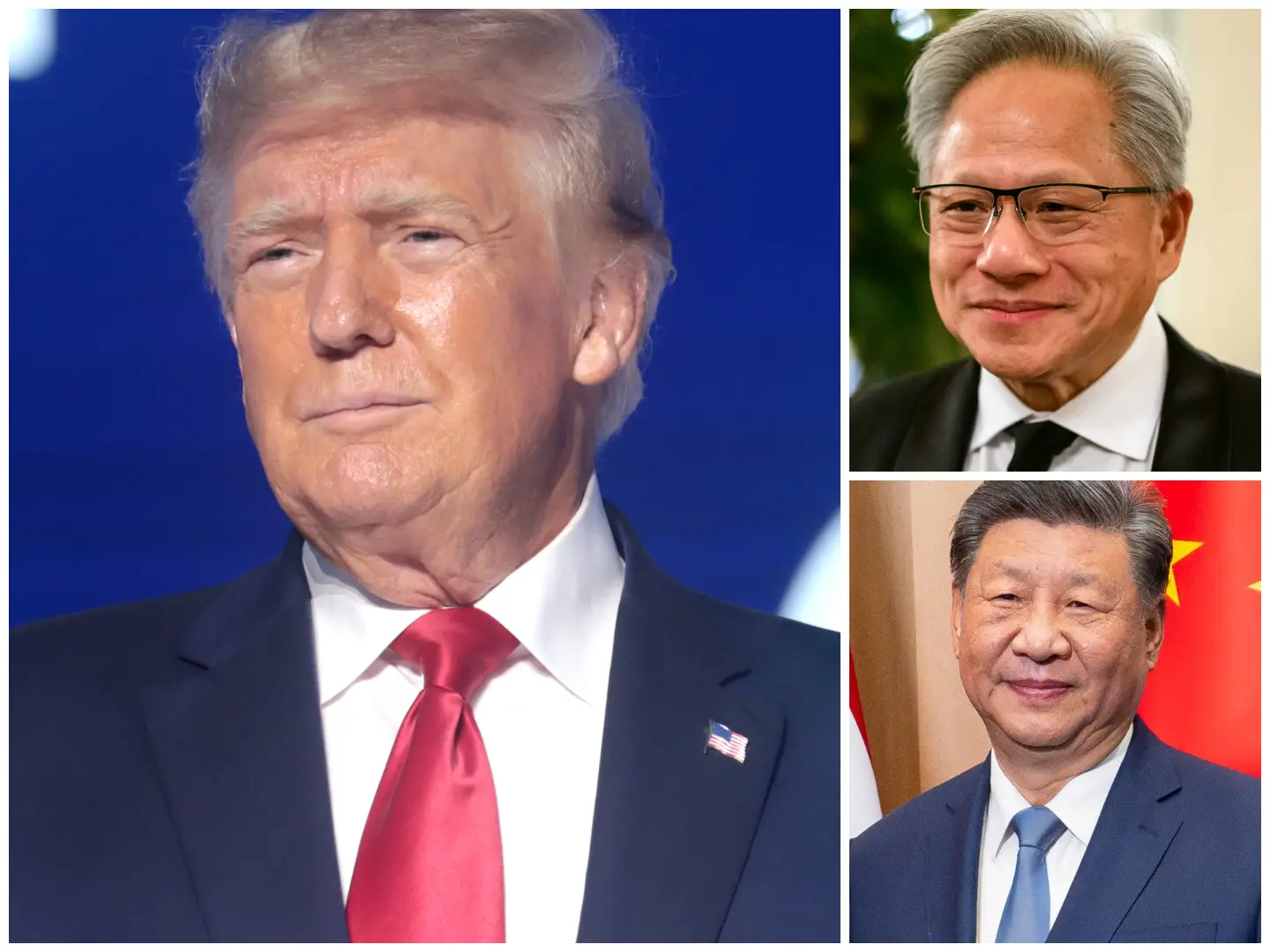
In 2025, the semiconductor rivalry between the US and China, often called ‘chip war’, continued. The US used export controls to limit China's access to advanced chip technologies. China, which is making progress on artificial intelligence and military applications, responded with steps to strengthen domestic semiconductor capabilities and export controls on critical inputs such as rare earths. Supply chains, investment patterns and industry strategies were affected, with many US companies, including AI chip giant Nvidia, seeing impacts due to the chip war.
Export controls became a tool for chip wars
As the year began, US export controls restricted sales of advanced AI chips and related technology to China. Firms like Nvidia faced significant revenue losses and costs related to restrictions on advanced AI chips and access to the Chinese market. US officials explained the restrictions as national security steps, but they were criticised by industry leaders for harming competitiveness and incentivising China to expand independent innovations. After Donald Trump became US president in January, he eased some export controls on advanced AI chips to “approved customers” in China, allowing sales of Nvidia’s H200 chip subject to profit sharing with the US government. These policy shifts were interpreted as efforts to maintain US companies’ market access.
China responded to US restrictions on chips with its own curbs
China asked the US to reverse what it called discriminatory semiconductor export controls, which it claimed were harming its industry and global supply chains.
Trending Stories
&imwidth=180&imheight=135&format=webp&quality=medium)
Priyanka Chopra celebrates Dussehra 2026 with Nick Jonas and daughter Malti Marie | See pics
&imwidth=180&imheight=135&format=webp&quality=medium)
Diljit Dosanjh's Oct 30 Delhi show hits roadblock, Delhi Police denies permission
&imwidth=180&imheight=135&format=webp&quality=medium)
China's dancing robot turns violent bodyguard, lifts cars and fights intruders - Watch
&imwidth=180&imheight=135&format=webp&quality=medium)
Will Rohit and Kohli play ODI World Cup 2027? BCCI president Manhas says board 'not in a position to comment'
&imwidth=180&imheight=135&format=webp&quality=medium)
Rafale Marine fighter begins flight trials in Goa ahead of Indian Navy induction
&imwidth=180&imheight=135&format=webp&quality=medium)
Feds obtain DNA evidence that could prove Ilhan Omar married her brother: Report
&imwidth=180&imheight=135&format=webp&quality=medium)
16-foot doomsday fish in Chile triggers fears that the next earthquake is coming
&imwidth=180&imheight=135&format=webp&quality=medium)
US midterms 2026: What polls and prediction markets indicate about Congress
&imwidth=180&imheight=135&format=webp&quality=medium)
Pakistan signs another defence pact even as Makkah Alliance shows no teeth. This time, it's with Qatar, Indonesia, Turkey
&im=FitAndFill=(700,400)&imwidth=180&imheight=135&format=webp&quality=medium)
New OTT releases this week (October 19-25, 2026): Gajab Raat to Chaar Yaar-8 titles to watch during Dussehra week on Netflix, Prime Video and more
&imwidth=180&imheight=135&format=webp&quality=medium)
Why websites around the world are suddenly going offline? What you need to know about PHP
&imwidth=180&imheight=135&format=webp&quality=medium)
From Agni-V to Project Kusha: How are India’s indigenous missile systems and defence shield reshaping modern warfare
&imwidth=180&imheight=135&format=webp&quality=medium)
Are the US and Israel preparing for another major attack on Iran? Here's what report claims
&imwidth=180&imheight=135&format=webp&quality=medium)
Ranbir Kapoor apologises for Dussehra speech slip, clarifies remark at Ramayana event
&imwidth=180&imheight=135&format=webp&quality=medium)
'Gyanu must go': CJP's Saurav Das, Ashutosh Ranka after release, despite Jantar Mantar protest undertaking
&imwidth=180&imheight=135&format=webp&quality=medium)
US-Iran war: Bibi, Trump gamble on new Iran war to save themselves in polls
&imwidth=180&imheight=135&format=webp&quality=medium)
Viral video shows cross falling on Colombia priest, no official confirmation | WATCH
&imwidth=180&imheight=135&format=webp&quality=medium)
Australia police arrest former national 100m champ Jake Doran for alleged child abuse
&imwidth=180&imheight=135&format=webp&quality=medium)
Kolkata airport: CISF detects ₹1.13 crore in US dollars hidden in bags of 2 Bangkok-bound passengers
&imwidth=180&imheight=135&format=webp&quality=medium)
EU probes Booking.com under Digital Services Act
&imwidth=180&imheight=135&format=webp&quality=medium)
'Father of all bombs' vs 'mother of all bombs': Iran threatens US with new weapon as Trump hints at MOAB strike
&imwidth=180&imheight=135&format=webp&quality=medium)
WATCH: Woman IPS officer fires several rounds of AK-47, ignites debate online
&imwidth=180&imheight=135&format=webp&quality=medium)
‘I caution the president...’: Trump’s ex-press secretary warns after Zacharia’s exit
&imwidth=180&imheight=135&format=webp&quality=medium)
'It's a crime not to see this scene': Tehran puts Trump 'behind bars'
&imwidth=180&imheight=135&format=webp&quality=medium)
US to get 850 F-35 stealth fighter jets under 10-year Pentagon-Lockheed deal
&imwidth=180&imheight=135&format=webp&quality=medium)
'You are a dummy, you are a stupid person': Trump loses temper with CNN, ABC reporters after questions about Russia sanctions
&imwidth=180&imheight=135&format=webp&quality=medium)
US midterms 2026: Trump's approval rating hits record low as Democrats gain ground
&imwidth=180&imheight=135&format=webp&quality=medium)
Meta slapped with $25 billion fine in New Mexico over Facebook data practices, company plans appeal
&imwidth=180&imheight=135&format=webp&quality=medium)
Ilhan Omar breaks silence over alleged marriage to her brother; Trump thinks it's 'really good answer'
China also placed export restrictions on rare earth elements, an area which it dominates and is crucial to AI chipmaking. As the competition intensified, both sides later agreed to suspend some rare earth export controls in late 2025.
Also read: AI chip war U-turn? Trump allows Nvidia H200 sales to China, says Xi Jinping ‘responded positively’
China increases self-reliance in semiconductor production
Chinese companies and the government raised research spending and production capacity on chips. The government supported local innovation efforts through policy changes, while more Chinese companies expanded their roles across semiconductor supply chains.
Even after export permission was granted, China moved to limit access to certain advanced foreign chips over security concerns, which affected chipmakers like Nvidia.
US-China chip war affected global supply chains
Global supply chains and investment flows were impacted by the ongoing US-China tensions and strategic diversification. The revenues and stock prices of American and allied companies were hit due to the curbs. Chinese firms focused on domestic technology, substituting local suppliers for restricted foreign components. The year also saw the US bolstering its domestic subsidy programmes through CHIPS Act, which envisages new domestic fabrication plants.

