Why Russian fighter jets leave exhaust pipes raw compared to US jets

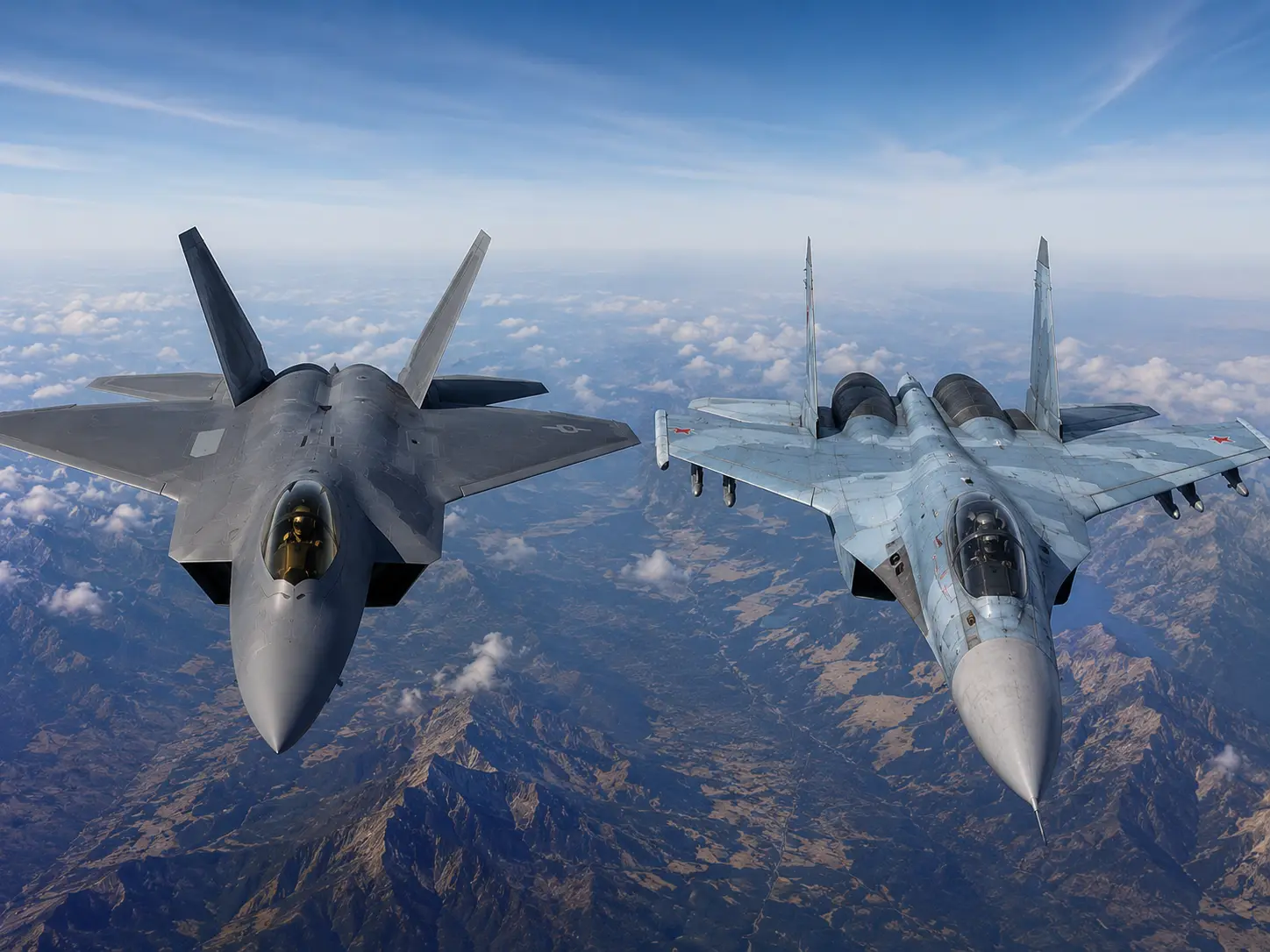
Russian jets use raw, circular nozzles to maximise thrust and agility while saving money. US jets employ flat rectangular nozzles to hide engine heat and scatter radar, ensuring complete stealth.
100 Per Cent Stealth
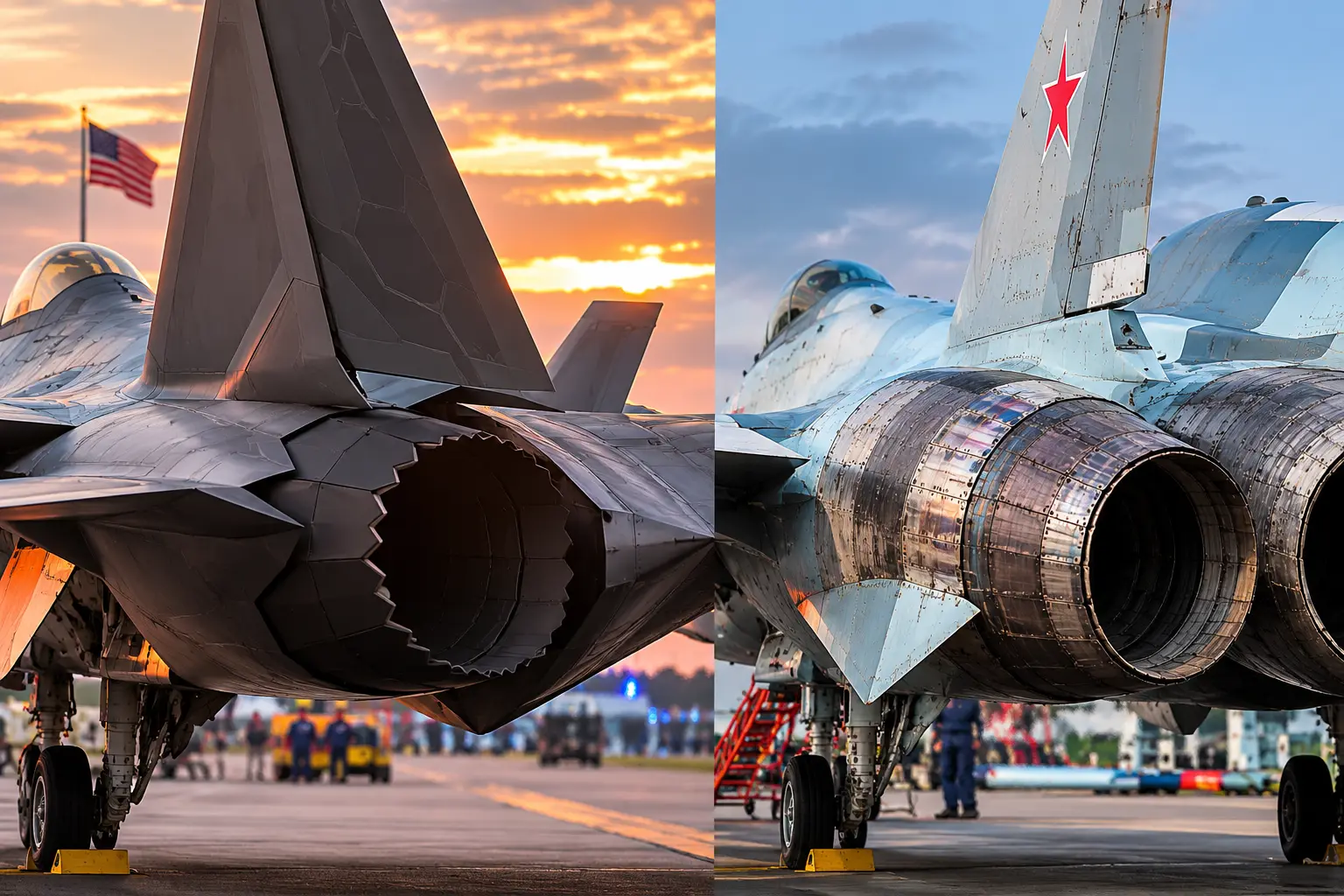
The Russian government developed the Su-57 with a priority on frontal stealth to manage manufacturing expenses. Developing F-22-style stealthy rear exhausts was ultimately deemed too expensive for the Russian budget. In contrast, the American Raptor was engineered for complete all-aspect stealth, demanding highly complex nozzle designs for rearward protection.
2D Versus 3D Nozzles
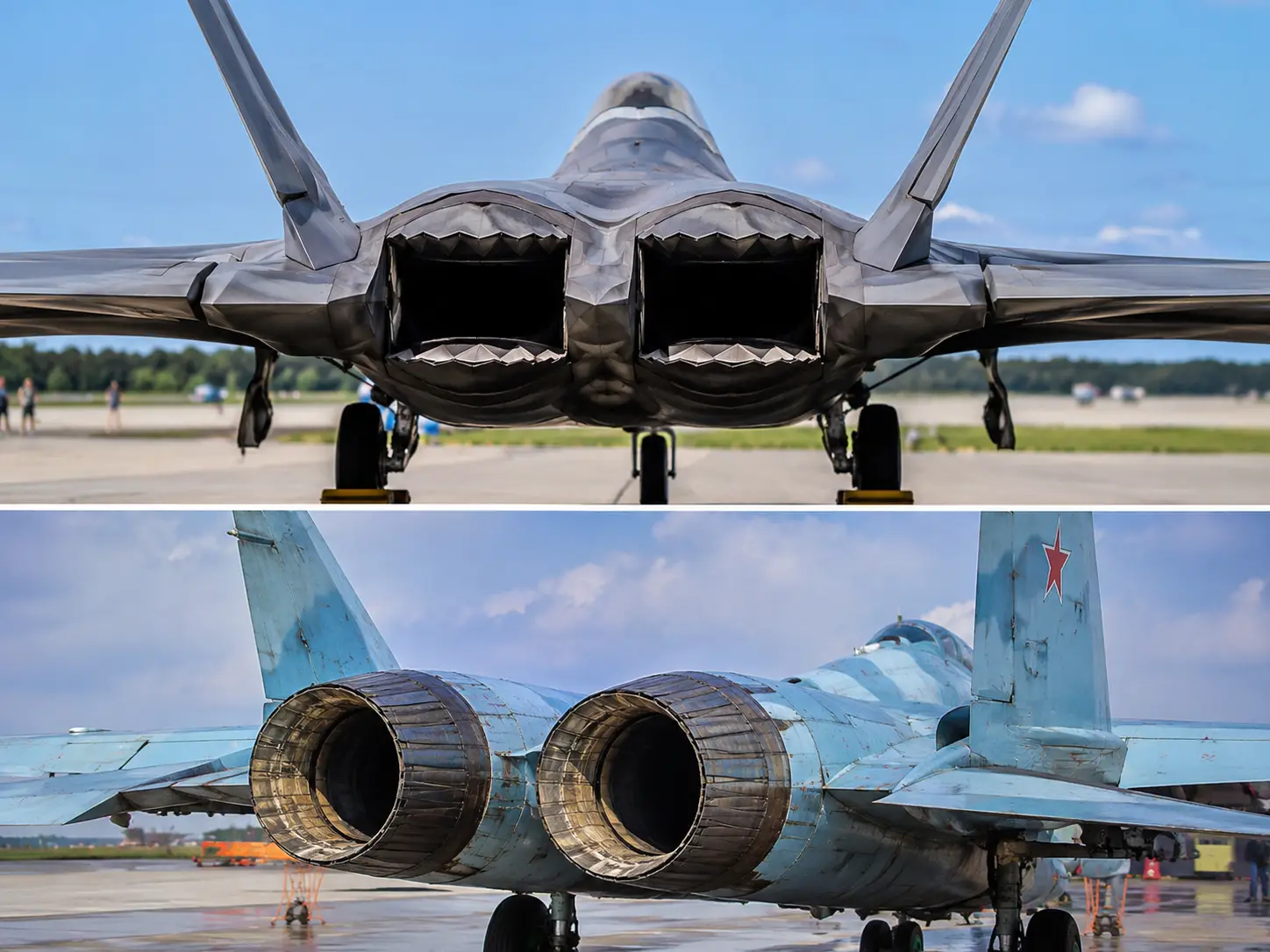
Russian jets utilise round, three-dimensional nozzles that swivel in both pitch and yaw to achieve extreme agility. The F-22 uses flat, two-dimensional nozzles that only pivot up and down. This specific flat design intentionally trades some multi-axis manoeuvrability for a significantly reduced radar cross-section.
1,000-Degree Turbine Heat
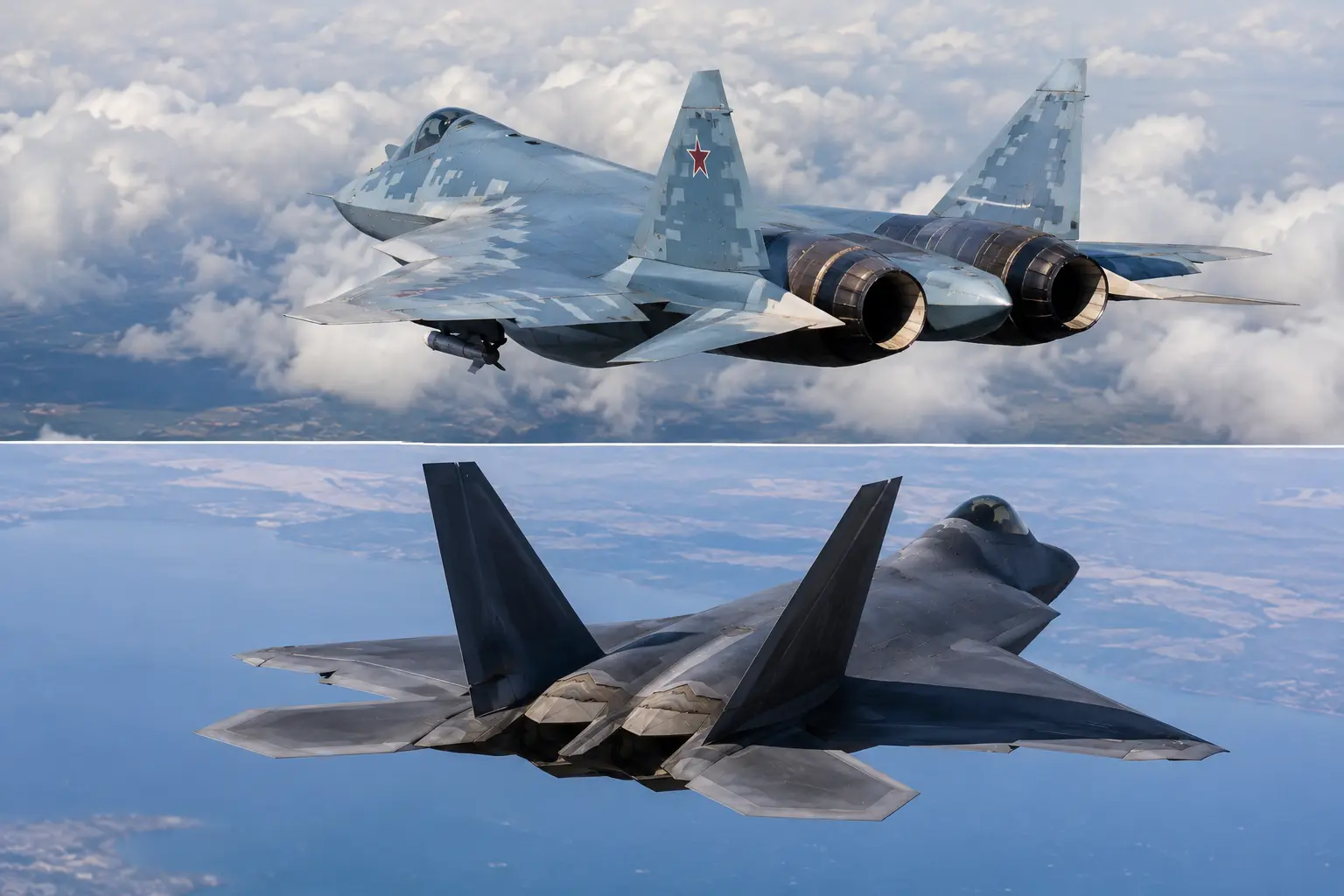
Flat, rectangular nozzles on the American Raptor spread exhaust gases over a wider area to rapidly lower the overall exhaust temperature. This integrated design effectively hides the hot engine turbine blades from modern infrared sensors. Traditional circular nozzles leave the high-temperature exhaust flow and internal components completely exposed to heat-seeking missiles.
17 Per Cent Penalty
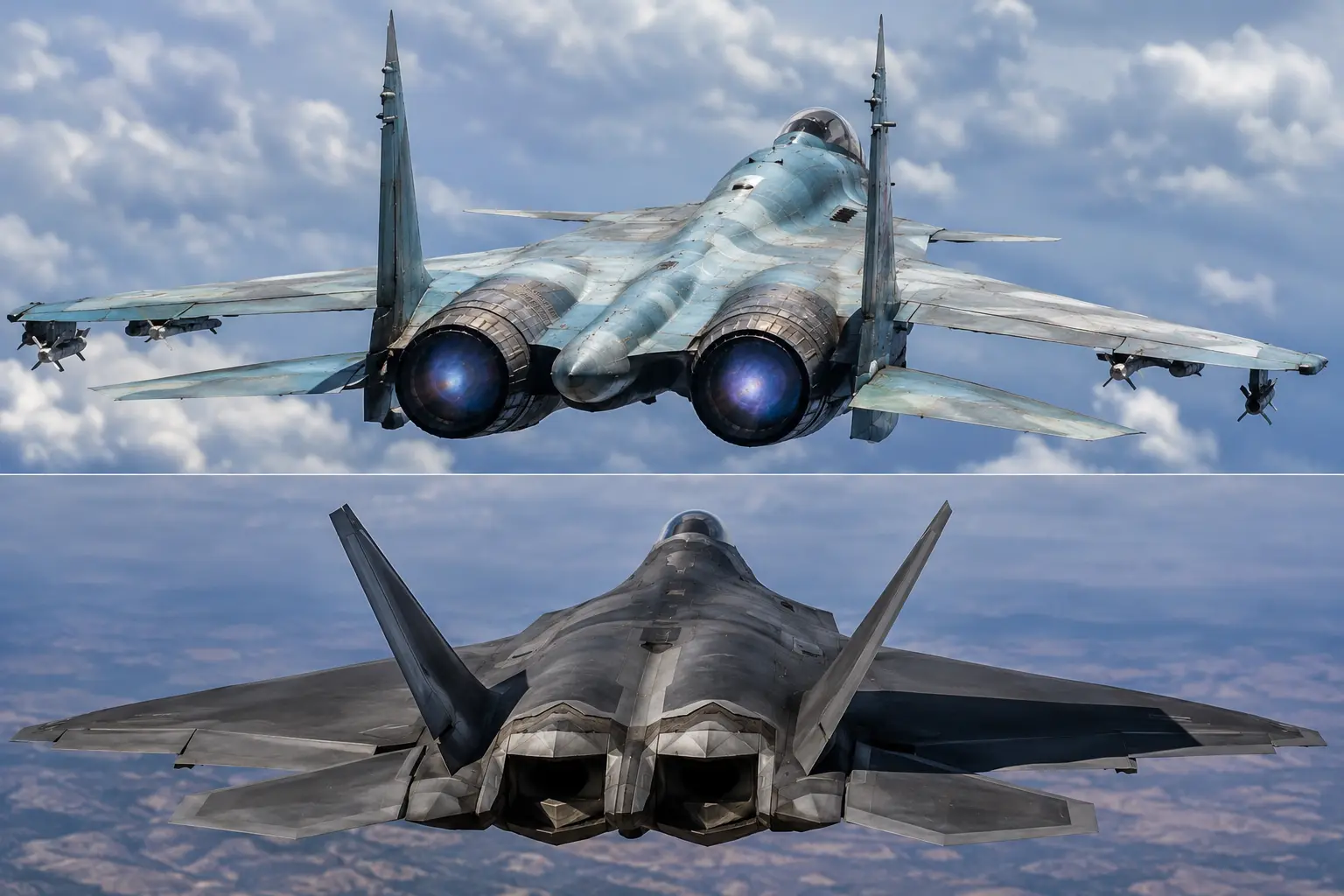
A jet engine naturally produces a circular column of exhaust, and forcing it into a rectangular shape causes up to a 17 per cent loss of total thrust. By leaving their nozzles round, Russian fighters achieve maximum engine power output. The US military accepted this thrust penalty to achieve superior radar and infrared evasion.
360-Degree Radar Deflection
Circular engine nozzles feature curved surfaces that unfortunately reflect incoming radar signals directly back to the emitter. American flat nozzles utilise faceted, saw-toothed, and subtly curved edges to physically deflect radar energy away from the source. These complex stealth considerations naturally forced the F-22 exhaust into a rectangular shape.
)
)
)
)
)