

&imwidth=800&imheight=600&format=webp&quality=medium "Why Sheikh Hasina wants to return to Bangladesh despite death sentence —and what it means for India | WION Decodes")
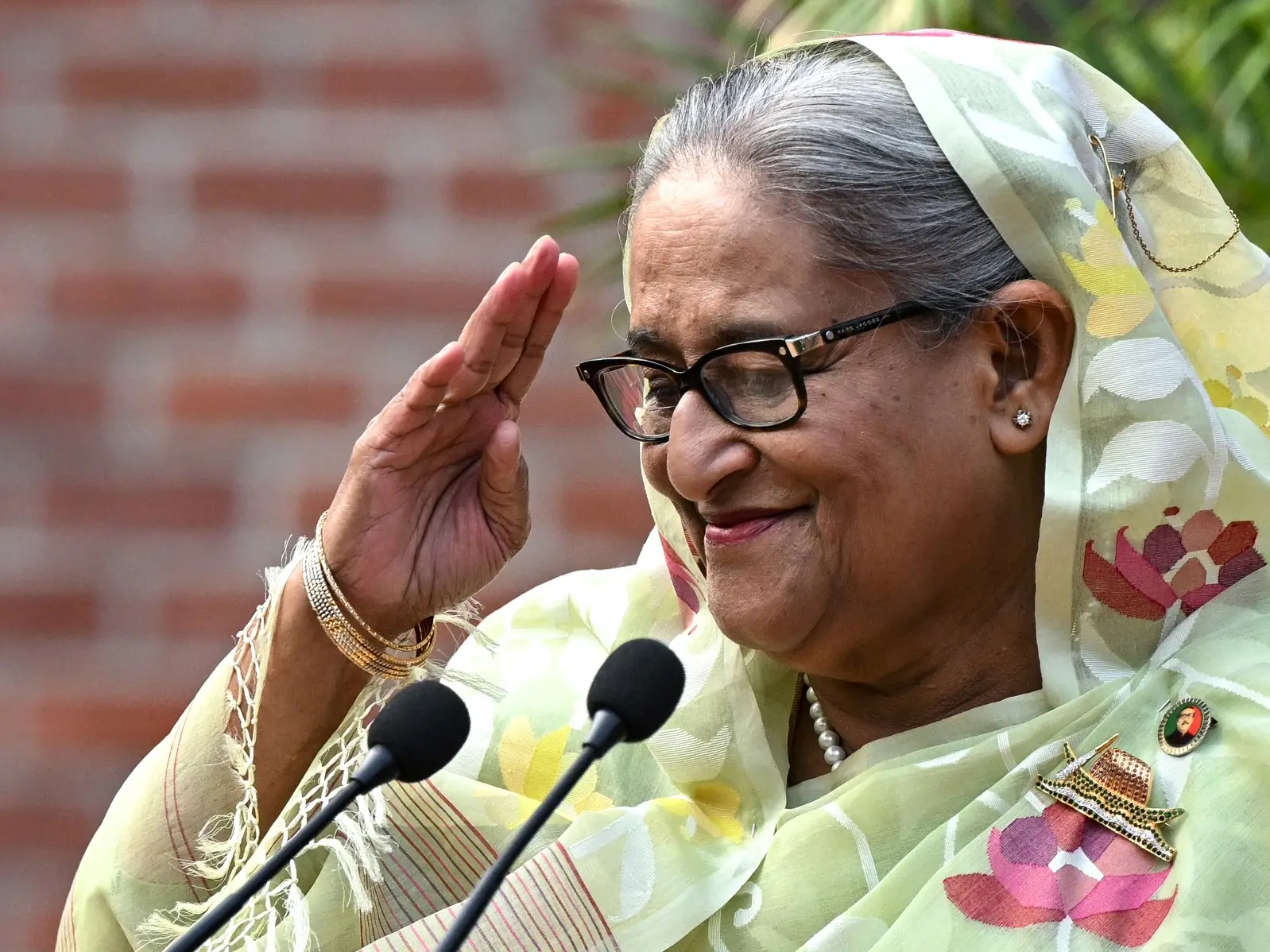
Former Bangladesh PM Sheikh Hasina has decided to return to her country despite being sentenced to death. Hasina, 78, has been living in India since she fled Dhaka after she was ousted following a violent student-led protest on August 5, 2024. After the BNP came to power, they have been seeking the extradition of Hasina, however, she had earlier said that she will return when the government in her country can ensure justice. As she hints at her return, the major question that arises is that why has she agreed to return.
The longest-serving prime minister of the South Asian nation has been sentenced to death in absentia after the Bangladesh's International Crimes Tribunal found her guilty of crimes against humanity. This happened while the country was still under the interim government led by Chief Adviser Muhammad Yunus. His government also banned the Awami League from campaigning, carrying out political activities and contesting elections. Hasina had called Yunus a "foreign agent" and accused him of fanning hatred against her party and her government.
The scenario has changed now. It is Bangaldesh Nationalist Party (BNP) in power and former late PM Khaleda Zia's son Tarique Rahman is the prime minister. His government has been maintaining that Hasina should return and pay for her alleged crimes. His advisor Zahed Ur Rahman, recently said that if she returns, the government "will welcome her." he also suggested her to “bring the best lawyers in the world" and follow the judicial process.
The BNP government has also maintained a good relation with India since in power despite pushing for Hasina's extradition. Combining this with Rahman's advisor's statement, it may be assumed that BNP might not seek political revenge from Hasina and Awami League knows this. Additionally, Hasina might be tempted to expose the unfair judicial process of BNP to the world. While she won't be saved, she would pave way for a bright future for her party Awami League. This is exactly a leaf out of Khaleda Zia's book. While she faced jail term and isolation in Bangladesh, when times changed, her son returned from London and ended up being the head of the state - winning a free and fair election.
Trending Stories
&imwidth=180&imheight=135&format=webp&quality=medium)
Brendan Taylor overtakes Andy Flower to become Zimbabwe’s leading ODI run-scorer
&imwidth=180&imheight=135&format=webp&quality=medium)
Researchers name newly discovered Andean plant after Argentina legend Lionel Messi
&imwidth=180&imheight=135&format=webp&quality=medium)
Lawrence Bishnoi gang claims responsibility for firing at Tiger Shroff over ties to Salman Khan
&imwidth=180&imheight=135&format=webp&quality=medium)
Flying car race: Alef Aeronautics welcomes Tesla Roadster '11 years' later, but are the two models the same?
&imwidth=180&imheight=135&format=webp&quality=medium)
KATSEYE performs at Victoria’s Secret show, teases Sophia Laforteza’s return
&imwidth=180&imheight=135&format=webp&quality=medium)
Shastri backs Shami comeback; lauds Bhuvi and warns Bumrah on format workload ahead of World Cup
&imwidth=180&imheight=135&format=webp&quality=medium)
Saudi Arabia asks skyscraper employees to work from home amid Houthi threats
&imwidth=180&imheight=135&format=webp&quality=medium)
Tiger Shroff shows injuries after Juhu firing incident; Eknath Shinde says Mumbai won’t tolerate gang wars
&imwidth=180&imheight=135&format=webp&quality=medium)
NFl 2026/27 - Saints vs Steelers to go ahead in Paris next week despite protest
&imwidth=180&imheight=135&format=webp&quality=medium)
4 killed, 19 critically injured in grass fire at Canada's largest military base
&imwidth=180&imheight=135&format=webp&quality=medium)
Nobel laureate Machado, who dedicated prize to Trump, confirmed as Venezuela opposition leader
&imwidth=180&imheight=135&format=webp&quality=medium)
After Kennedy Center and reflecting pool disputes, Trump turns to Washington golf course plan amid legal battle
&imwidth=180&imheight=135&format=webp&quality=medium)
Why France looks the most fragile in the G7 amid protests and budget deadlock
&imwidth=180&imheight=135&format=webp&quality=medium)
China responds to Trump's Press Secretary Katie Zacharia after toilet remark: 'Visit China more often'
&imwidth=180&imheight=135&format=webp&quality=medium)
Cattle feed found in biscuits of Indian company, FSSAI sends legal notice
&imwidth=180&imheight=135&format=webp&quality=medium)
Anthropic’s public benefit plan: What its 5% share commitment means for AI’s future
&imwidth=180&imheight=135&format=webp&quality=medium)
Girl 'dead' for 8 hours wakes up at her own funeral, dad insists she wasn't breathing
&imwidth=180&imheight=135&format=webp&quality=medium)
MI5 is opening an AI threat centre, and OpenAI just told MPs the worst isn't over
&imwidth=180&imheight=135&format=webp&quality=medium)
Elon Musk features on Lucknow's 'anti-India' Ravan poster alongside Rahul Gandhi, Akhilesh
&im=FitAndFill=(700,400)&imwidth=180&imheight=135&format=webp&quality=medium)
New OTT releases this week (October 19-25, 2026): Gajab Raat to Chaar Yaar-8 titles to watch during Dussehra week on Netflix, Prime Video and more
&imwidth=180&imheight=135&format=webp&quality=medium)
Kylie Jenner makes Victoria’s Secret debut in $50 million diamond-encrusted design as Timothée Chalamet cheers
&imwidth=180&imheight=135&format=webp&quality=medium)
Putin wants joint meeting with Trump-Xi summit on Ukraine war, proposes talks alongside APEC: Report
&imwidth=180&imheight=135&format=webp&quality=medium)
No Ravindra Jadeja, Yashasvi Jaiswal in India’s 2027 ODI World Cup plans: Report
&imwidth=180&imheight=135&format=webp&quality=medium)
India moves to buy 10,000 more AI chips for a national compute pool open to startups
&imwidth=180&imheight=135&format=webp&quality=medium)
Tiger Shroff attacked by three gunmen in Mumbai, actor safe, two injured
&imwidth=180&imheight=135&format=webp&quality=medium)
Anirudh Ravichander-Kavya Maran wedding: Telangana CM reveals Chennai reception date
&im=FitAndFill=(700,400)&imwidth=180&imheight=135&format=webp&quality=medium)
Tesla Roadster engineering: The hidden hardware behind its flying demonstration
&imwidth=180&imheight=135&format=webp&quality=medium)
US to review Russia sanctions waiver within 60 days as Rubio cites India’s ‘substantial’ Russian energy imports
&imwidth=180&imheight=135&format=webp&quality=medium)
'Grassroots leagues help bridge the gap': India's ODI WC winner Suresh Raina lauds ISCL ahead of Season 2
&imwidth=180&imheight=135&format=webp&quality=medium)
'We feel like Mr India': Gujarat’s undercover SHE team guard garba nights at Navratri
&imwidth=180&imheight=135&format=webp&quality=medium)
Cattle-feed bran in biscuits, detergent in milk: FSSAI acts against 3 companies
&im=FitAndFill=(700,400)&imwidth=180&imheight=135&format=webp&quality=medium)
5 technologies that could make the Tesla Roadster one of the most unusual cars ever built
&imwidth=180&imheight=135&format=webp&quality=medium)
'It's a joy to see the makers bring it on such a grand scale': SS Rajamouli on Ramayana
&imwidth=180&imheight=135&format=webp&quality=medium)
Priest dies after crucifix falls on his head during livestreamed Mass in Ecuador | VIDEO
What is India's position on the matter?
As for India, there might be a good news and a bad one. If Hasina decides to leave, it would be the end of one of the crucial sensitive issue between New Delhi and Dhaka, amid the latter's increasing ties with Beijing. The bad news is if Hasina is persecuted after she returns, India will be under scanner as it would violate the principle of non-refoulement in the international law. Though India is not a signatory to 1951 Refugee Convention or its 1967 Protocol that makes the principle legally binding, ethically, it would be at the centre of a major controversy.
For now, speaking to media on Tuesday (July 15) during weekly press briefing of the Ministry of External Affairs (MEA), spokesperson Randhir Jaiswal said that the matter is a legal issue and will be dealt accordingly. The MEA clarified that there has been no change in New Delhi's stance on the matter even as the former Bangladeshi PM has openly expressed about her plans to leave India and return to her homeland. “There is no change in our approach to the matter. Any extradition matter is a legal issue, and it will be dealt with accordingly,” external affairs ministry spokesperson Randhir Jaiswal told reporters. India has maintained that the extradition demand will be examined in line with judicial and legal processes.
What Sheikh Hasina said?
Hasina, who is in India, since she fled her nation after August uprising, said that she may go back by December along with other senior party colleagues. While she expressed her fear of getting killed, she said that she is not afraid to be jailed. She also said that people should decide the fate of her party Awami league and the BNP government should not ban it. "They may arrest me on my return, they may even kill me...If death comes, I want it to come on my own soil, where my parents are buried and where their blood was shed," Hasina said. "When a government works for a long time, mistakes can happen — no government is above error. But the right to judge the good and bad, the right and wrong of a government belongs to the people. They may have convicted me, and I may not be able to contest elections. But why should they suspend the Awami League?" she added.

