Wonderful World | A once-in-a-century celestial event: The 6-minute solar eclipse that will turn day into night

&imwidth=600&imheight=450&format=webp&quality=medium "Wonderful World | A once-in-a-century celestial event: The 6-minute solar eclipse that will turn day into night")
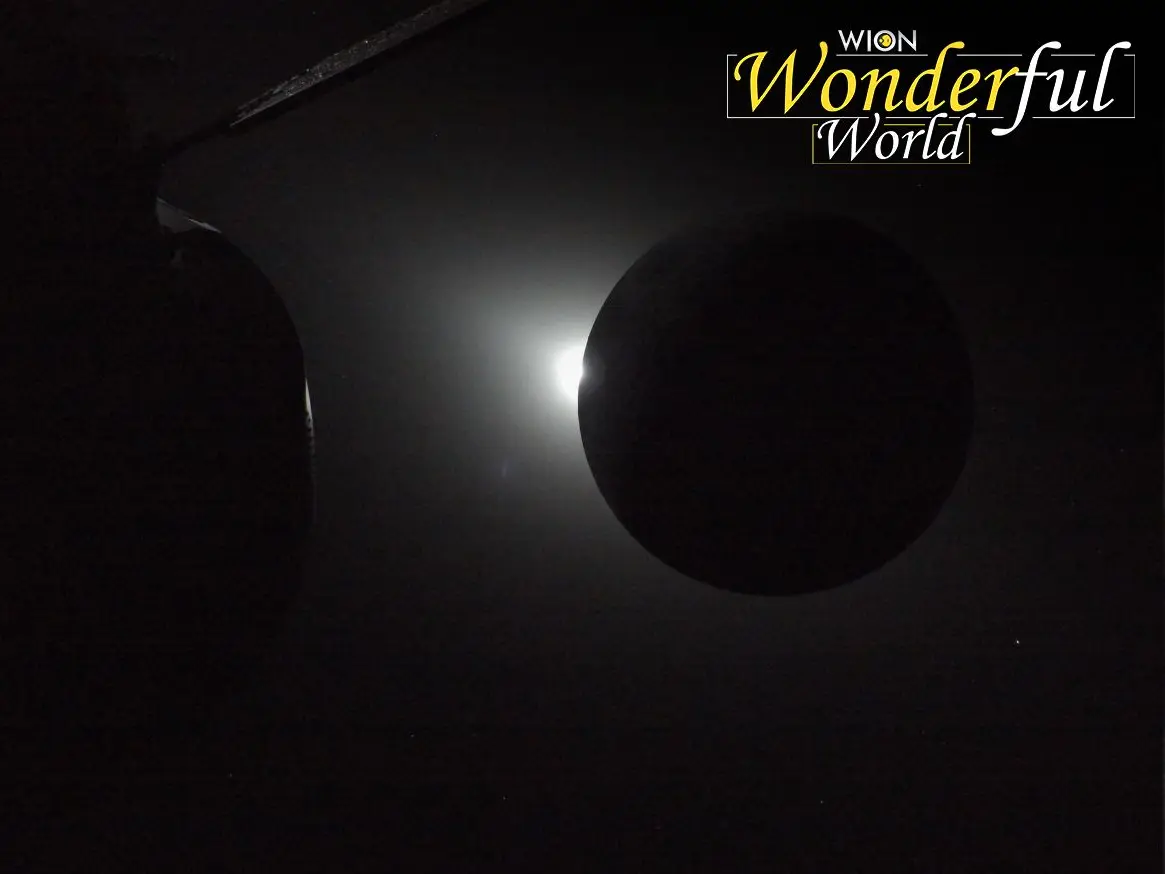
This picture released by NASA shows The Sun rising at the left edge of the Moon, ending a nearly one-hour total solar eclipse on April 6, 2026. Photograph: (WION/AFP)
The longest total solar eclipse visible from land in the 21st century will occur on August 2, 2027, when the Moon will completely obscure the Sun for up to 6 minutes and 23 seconds.
A once-in-a-century celestial event: the 6-minute solar eclipse that will turn day into night
The longest total solar eclipse visible from accessible landmasses in the 21st century will take place on August 2, 2027, giving millions of people a chance to witness more than six minutes of daytime darkness.
At its peak, the Moon will completely cover the Sun for about 6 minutes and 23 seconds, making it the longest total solar eclipse visible from land this century. The rare event will be seen across parts of Spain, Morocco, Algeria, Libya, Egypt and Saudi Arabia, among other countries, and is expected to attract astronomers, eclipse enthusiasts and tourists from around the world.
Scientists say the eclipse's extraordinary duration is the result of a rare alignment between the Earth, Moon and Sun. People located within the path of totality will experience the sky darkening in the middle of the day, while the Sun's outer atmosphere, known as the corona, becomes visible.
Also Read: WION Decodes | Why is India switching to plastic notes? RBI plans to introduce polymer currency
Why will the eclipse last so long
Trending Stories
&imwidth=280&imheight=210&format=webp&quality=medium)
&imwidth=280&imheight=210&format=webp&quality=medium)
&imwidth=280&imheight=210&format=webp&quality=medium)
&imwidth=280&imheight=210&format=webp&quality=medium)
&imwidth=280&imheight=210&format=webp&quality=medium)
&im=FitAndFill=(700,400)&imwidth=280&imheight=210&format=webp&quality=medium)
&imwidth=280&imheight=210&format=webp&quality=medium)
&imwidth=280&imheight=210&format=webp&quality=medium)
&imwidth=280&imheight=210&format=webp&quality=medium)
&imwidth=280&imheight=210&format=webp&quality=medium)
&imwidth=280&imheight=210&format=webp&quality=medium)
&imwidth=280&imheight=210&format=webp&quality=medium)
&im=FitAndFill=(700,400)&imwidth=280&imheight=210&format=webp&quality=medium)
&imwidth=280&imheight=210&format=webp&quality=medium)
&imwidth=280&imheight=210&format=webp&quality=medium)
&imwidth=280&imheight=210&format=webp&quality=medium)
&imwidth=280&imheight=210&format=webp&quality=medium)
&im=FitAndFill=(700,400)&imwidth=280&imheight=210&format=webp&quality=medium)
&im=FitAndFill=(700,400)&imwidth=280&imheight=210&format=webp&quality=medium)
&imwidth=280&imheight=210&format=webp&quality=medium)
&imwidth=280&imheight=210&format=webp&quality=medium)
&imwidth=280&imheight=210&format=webp&quality=medium)
&imwidth=280&imheight=210&format=webp&quality=medium)
&imwidth=280&imheight=210&format=webp&quality=medium)
&im=FitAndFill=(700,400)&imwidth=280&imheight=210&format=webp&quality=medium)
&imwidth=280&imheight=210&format=webp&quality=medium)
&imwidth=280&imheight=210&format=webp&quality=medium)
&imwidth=280&imheight=210&format=webp&quality=medium)
&imwidth=280&imheight=210&format=webp&quality=medium)
&imwidth=280&imheight=210&format=webp&quality=medium)
&imwidth=280&imheight=210&format=webp&quality=medium)
&imwidth=280&imheight=210&format=webp&quality=medium)
&imwidth=280&imheight=210&format=webp&quality=medium)
&imwidth=280&imheight=210&format=webp&quality=medium)
A solar eclipse occurs when the Moon passes directly between the Earth and the Sun, casting its shadow on Earth. However, the duration of totality varies depending on the positions of the three celestial bodies.
According to calculations cited on NASA's eclipse resources and data published by Eclipsophile, the August 2027 eclipse will last unusually long because the Moon will be relatively close to Earth at the time of the event, making it appear larger in the sky.
At the same time, Earth will be near aphelion, the point in its orbit where it is farthest from the Sun. This makes the Sun appear slightly smaller than usual. The combination allows the Moon to cover the Sun completely for a longer period, extending the duration of totality to more than six minutes.
Astronomers note that such a favourable alignment is uncommon, which is why eclipses of this length are rarely seen.
Where it will be visible and what people will see
The path of totality will begin over the Atlantic Ocean before moving across southern Europe, North Africa and parts of the Middle East.
According to official eclipse calculations, totality will be visible from parts of Spain, Gibraltar, Morocco, Algeria, Tunisia, Libya, Egypt, Sudan, Saudi Arabia, Yemen and Somalia.
Egypt is expected to provide some of the best viewing conditions. Areas near Luxor and parts of the New Valley Governorate could experience nearly the full 6 minutes and 23 seconds of darkness. Astronomical calculations indicate that the point of greatest eclipse will occur over Egypt.
During totality, daylight will briefly turn into twilight-like darkness. Temperatures may drop slightly, while bright planets and stars could become visible. According to NASA, totality is the only phase of a solar eclipse during which the Sun's corona can be viewed with the naked eye.
Observers may also witness rare phenomena such as Bailey's Beads and the Diamond Ring Effect, caused by sunlight passing through valleys on the Moon's surface before and after totality.
Experts advise viewers to use certified solar eclipse glasses during all stages of the eclipse except the brief period of totality. According to estimates from Time and Date, more than four billion people across Africa, Europe and western Asia could witness at least a partial eclipse, making it one of the most widely observed astronomical events of the century.