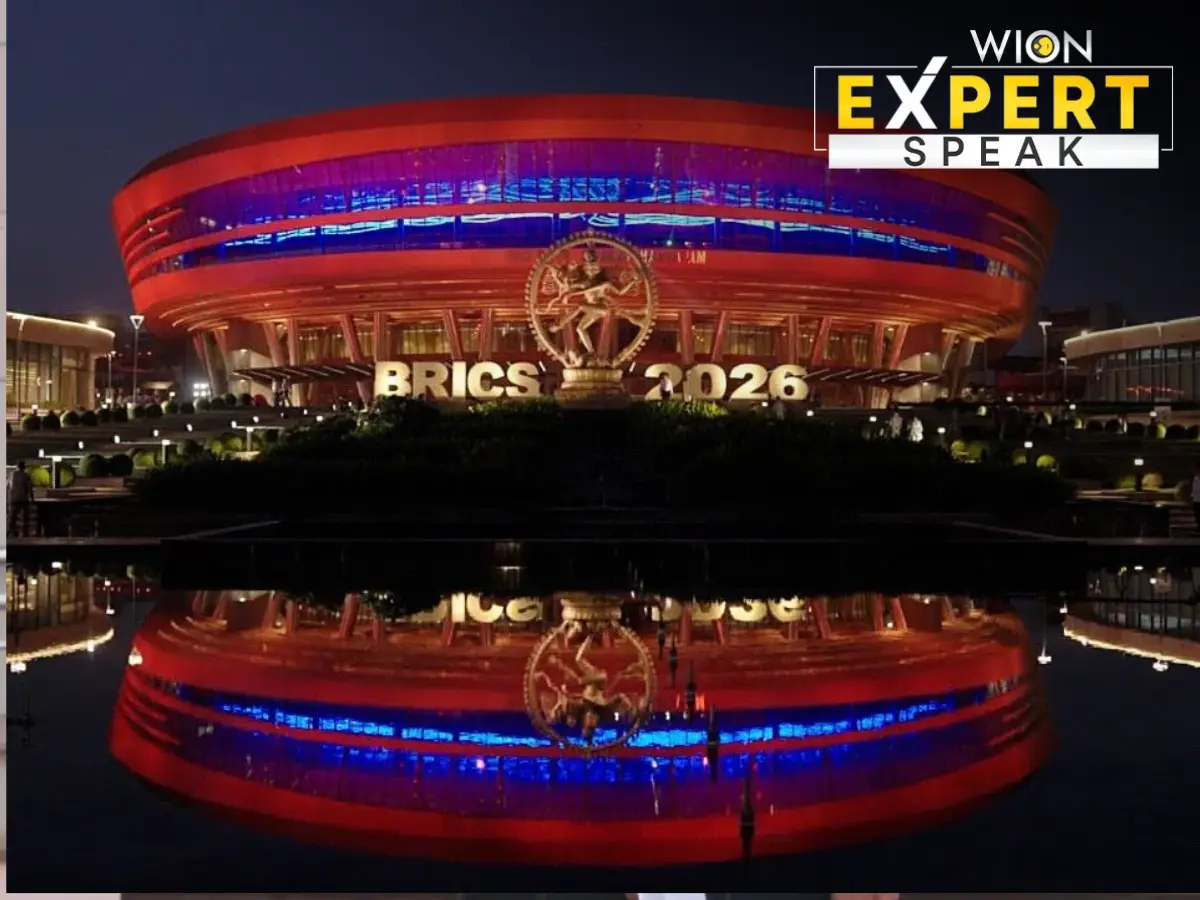
WION Expertspeak: Understanding India's BRICS presidency amid wars, trade tensions and global turmoil

&imwidth=600&imheight=450&format=webp&quality=medium "WION Expertspeak: Understanding India's BRICS presidency amid wars, trade tensions and global turmoil")
Photograph: (WION)
India's 2026 BRICS presidency faces the challenge of steering the expanding bloc towards greater financial autonomy and a multipolar world amid ongoing wars, geopolitical tensions and global economic uncertainty.
As India gears up to host the 18th BRICS Summit in New Delhi on September 12 and 13 under its 2026 chairship, the grouping is guided by the theme “Building for Resilience, Innovation, Cooperation and Sustainability”, with development, sustainability and innovation at the centre of its agenda.
However, the summit comes at a time of significant global economic and geopolitical turmoil. The Russia-Ukraine war has continued for more than four years, while the West Asia conflict between Iran and the United States has spilled into the wider Middle East, disrupting energy supplies and trade routes and sending ripples through the global economy.
To understand India's BRICS presidency at a time of such geopolitical flux, WION spoke to Dr Anshu Joshi of the School of International Studies at Jawaharlal Nehru University in New Delhi.
As India prepares to host the 18th BRICS Summit in New Delhi, the grouping still lacks a permanent headquarters and bureaucracy, even as it expands its footprint across Asia with new members. Do you think BRICS remains largely a bloc of summits, talks and conferences, without concrete mechanisms to implement its programmes and declarations?
Yes, it is true that BRICS does not have a permanent headquarters, and that is a challenge as the bloc rapidly expands. However, we cannot say that the absence of a headquarters means BRICS is only about optics. We have to understand the rapid expansion and dynamism BRICS has shown in the past couple of years.
BRICS works through a consensus-driven, rotating chair system that helps manage the complex dynamics among its member nations. India is also proposing to formalise BRICS' institutional footprint by establishing a permanent secretariat in New Delhi.
Trending Stories
&imwidth=280&imheight=210&format=webp&quality=medium)
&imwidth=280&imheight=210&format=webp&quality=medium)
&imwidth=280&imheight=210&format=webp&quality=medium)
&imwidth=280&imheight=210&format=webp&quality=medium)
&imwidth=280&imheight=210&format=webp&quality=medium)
&imwidth=280&imheight=210&format=webp&quality=medium)
&imwidth=280&imheight=210&format=webp&quality=medium)
&imwidth=280&imheight=210&format=webp&quality=medium)
&imwidth=280&imheight=210&format=webp&quality=medium)
&imwidth=280&imheight=210&format=webp&quality=medium)
&imwidth=280&imheight=210&format=webp&quality=medium)
&imwidth=280&imheight=210&format=webp&quality=medium)
&im=FitAndFill=(700,400)&imwidth=280&imheight=210&format=webp&quality=medium)
&imwidth=280&imheight=210&format=webp&quality=medium)
&imwidth=280&imheight=210&format=webp&quality=medium)
&imwidth=280&imheight=210&format=webp&quality=medium)
&imwidth=280&imheight=210&format=webp&quality=medium)
&imwidth=280&imheight=210&format=webp&quality=medium)
&imwidth=280&imheight=210&format=webp&quality=medium)
&imwidth=280&imheight=210&format=webp&quality=medium)
&imwidth=280&imheight=210&format=webp&quality=medium)
&imwidth=280&imheight=210&format=webp&quality=medium)
&imwidth=280&imheight=210&format=webp&quality=medium)
&imwidth=280&imheight=210&format=webp&quality=medium)
&imwidth=280&imheight=210&format=webp&quality=medium)
&imwidth=280&imheight=210&format=webp&quality=medium)
&imwidth=280&imheight=210&format=webp&quality=medium)
&imwidth=280&imheight=210&format=webp&quality=medium)
&imwidth=280&imheight=210&format=webp&quality=medium)
&imwidth=280&imheight=210&format=webp&quality=medium)
&imwidth=280&imheight=210&format=webp&quality=medium)
&imwidth=280&imheight=210&format=webp&quality=medium)
&imwidth=280&imheight=210&format=webp&quality=medium)
&imwidth=280&imheight=210&format=webp&quality=medium)
&imwidth=280&imheight=210&format=webp&quality=medium)
When we talk about the tangible and institutionalised outcomes of BRICS, we must look at the New Development Bank, which is a concrete mechanism. It has financed over $30 billion to $35 billion in infrastructure projects across member nations, including India.
BRICS now also includes major energy and economic players, including Iran, the UAE, Saudi Arabia, Egypt, Ethiopia and Indonesia. This demonstrates how the bloc is expanding across a significant part of the Global South.
As I mentioned, India has proposed establishing a BRICS headquarters in New Delhi. Hopefully, after this summit or in the New Delhi Declaration, we may get some positive news on this.
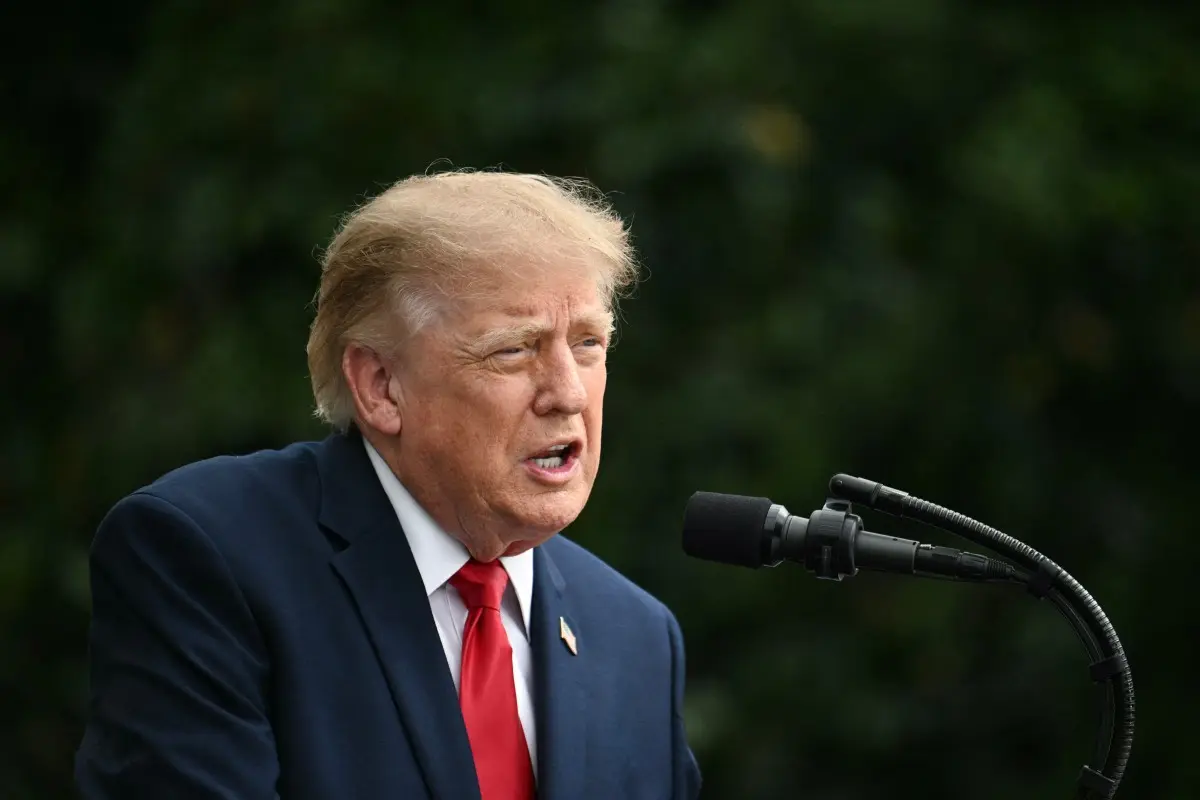
BRICS is increasingly being seen as a challenger to the US-led Western financial system, with talks of de-dollarisation gaining momentum. Even President Trump has threatened the grouping over efforts to challenge dollar dominance. Is BRICS planning to roll out a new financial system, currency or agreement at the upcoming summit?
I am not sure, but there is certainly talk that BRICS could roll out a single common currency. However, that is not the case. We have to understand the difference between a common currency and interoperable digital payment mechanisms.
Under such mechanisms, BRICS nations can trade in their own currencies. India and Russia, for instance, conduct a significant part of their trade in rupees and roubles.
The core intention of BRICS has always been to address the economic challenges faced by Global South nations and emerging economies. One of the obstacles in achieving this objective is the dominance of the US dollar.
There has been speculation that BRICS could introduce its own common currency, but that has several challenges and there is a lot of work to be done in that direction. Instead, BRICS is promoting an alternative financial framework based on greater use of local currencies.
This includes expanding local currency trade settlements to reduce dependence on the US dollar, along with mechanisms such as BRICS Pay, a proposed cross-border payment system designed to operate independently of Western networks such as SWIFT.
Such a system could allow countries such as Russia, which has been excluded from SWIFT, to participate in trade using their local currencies. It represents a significant shift towards financial autonomy, which is a key goal for Global South nations.
That is why the US and other Western countries view these efforts as a challenge to the dollar-based financial system. However, the core objective of BRICS is to ensure financial autonomy and currency sovereignty for its member nations.
The West Asia war has put India's BRICS presidency in a difficult position. With Saudi Arabia, the UAE and Iran part of BRICS, will it be a challenge for New Delhi to secure a consensus declaration, similar to the one India achieved during its G20 presidency despite the Russia-Ukraine conflict?
I don't think so. Apart from BRICS' principle of multi-alignment, we have to look at how India has strengthened its bilateral diplomatic relations with BRICS members, including Russia and Iran. There are certain challenges with China, but India has very good relations with most of the other members, including Egypt, Ethiopia, Iran, the UAE and Saudi Arabia.
When we look at the agenda India is likely to push through the 18th BRICS Summit in New Delhi and the New Delhi Declaration, it would have to consider the complex dynamics in Asia, particularly the situation in West Asia and the Russia-Ukraine conflict.
There are also challenges facing member nations, ranging from energy security and supply chain disruptions to difficulties related to manufacturing, logistics, infrastructure development and connectivity.
India is likely to keep these issues at the centre of the New Delhi Declaration because they are of significance to every member nation. I don't think member nations would have major difficulties in adopting these agenda items because they serve their own national interests.
Just as India managed to adopt the Delhi Declaration without a single dissent during the G20 Summit in New Delhi in September 2023, I believe it can achieve a similar outcome with the BRICS declaration. There will be diplomatic complexities, but India could once again prove itself to be a diplomatic champion.
India's regular presence at the Western-dominated G7, alongside its membership of groupings such as the SCO and BRICS, puts New Delhi in a delicate position. How can India effectively manage its multi-alignment policy amid growing global headwinds?
India has been successfully navigating multi-alignment amid different global headwinds and challenges. It has structured its foreign policy in a way that allows it to engage with Western platforms such as the G7 and Quad, while also participating in non-Western forums such as BRICS and the SCO.
India has made it clear that being part of BRICS or the SCO does not mean opposing the West. It is not about being anti-West. It is about being non-Western while pursuing India's own national interests, strategic autonomy and a multipolar world.
India has followed a multi-pronged approach, building coalitions based on specific issues. It engages with the G7 on areas such as high-tech transfers, defence production and green financing, while using BRICS to promote greater representation and leadership for the Global South.
India also works to ensure that BRICS does not become purely anti-Western or China-centric. It has consistently promoted the idea of BRICS as non-Western rather than anti-Western and has advocated strategic autonomy for member nations and even invited countries from the Global South.
Instead of aligning itself with any ideological bloc, India seeks to protect its own interests while remaining a vital geopolitical swing state that engages across platforms and promotes a positive Global South agenda.
BRICS+ has become an economic heavyweight, surpassing the G7 in its share of global GDP, while its combined military capabilities are also significant. Do you see the bloc eventually moving beyond climate, governance and trade to challenge US-led Western influence in military terms?
No, BRICS is not a military alliance. From the beginning, its core agenda has focused on financial autonomy, economic development and infrastructure, particularly for Global South nations.
It is highly unlikely that BRICS will transform into a military alliance. It is not like NATO. Any military bloc requires shared security perceptions, and there are significant differences within BRICS. Mutual defence pacts would also be necessary, and those do not exist within BRICS.
There are disputes between India and China, while several other member nations have their own bilateral defence agreements with the US. Egypt, the UAE and Brazil, for instance, have deep defence ties with Washington.
Therefore, BRICS+ is likely to remain focused on economic multipolarity, financial autonomy, alternative trade architecture and global governance reforms rather than becoming a military counterweight to NATO or the US.