Why is Australia key strategic partner for India in Indo-Pacific region? EXPLAINED

&imwidth=600&imheight=450&format=webp&quality=medium "Why is Australia key strategic partner for India in Indo-Pacific region? EXPLAINED")
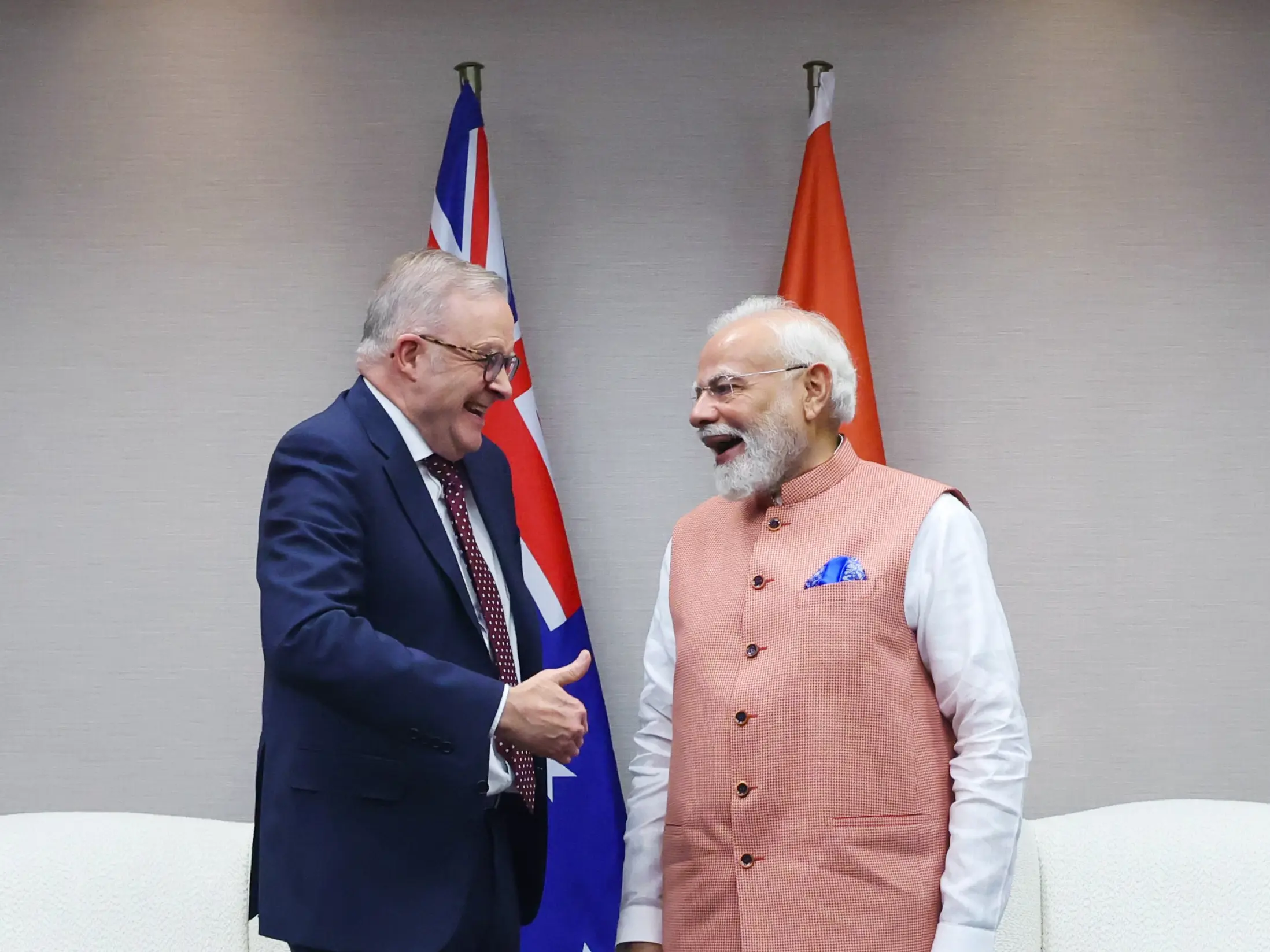
File photo of PM Modi and Australian PM Anthony Albanese. Photograph: (ANI)
The CSP is based on mutual understanding, trust, common interests and the common values of democracy as well as the rule of law, reflecting India and Australia’s firm commitment to practical global cooperation to address major challenges.
Prime Minister Narendra Modi is set to commence a high-profile, three-day official visit to Australia on Wednesday (July 8, 2026), after an invitation from Prime Minister Anthony Albanese. PM Modi's visit spans 8 to 10 July, focusing heavily on increasing diplomatic, economic, and cultural bridges between the two democracies.
Both leaders will meet in Melbourne for the Australia–India Annual Leaders’ Summit. Previously, Albanese met with PM Modi in the margins of the G20 Summit in Johannesburg in November 2025. Importantly, the development marks PM Modi's third official visit to the country after he became Prime Minister and coincides with the high-stakes Australia-India Annual Leaders' Summit.
Narendra Modi's visits also act as the critical second leg of his broader three-nation visit covering Indonesia, Australia, and New Zealand. During his stay in Melbourne, Prime Minister Modi will engage in extensive bilateral discussions with Albanese and pay a formal courtesy call on Australian Governor-General Sam Mostyn.
Prime Minister Anthony Albanese characterised India as a vital economic ally, underscoring the expanding geopolitical importance of the bilateral relationship. In an official statement released by the Prime Minister's Office in Canberra, Albanese pointed out that India's standing as the world's fourth-largest and fastest-growing major economy renders it a crucial commercial partner for Australia.
Why is the Australia–India Annual Leaders’ Summit important?
Trending Stories
&imwidth=280&imheight=210&format=webp&quality=medium)
&imwidth=280&imheight=210&format=webp&quality=medium)
&imwidth=280&imheight=210&format=webp&quality=medium)
&im=FitAndFill=(700,400)&imwidth=280&imheight=210&format=webp&quality=medium)
&imwidth=280&imheight=210&format=webp&quality=medium)
&imwidth=280&imheight=210&format=webp&quality=medium)
&imwidth=280&imheight=210&format=webp&quality=medium)
&imwidth=280&imheight=210&format=webp&quality=medium)
&imwidth=280&imheight=210&format=webp&quality=medium)
&imwidth=280&imheight=210&format=webp&quality=medium)
&imwidth=280&imheight=210&format=webp&quality=medium)
&imwidth=280&imheight=210&format=webp&quality=medium)
&imwidth=280&imheight=210&format=webp&quality=medium)
&imwidth=280&imheight=210&format=webp&quality=medium)
&imwidth=280&imheight=210&format=webp&quality=medium)
&imwidth=280&imheight=210&format=webp&quality=medium)
&imwidth=280&imheight=210&format=webp&quality=medium)
&imwidth=280&imheight=210&format=webp&quality=medium)
&imwidth=280&imheight=210&format=webp&quality=medium)
&imwidth=280&imheight=210&format=webp&quality=medium)
&im=FitAndFill=(700,400)&imwidth=280&imheight=210&format=webp&quality=medium)
&imwidth=280&imheight=210&format=webp&quality=medium)
&imwidth=280&imheight=210&format=webp&quality=medium)
&imwidth=280&imheight=210&format=webp&quality=medium)

&imwidth=280&imheight=210&format=webp&quality=medium)
&imwidth=280&imheight=210&format=webp&quality=medium)
&imwidth=280&imheight=210&format=webp&quality=medium)
&imwidth=280&imheight=210&format=webp&quality=medium)
&imwidth=280&imheight=210&format=webp&quality=medium)
&im=FitAndFill=(700,400)&imwidth=280&imheight=210&format=webp&quality=medium)
&imwidth=280&imheight=210&format=webp&quality=medium)

During an upcoming bilateral visit, India and Australia are poised to strengthen their comprehensive strategic partnership through closer political, economic, and maritime security cooperation. PM Modi will interact with Australian business leaders to expand trade and investment, focusing heavily on clean energy like solar power and essential minerals such as lithium.
To maintain a safe, open, and free Indo-Pacific region, both nations plan to significantly deepen their defence ties. Additionally, the visit aims to enhance collaboration in technology, education, innovation, and skills development. Finally, both leaders will prioritise strengthening people-to-people connections, emphasising active engagement with the vibrant Indian diaspora in Australia to foster deeper long-term commercial and cultural partnerships.
WATCH:
Why is Australia important?
Based on economic cooperation, Australia has found four sectors that offer the greatest opportunities for potential collaboration, including education, agriculture and food, tourism, and the green energy supply chain. Both nations are expanding trade, investment and economic cooperation under the Comprehensive Strategic Partnership (CSP).
The CSP is based on mutual understanding, trust, common interests and the common values of democracy as well as the rule of law, reflecting India and Australia’s firm commitment to practical global cooperation to address major challenges. Influenced by common democratic ideology, both nations collaborate closely on military and maritime security, highlighted by their active participation in the QUAD alliance and join navy exercises.
Beyond defence, Australia has emerged as a trusted partner for supplying critical minerals, which are vital for securing India’s supply chains and clean energy transition. Furthermore, landmark initiatives like the Economic Cooperation and Trade Agreement are rapidly expanding mutual trade and investment. Together, they are also fostering robust cooperation in emerging technologies, education, and innovation, cementing a resilient and long-term strategic relationship. In addition, more than 1 million Indians are living in Australia, creating a strong, friendly connection prompting both nations closer together.

