Why are Gen Z paying $2,000 a year to pretend they have jobs? Inside China’s ‘fake office’ spaces for jobless graduates

&imwidth=600&imheight=450&format=webp&quality=medium "Why are Gen Z paying $2,000 a year to pretend they have jobs? Inside China’s ‘fake office’ spaces for jobless graduates")
Why are Gen Z paying $2,000 a year to pretend they have jobs? Inside China’s ‘fake office’ spaces for jobless graduates Photograph: (Reuters)
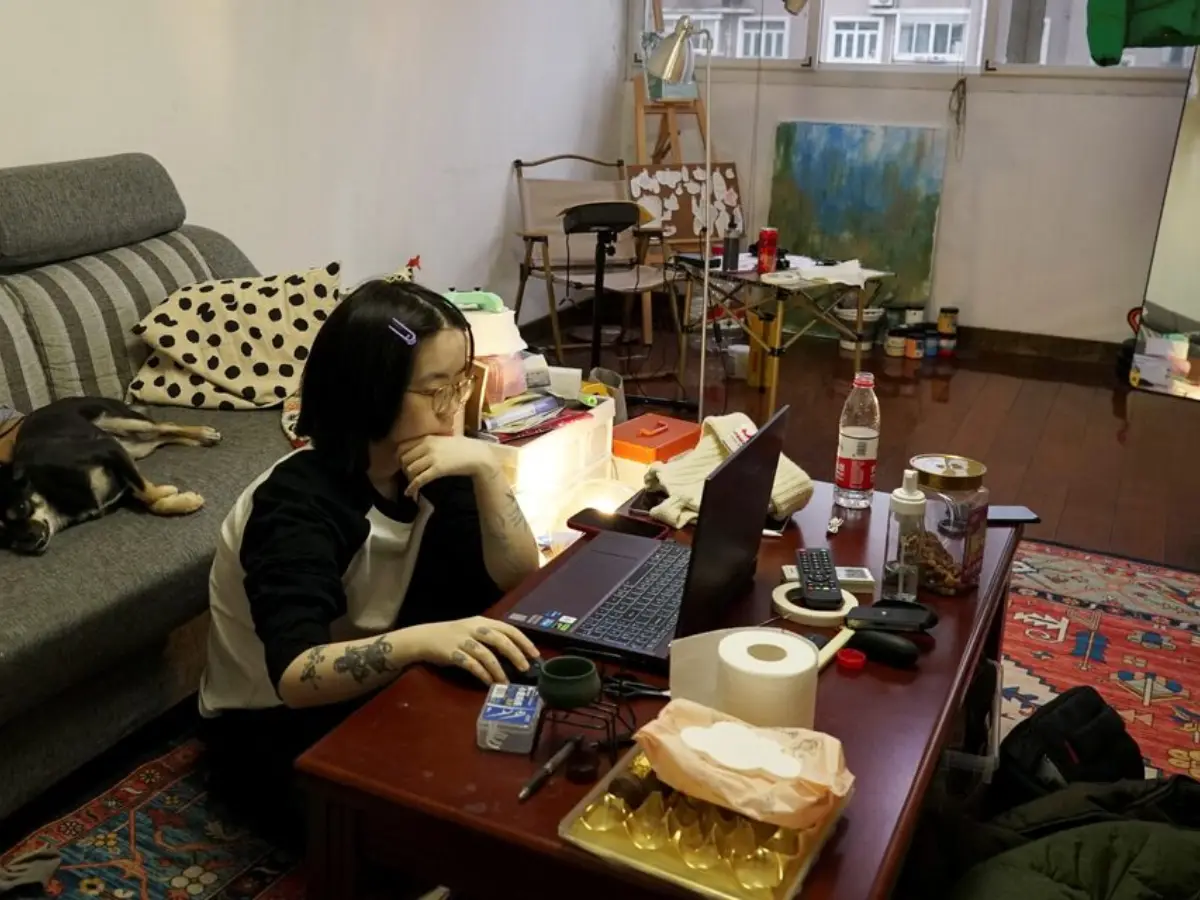
Amid 14.5% youth unemployment, some Gen Z in China are paying to spend time in fake offices, mimicking work to cope with joblessness. Even top graduates are struggling in the country’s slowing economy.
China’s job crisis for the Gen Z population has become so severe that many are now paying to “work” in fake offices. With the youth unemployment rate at 14.5%, graduates with top degrees are struggling to find jobs in a slowing economy. To cope, some are joining spaces run by “Pretend to Work Company”, which offer a mock office environment where jobless young adults can spend their days as if they were employed.
How does 'pretending to work' actually work?
These mock workplaces, found in cities such as Shanghai, Shenzhen, Wuhan, Chengdu, Nanjing and Kunming, charge between 30 and 50 yuan a day (about $4–$7). The cost may sound small, but when compared with China’s average annual salary of just under $16,000, it adds up to nearly $2,000 a year for a full-time “pretend job.”
The offices are fully equipped with desks, computers, free snacks, lunch and drinks. Some attendees use the time to apply for jobs, work on personal projects, or simply spend the day around others facing the same struggle.
Why are young people doing this?
Trending Stories
)
)
)
)
)
)
)
)
)
)
)
)
)
)
)
)
)
)
)
)
)
)
)
)
)
&im=FitAndFill=(700,400))
)
)
)
&im=FitAndFill=(700,400))
)
)
)
)
)
)
)
Experts say the phenomenon is less about playacting and more about survival. “The phenomenon of pretending to work is now very common,” said Christian Yao, senior lecturer at Victoria University of Wellington’s School of Management, told the BBC. “Due to economic transformation and the mismatch between education and the job market, young people need these places to think about their next steps, or to do odd jobs as a transition… Pretend office companies are one of the transitional solutions,” Yao added.
From ‘rat people’ to ‘lying flat’
China’s young professionals have faced years of difficulty entering the workforce, a crisis worsened by the pandemic. At one point in 2023, unemployment among 16- to 24-year-olds was estimated at 46.5%, according to Peking University professor Zhang Dandan. The situation became so dire that the government even stopped publishing youth unemployment data.
Since then, some identify as “rat people”, spending their days “bed rotting,” scrolling on their phones, ordering takeaway and napping. Others have embraced the “lying flat” trend, rejecting high-pressure careers to do the bare minimum.
What is the government doing?
The Chinese government has introduced measures to address the crisis. Since 2011, it has threatened to scrap university majors if fewer than 60% of graduates find jobs for two consecutive years. Reports also suggest some universities have pressured graduates to falsify their employment status to keep programmes alive.
