WHO says global rise in COVID-19 cases is 'tip of the iceberg'


General Tedros Adhanom Ghebreyesus
Figures showing aglobalriseinCOVID-19casescould herald a much bigger problem as some countries also report a drop in testing rates, theWHOsaid on Tuesday, warning nations to remain vigilant against the virus.
After more than a month of decline,COVIDcasesstarted to increase around the world last week, theWHOsaid, with lockdowns in Asia and China's Jilin province battling to contain an outbreak.
A combination of factors was causing the increases, including the highly transmissible Omicron variant and its BA.2 sublineage, and the lifting of public health and social measures, theWHOsaid.

"These increase are occurring despite reductions in testing in some countries, which means thecaseswe're seeing are just the tip of the iceberg,"WHO's head Tedros Adhanom Ghebreyesus told reporters.
Low vaccination rates in some countries, driven partly by a "huge amount of misinformation" also explained therise,WHOofficials said.
&im=FitAndFill=(700,400))
Shahid Kapoor to Rajkummar Rao: Actors who rule both theatres and OTT
&im=FitAndFill=(700,400))
How 2nm technology improves iPhone performance
)
BRICS Summit 2026: Trump wants to weaken BRICS, but maybe doing the opposite
&im=FitAndFill=(700,400))
Meet top 5 batters fastest to 3000 runs in T20Is
)
Did BRICS Summit 2026 prove that an 11-member bloc with India and China in it can still agree on key issues?
)
Top 5 places to visit in Goa beyond its famous beaches
&im=FitAndFill=(700,400))
Why European Meteor missiles use ramjet engines compared to standard US solid rockets
)
'He is popular...': Malaysian PM Anwar Ibrahim's praise for PM Modi during bilateral meeting | WATCH
)
BRICS Summit 2026: PM Modi, Xi reach key consensus on ties, China to assume BRICS chairmanship in 2027
)
Russia-Ukraine-US talks in October? Kremlin says not ruling out possibility of trilateral
)
UK breakup on the cards? Scotland, Wales and Northern Ireland push for independence
)
‘Want to reset ties with India, have engagement based on mutual interests,’ says Bangladesh minister
)
Trump says Canada eager to reach a deal, it could come ‘fairly soon’ if Ottawa treats US farmers better
)
The Verdict | Africa is too big to remain a guest at the BRICS table
)
‘Partners, not rivals’: Xi outlines four point plan for stronger India-China ties
&im=FitAndFill=(700,400))
Why Chinese PL-15 air-to-air missiles use dual-pulse motors compared to European interceptors
)
'It’s going to be a war': Ben Shelton on facing Zverev in US Open title clash
)
NATO under Russian threat? Drone strikes just 2 km from Poland, narrow escape for former UK PM, CIA chief
)
Song Ha Yoon school violence case explained: The claims, denials and latest twist of Marry My Husband actress
)
'80% of Indians are non-vegetarian': Rahul Gandhi slams BRICS Summit dinner menu, BJP calls it 'politics on food menu'
)
BRICS Summit: New Delhi declaration adopted with full consensus, big diplomatic win for India
)
800 million years old - Scientists discover 'fingerprints' of supercontinent Gondwana in ancient rocks
)
Russian drone hits Warsaw-bound train near Polish border, Zelensky accuses Moscow of ‘deliberate’ targeting
)
War is making Russia stronger? How Ukraine is shaping Moscow’s next generation of weapons
)
BRICS Summit 2026: Russia-India-China grouping never formalised
)
From severe mobility problems to recovery: Madhuri the elephant’s journey of wildlife care
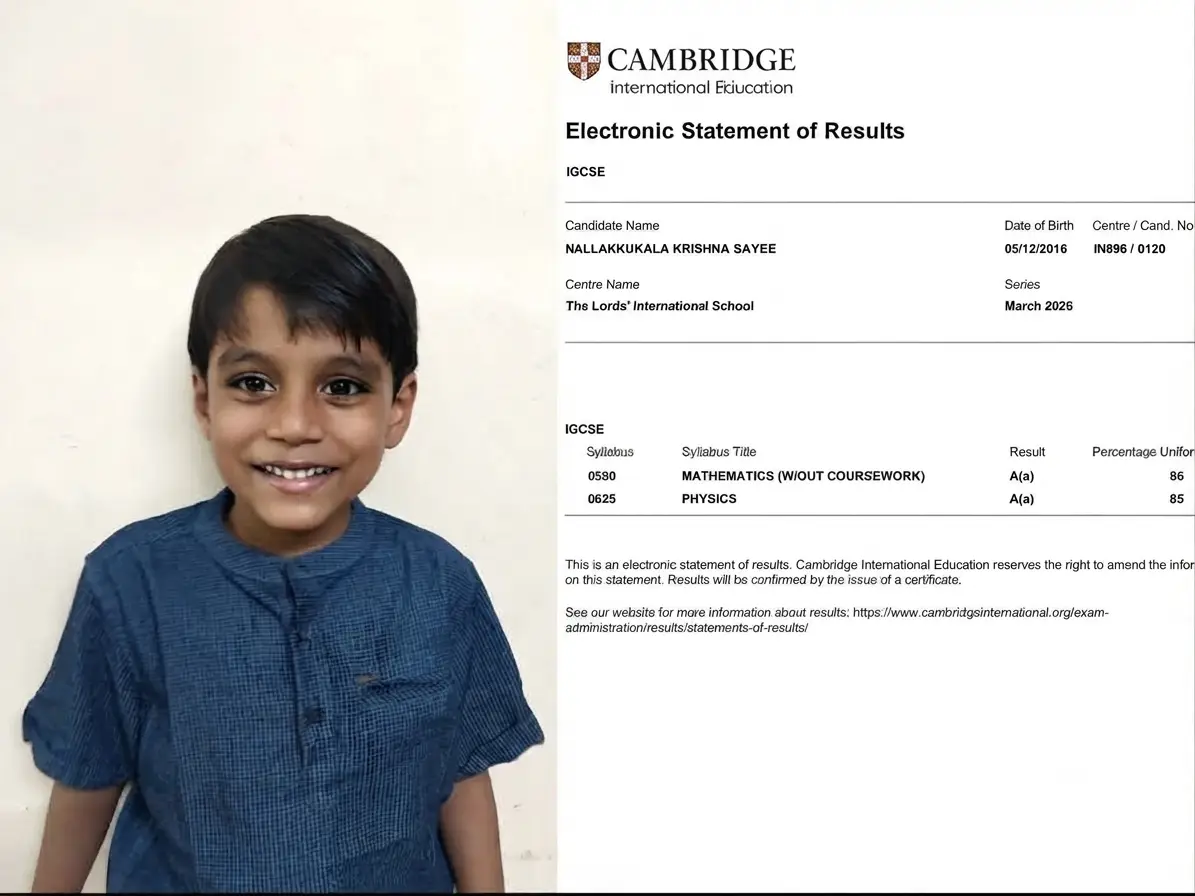)
9-year-old Chennai prodigy clears Cambridge IGCSE grade 10 exams
)
Indian importers urge Bangladesh to lift export ban on 'Hilsa' fish ahead of Durga Puja
)
Humans may lose control of AI: Anthropic CEO calls for slowdown, Altman, Musk back him
)
BRICS Summit 2026: Modi-Xi moment highlights India-China thaw at BRICS
)
US diplomat accused of possessing child abuse images secretly flown out of UK by US Marines
)
Bigg Boss 20: Who Is Rohed Khan? Meet the Austrian actor from Bade Miyan Chote Miyan
)
PM Modi and China's Xi offered to help resolve Russia-Ukraine war: Kremlin
)
Akram, Afridi, Mushtaq tear into PCB after Pakistan’s Test series collapse in UK
New infections jumped by 8 per centglobally compared to the previous week, with 11 million newcasesand just over 43,000 new deaths reported from March 7-13. It is the firstrisesince the end of January.
The biggest jump was in theWHO's Western Pacific region, which includes South Korea and China, wherecasesrose by 25 per centand deaths by 27 per cent.
Africa also saw a 12 per cent risein newcasesand 14 per centrisein deaths, and Europe a 2 per centriseincasesbut no jump in deaths. Other regions reported decliningcases, including the eastern Mediterranean region, although this area saw a 38 per centrisein deaths linked to a previous spike in infections.
A number of experts have raised concerns that Europe faces another coronavirus wave, with case rising since the beginning of March in Austria, Germany, Switzerland, the Netherlands, and the United Kingdom.
TheWHO's Maria Van Kerkhove said at the briefing that BA.2 appears to be the most transmissible variant so far.
However, there are no signs that it causes more severe disease, and no evidence that any other new variants are driving theriseincases.
The picture in Europe is also not universal. Denmark, for example, saw a brief peak incasesin the first half of February, driven by BA.2, which quickly subsided.
But experts have begun to warn that the United States could soon see a similar wave to that seen in Europe, potentially driven by BA.2, the lifting of restrictions and potential waning immunity from vaccines given several months ago.
"I agree with the easing of restrictions, because you can't think of it as an emergency after two years," said Antonella Viola, professor of immunology at Italy's University of Padua.
"We just have to avoid thinking thatCOVIDis no longer there. And therefore maintain the strictly necessary measures, which are essentially the continuous monitoring and tracking ofcases, and the maintenance of the obligation to wear a mask in closed or very crowded places."
Watch |Report: Combo strain 'Deltacron' detected in Israel