Want to join IMEC officially, says top Israeli diplomat Zadka; shares optimism about Abraham Accords

&imwidth=600&imheight=450&format=webp&quality=medium "Want to join IMEC officially, says top Israeli diplomat Zadka; shares optimism about Abraham Accords")
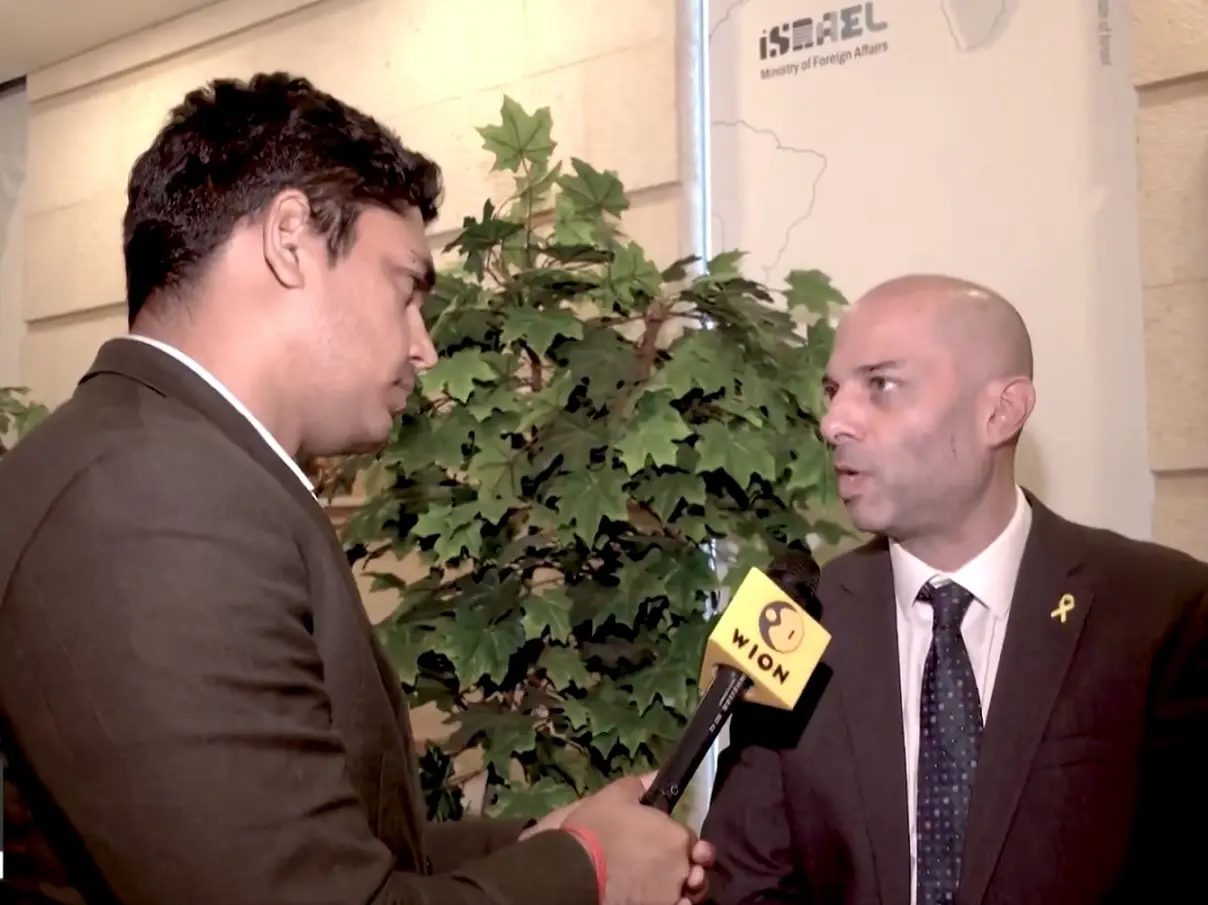
The head of the Middle East Bureau at the Israel Foreign Ministry, Jonathan Zadka, speaking to WION.
IMEC was announced in New Delhi on the sidelines of the G20 Summit in India in 2023, and since then some segments of the mega connectivity corridor have seen work being undertaken. But the ongoing West Asia conflict has impacted parts of the corridor.
The head of the Middle East Bureau at the Israel Foreign Ministry, Jonathan Zadka, has said that his country would like to join the India-Middle East-Europe Corridor (IMEC) officially as it looks to engage with countries in Asia, especially India. Speaking to WION’s Sidhant Sibal in Jerusalem, Jonathan Zadka said, “Our discussion with India and other partners in different capacities of the IMEC is happening in an ongoing manner most of the time.”
IMEC was announced in New Delhi on the sidelines of the G20 Summit in India in 2023, and since then some segments of the mega connectivity corridor have seen work being undertaken. But the ongoing West Asia conflict has impacted parts of the corridor.
On being asked about the delay, he said, “It would be important for this to be put on the fast pace.” He was optimistic about the future of the Abraham Accords that saw normalisation of ties between Israel and some Arab countries. Zadka was earlier the Consul General of Israel in Bengaluru.
Sidhant Sibal: What is Israel’s view about the India Middle East Europe Corridor?
Jonathan Zadka: So the IMEC element is a key cornerstone in any regional architecture that we see. The fact that IMEC would be a way for us to engage better with countries in Asia, mainly with India, throughout the Middle East and via Israel to Europe and then to the United States, is a key element that we aspire to. Hopefully, I think soon, we will be able to see a way forward in which what I make is actually taking root and established in a more concrete manner.
Sidhant Sibal: What kind of conversations have you had with India over the IMEC? You’re not officially part of the IMEC. So when does Israel plan to become a member of IMEC?
Jonathan Zadka: Israel is not a member of IMEC, but is mentioned in the IMEC MOU, especially the Haifa port. Our discussion with India and other partners in different capacities of the IMEC is happening in an ongoing manner most of the time, and hopefully we will be able to join the IMEC soon, with the help of the other signers to the MOU.
Sidhant Sibal: The pace of IMEC is still very slow. It’s not fast, particularly when it comes to this part of the world, primarily because of the ongoing conflict, how much that has been an impediment, and also the normalisation process with Saudi Arabia. Do you think that that is also an impediment when it comes to speeding up the entire corridor, the connectivity project?
Jonathan Zadka: I think when it comes to the IMEC, it carries many, many forms. It is a matter of physical route. It could be an element that carries out transportation elements, energy, data, ideas, and many other scope of elements. And for us, it would be important for this to be put on the fast pace. We would first want to be joined officially to the IMEC and then later on, I think we will be able to carry different avenues of cooperation, from India through Israel to other countries. Hopefully this would coincide with the enlargement of normalisation and better processes in the Middle East, including the extension of the Abraham Accords.
Trending Stories
&im=FitAndFill=(700,400)&imwidth=280&imheight=210&format=webp&quality=medium)
&imwidth=280&imheight=210&format=webp&quality=medium)
&imwidth=280&imheight=210&format=webp&quality=medium)
&im=FitAndFill=(700,400)&imwidth=280&imheight=210&format=webp&quality=medium)
&imwidth=280&imheight=210&format=webp&quality=medium)
&imwidth=280&imheight=210&format=webp&quality=medium)
&imwidth=280&imheight=210&format=webp&quality=medium)
&imwidth=280&imheight=210&format=webp&quality=medium)
&imwidth=280&imheight=210&format=webp&quality=medium)
&imwidth=280&imheight=210&format=webp&quality=medium)
&imwidth=280&imheight=210&format=webp&quality=medium)
&imwidth=280&imheight=210&format=webp&quality=medium)
&imwidth=280&imheight=210&format=webp&quality=medium)
&im=FitAndFill=(700,400)&imwidth=280&imheight=210&format=webp&quality=medium)
&imwidth=280&imheight=210&format=webp&quality=medium)
&imwidth=280&imheight=210&format=webp&quality=medium)
&imwidth=280&imheight=210&format=webp&quality=medium)
&imwidth=280&imheight=210&format=webp&quality=medium)
&imwidth=280&imheight=210&format=webp&quality=medium)
&imwidth=280&imheight=210&format=webp&quality=medium)
&imwidth=280&imheight=210&format=webp&quality=medium)
&imwidth=280&imheight=210&format=webp&quality=medium)
&imwidth=280&imheight=210&format=webp&quality=medium)
&imwidth=280&imheight=210&format=webp&quality=medium)
&imwidth=280&imheight=210&format=webp&quality=medium)
&imwidth=280&imheight=210&format=webp&quality=medium)
&im=FitAndFill=(700,400)&imwidth=280&imheight=210&format=webp&quality=medium)
&imwidth=280&imheight=210&format=webp&quality=medium)
&imwidth=280&imheight=210&format=webp&quality=medium)
&im=FitAndFill=(700,400)&imwidth=280&imheight=210&format=webp&quality=medium)
&imwidth=280&imheight=210&format=webp&quality=medium)
&imwidth=280&imheight=210&format=webp&quality=medium)
&imwidth=280&imheight=210&format=webp&quality=medium)
&imwidth=280&imheight=210&format=webp&quality=medium)
Sidhant Sibal: Summing it up on Abraham Accords, what’s the update like? Are you looking at more countries joining the Abraham Accords? And we have seen the Abraham Accords surviving the current situation in West Asia that emerged after the 7th of October terror attack.
Jonathan Zadka: The key important issue is that the Abraham Accords is very much present. It is a strategic, it manifests the strategic decision by the different partners for them to join together by the Abraham Accords to think about a better future for everybody. Hopefully this would be larger in scope as sooner than later.
The reporter was in Israel at the invitation of the Israeli embassy in New Delhi.
