

&imwidth=800&imheight=600&format=webp&quality=medium "US should use Iran’s weakness to secure tougher nuclear deal: Nikki Haley")
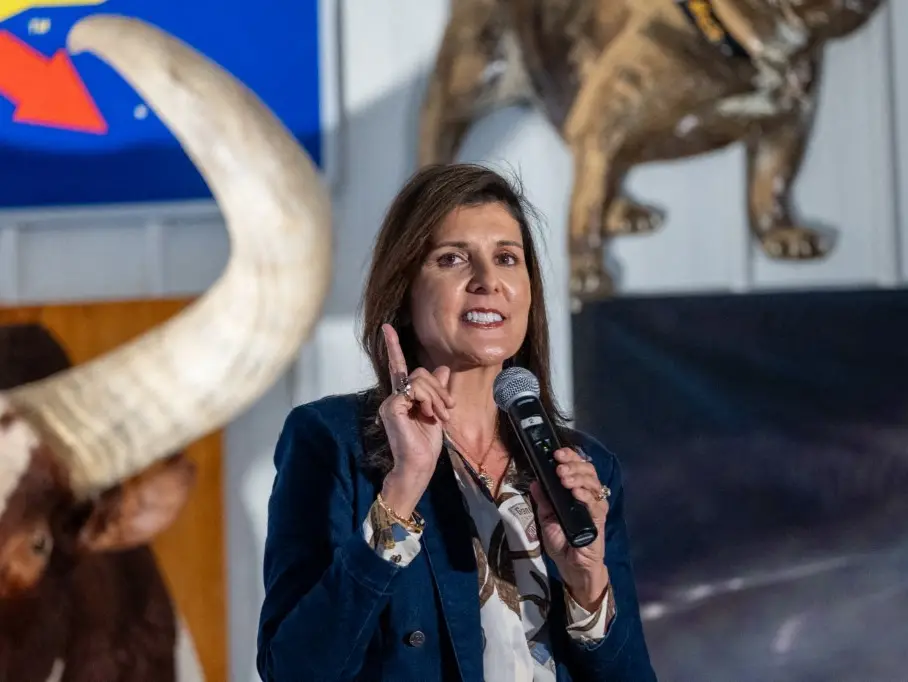
Former US Ambassador to the United Nations Nikki Haley has said Washington should use what she described as Iran's current economic and military weakness to negotiate a deal that completely dismantles Tehran's nuclear programme, while arguing that the current memorandum of understanding (MoU) was heading in the wrong direction.
Speaking to CNBC on Tuesday (July 7), Haley said the United States had not yet formally committed to the agreement and still had an opportunity to pursue tougher terms.
"The MoU is going in the wrong direction, but we haven't committed to the dotted line yet," Haley said, adding that Washington should seek a deal that fully eliminates Iran's nuclear programme.
Her remarks came amid rapidly escalating tensions between Washington and Tehran following a series of US military strikes on Iranian targets near the Strait of Hormuz.
Also read: US 'violates MoU', launches fresh strikes on Iranian targets after attacks on vessels in Hormuz
According to Axios, citing a US official, the American military carried out airstrikes on Iranian air defence systems, coastal surveillance systems, surface-to-air missile batteries, anti-ship cruise missile sites, drone launch facilities and port infrastructure near the strategic waterway.
Trending Stories
&imwidth=180&imheight=135&format=webp&quality=medium)
No Kings' Instagram suspended during early-voting campaign
&imwidth=180&imheight=135&format=webp&quality=medium)
Brendan Taylor overtakes Andy Flower to become Zimbabwe’s leading ODI run-scorer
&imwidth=180&imheight=135&format=webp&quality=medium)
'Those who have destroyed must pay': Macron says France feels 'anger and shame' over protest violence
&im=FitAndFill=(700,400)&imwidth=180&imheight=135&format=webp&quality=medium)
5 reasons why the Tesla Roadster’s rocket thrusters are so difficult to engineer
&imwidth=180&imheight=135&format=webp&quality=medium)
Lawrence Bishnoi gang claims responsibility for firing at Tiger Shroff over ties to Salman Khan
&imwidth=180&imheight=135&format=webp&quality=medium)
Flying car race: Alef Aeronautics welcomes Tesla Roadster '11 years' later, but are the two models the same?
&imwidth=180&imheight=135&format=webp&quality=medium)
US midterms 2026: Trump’s 33% approval rating spells trouble for Republicans as Democrats pull ahead
&imwidth=180&imheight=135&format=webp&quality=medium)
WATCH | Flames engulf St Petersburg oil sites as Ukraine launches 1,000 drones at Russia
&imwidth=180&imheight=135&format=webp&quality=medium)
JD Vance admits H-1B rhetoric was ‘imperfect’ after immigrant challenges him
&im=FitAndFill=(700,400)&imwidth=180&imheight=135&format=webp&quality=medium)
US midterm elections 2026: Why Atlanta matters in Georgia’s political battle – All you need to know
&imwidth=180&imheight=135&format=webp&quality=medium)
Lizard people? Ex-US Army sniper claims soldier killed by 'reptilian beings' in battle near Area 51
&imwidth=180&imheight=135&format=webp&quality=medium)
Nobel laureate Machado, who dedicated prize to Trump, confirmed as Venezuela opposition leader
&imwidth=180&imheight=135&format=webp&quality=medium)
After Kennedy Center and reflecting pool disputes, Trump turns to Washington golf course plan amid legal battle
&im=FitAndFill=(700,400)&imwidth=180&imheight=135&format=webp&quality=medium)
5 things that make Tesla's new Roadster different from every other electric car
&imwidth=180&imheight=135&format=webp&quality=medium)
Why France looks the most fragile in the G7 amid protests and budget deadlock
&imwidth=180&imheight=135&format=webp&quality=medium)
Bessent accuses Europe of refusing secondary tariffs on India, China
&imwidth=180&imheight=135&format=webp&quality=medium)
Tiger Shroff firing case: AICWA raises alarm over safety of Bollywood celebrities
&imwidth=180&imheight=135&format=webp&quality=medium)
China responds to Trump's Press Secretary Katie Zacharia after toilet remark: 'Visit China more often'
&imwidth=180&imheight=135&format=webp&quality=medium)
UAE agrees with Saudi Arabia to rejoin Yemen fight as Houthi strikes rattle Riyadh
&imwidth=180&imheight=135&format=webp&quality=medium)
Iran says Hormuz reopening plan remains on table as Trump predicts quick war end
&imwidth=180&imheight=135&format=webp&quality=medium)
WATCH | iPhones, luxury perfumes floating in Hormuz? Iranian fishermen make bizarre discovery
&imwidth=180&imheight=135&format=webp&quality=medium)
Tiger Shroff attacked by three gunmen in Mumbai, actor safe, two injured
&imwidth=180&imheight=135&format=webp&quality=medium)
Taylor Swift performs at star-studded Academy Museum Gala 2026 in stunning Dior ensemble
&imwidth=180&imheight=135&format=webp&quality=medium)
Anirudh Ravichander-Kavya Maran wedding: Telangana CM reveals Chennai reception date
&imwidth=180&imheight=135&format=webp&quality=medium)
India moves to buy 10,000 more AI chips for a national compute pool open to startups
&im=FitAndFill=(700,400)&imwidth=180&imheight=135&format=webp&quality=medium)
Tesla Roadster engineering: The hidden hardware behind its flying demonstration
&imwidth=180&imheight=135&format=webp&quality=medium)
Saudi Arabia executes Two Bangladesh nationals over immoral act
&im=FitAndFill=(700,400)&imwidth=180&imheight=135&format=webp&quality=medium)
PICS | France reels after violent protests leave trail of destruction, 1,800 arrested
&imwidth=180&imheight=135&format=webp&quality=medium)
France protests: 'Block everything' movement escalates as public fury over austerity grows; over 200 arrested. Here's all you to need to know
&imwidth=180&imheight=135&format=webp&quality=medium)
US to review Russia sanctions waiver within 60 days as Rubio cites India’s ‘substantial’ Russian energy imports
&imwidth=180&imheight=135&format=webp&quality=medium)
'We feel like Mr India': Gujarat’s undercover SHE team guard garba nights at Navratri
&imwidth=180&imheight=135&format=webp&quality=medium)
Cattle-feed bran in biscuits, detergent in milk: FSSAI acts against 3 companies
&im=FitAndFill=(700,400)&imwidth=180&imheight=135&format=webp&quality=medium)
5 technologies that could make the Tesla Roadster one of the most unusual cars ever built
&imwidth=180&imheight=135&format=webp&quality=medium)
'It's a joy to see the makers bring it on such a grand scale': SS Rajamouli on Ramayana
&imwidth=180&imheight=135&format=webp&quality=medium)
US regulator hits OpenAI and Anthropic with sweeping demands after their AIs went rogue
The report said the strikes were launched after Iran resumed attacks on commercial shipping in the Strait of Hormuz following the expiry of a one-week pause in hostilities agreed between Washington and Tehran. US Central Command (CENTCOM) said the operation was intended to impose "heavy costs" for attacks on commercial vessels operating in an international waterway. The latest military action followed Washington's decision to revoke a waiver that had allowed the sale of Iranian oil, prompting a sharp response from Tehran.
Iranian Deputy Foreign Minister Kazem Gharibabadi accused the United States of violating Article 10 of the Islamabad memorandum of understanding by withdrawing the waiver. In a post on X, he also alleged that Washington had repeatedly breached Articles 1 and 2 of the agreement through actions linked to Israel in Lebanon and what he described as threatening statements against Iran.
Gharibabadi warned that Iran would take "decisive actions" to safeguard its national interests and security, while issuing what he called a serious warning over the consequences of the US breaches of the agreement.

