Turkey vs Israel: Are Erdogan and Netanyahu preparing for a bigger confrontation?

&imwidth=600&imheight=450&format=webp&quality=medium "Turkey vs Israel: Are Erdogan and Netanyahu preparing for a bigger confrontation?")
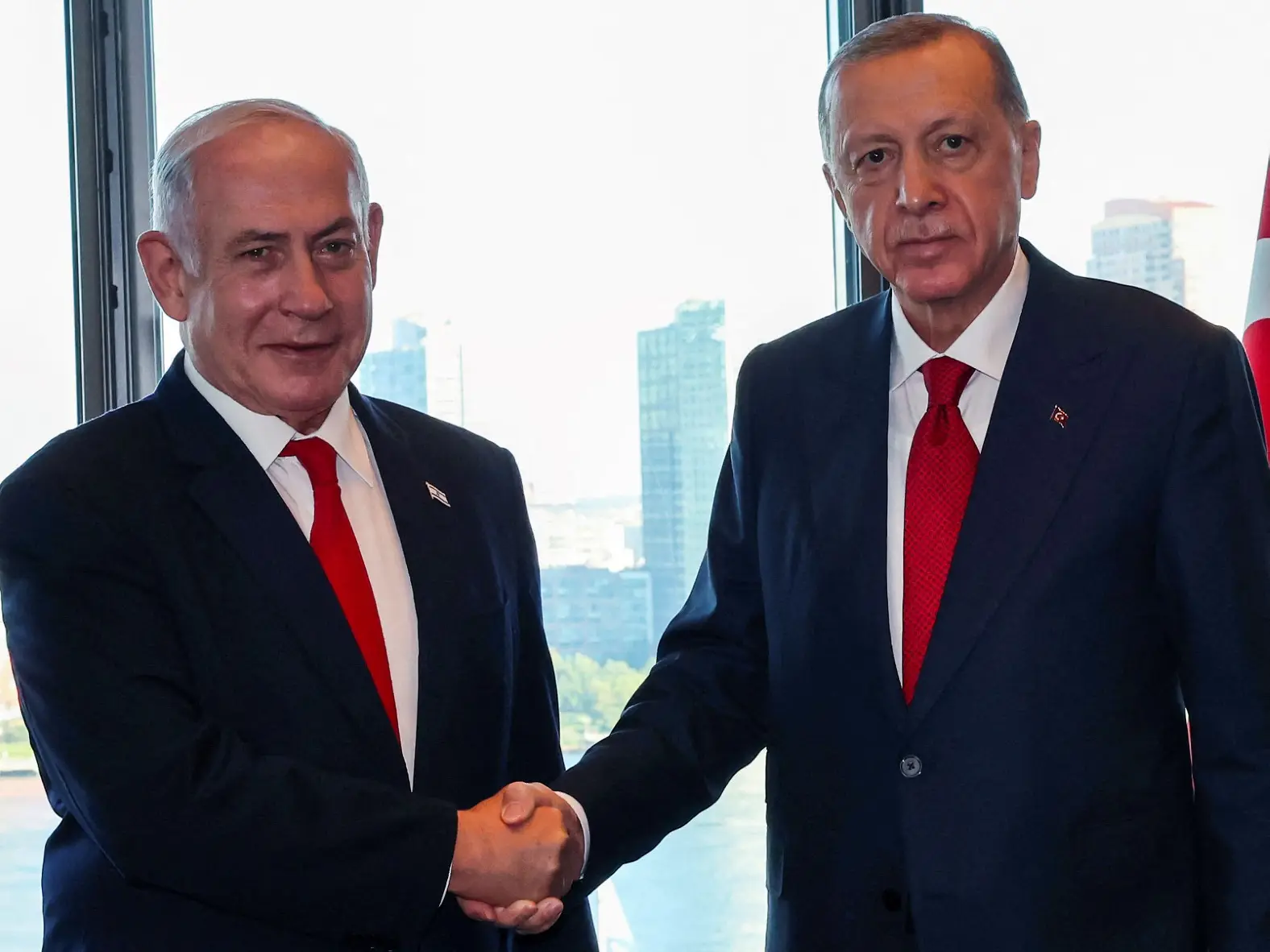
Netanyahu and Erdogan Photograph: (AFP)
Turkey and Israel face growing strategic tensions over Gaza, Syria and regional influence, raising fears of miscalculation despite US ties
Relations between Turkey and Israel have deteriorated sharply in recent years, with leaders on both sides exchanging increasingly hostile accusations and warnings. President Recep Tayyip Erdogan has described Israel as a ‘terror state’, compared Prime Minister Benjamin Netanyahu to Hitler and even raised the possibility of Turkish military intervention in Israel. Netanyahu has responded by calling Erdogan an ‘antisemitic dictator’, while Israeli officials have accused Turkey of backing terrorism and behaving like ‘an enemy state’.
The increasingly bitter rhetoric reflects a broader strategic rivalry that is spreading across the Middle East, the Horn of Africa and the Eastern Mediterranean. Analysts and officials warn that the confrontation could add another layer of instability to a region already dealing with the consequences of wars in Syria, Lebanon, Gaza and Iran. Although Turkey and Israel are both closely connected to the United States, their regional ambitions are increasingly colliding. Both possess powerful militaries and have demonstrated a growing willingness to project their influence beyond their borders.
Syria emerges as the main flashpoint
The danger became more apparent recently when Israel carried out a strike against a defunct air base in northern Syria. Israeli officials said the operation was designed to prevent the possible deployment of Turkish forces to the facility. Both Turkey and Syria denied that such a troop deployment was planned. The strike did not result in any reported deaths. Tom Barrack, the US ambassador to Turkey and special envoy to Syria and Iraq, criticised the Israeli operation on social media, describing it as an ‘unnecessary escalation’. He urged Turkey and Israel to 'prioritize logical discourse over further military incidents'.
Syria has become particularly important to the rivalry because it sits between the two countries and is central to their competing security strategies. Turkey has sought to support Syria's new government following the ouster of Bashar al-Assad in late 2024. The new administration, led by President Ahmed al-Sharaa, has received Turkish diplomatic and military backing as it attempts to stabilize the country. Israel, meanwhile, has taken a much more cautious approach toward the new Syrian leadership.
Following Assad's removal, Israeli forces destroyed large quantities of Syria's military equipment, citing concerns about the country's future security. Israel has also maintained control over territory in southern Syria, saying the move is intended to prevent threats from Islamic militants. The two countries therefore have fundamentally different visions for Syria.
Trending Stories
&im=FitAndFill=(700,400)&imwidth=280&imheight=210&format=webp&quality=medium)
&imwidth=280&imheight=210&format=webp&quality=medium)
&imwidth=280&imheight=210&format=webp&quality=medium)
&imwidth=280&imheight=210&format=webp&quality=medium)
&imwidth=280&imheight=210&format=webp&quality=medium)
&imwidth=280&imheight=210&format=webp&quality=medium)
&imwidth=280&imheight=210&format=webp&quality=medium)
&imwidth=280&imheight=210&format=webp&quality=medium)
&im=FitAndFill=(700,400)&imwidth=280&imheight=210&format=webp&quality=medium)
&imwidth=280&imheight=210&format=webp&quality=medium)
&imwidth=280&imheight=210&format=webp&quality=medium)
&imwidth=280&imheight=210&format=webp&quality=medium)
&imwidth=280&imheight=210&format=webp&quality=medium)
&imwidth=280&imheight=210&format=webp&quality=medium)
&imwidth=280&imheight=210&format=webp&quality=medium)
&imwidth=280&imheight=210&format=webp&quality=medium)
&imwidth=280&imheight=210&format=webp&quality=medium)
&imwidth=280&imheight=210&format=webp&quality=medium)
&imwidth=280&imheight=210&format=webp&quality=medium)
&imwidth=280&imheight=210&format=webp&quality=medium)
&imwidth=280&imheight=210&format=webp&quality=medium)
&imwidth=280&imheight=210&format=webp&quality=medium)
&imwidth=280&imheight=210&format=webp&quality=medium)
&imwidth=280&imheight=210&format=webp&quality=medium)
&imwidth=280&imheight=210&format=webp&quality=medium)
&imwidth=280&imheight=210&format=webp&quality=medium)
&imwidth=280&imheight=210&format=webp&quality=medium)
&im=FitAndFill=(700,400)&imwidth=280&imheight=210&format=webp&quality=medium)
&imwidth=280&imheight=210&format=webp&quality=medium)
&imwidth=280&imheight=210&format=webp&quality=medium)
&imwidth=280&imheight=210&format=webp&quality=medium)
&imwidth=280&imheight=210&format=webp&quality=medium)
&imwidth=280&imheight=210&format=webp&quality=medium)
&imwidth=280&imheight=210&format=webp&quality=medium)
&imwidth=280&imheight=210&format=webp&quality=medium)
&imwidth=280&imheight=210&format=webp&quality=medium)
Gaza changed the relationship
The war in Gaza has been another major source of tension. Israel launched its military campaign following the Hamas-led attack of Oct. 7, 2023, which killed about 1,200 people in Israel. Turkey strongly criticized Israel's military response and repeatedly accused Israeli forces of genocide. Erdogan also expressed support for Hamas, which Israel, the United States and several other governments classify as a terrorist organization. The increasingly hostile rhetoric has been accompanied by a fundamental shift in Israel's perception of Turkey. Israel now sees Turkey as an increasingly capable regional military power. Turkey has expanded its domestic defense industry, maintains troops or military operations in several countries and has increasingly used its armed forces outside its own borders.
Competing regional ambitions
The rivalry extends well beyond Syria and Gaza. In the Horn of Africa, Turkey maintains close relations with Somalia, including a significant diplomatic and military presence. Israel's decision to recognize Somaliland has therefore become another point of disagreement. Somaliland declared independence from Somalia in 1991, although its independence has not been broadly recognized internationally. Israel's recognition made it the first country to formally take that step, prompting strong opposition from Erdogan.
The Turkish president called Israel's recognition of Somaliland 'illegal and unacceptable'. The Eastern Mediterranean is another area where strategic competition is intensifying. Israel has strengthened military and energy cooperation with Greece and Cyprus, two countries that have longstanding disputes with Turkey. Erdogan sought to minimize the significance of the agreements between Israel, Greece and Cyprus, dismissing them as ‘a rattling tin can’. Turkey has also sought to strengthen its own regional partnerships. Its recent mutual defense agreement with Saudi Arabia and Pakistan has been viewed by analysts as an effort to build greater strategic weight and counterbalance Israeli influence.
A rivalry that may not become war
Despite the increasingly aggressive rhetoric, analysts do not expect Turkey and Israel to enter a direct military conflict in the immediate future. The United States has strong relationships with both countries and has an interest in preventing their rivalry from escalating into an open confrontation.
The recent Israeli strike on the Syrian air base in Abu al-Duhur, roughly 40 miles south of the Turkish border, represented a rare instance in which the rivalry moved beyond diplomatic statements and political pressure into direct military action affecting the other's strategic interests. The strike was followed by a renewed exchange of threats. On Aug. 19, the day after the attack, Netanyahu said Israel would not accept a Turkish military presence in Syria that descends south because it threatens us.
Two days later, Turkey announced that it would seek Netanyahu's arrest through Interpol over allegations including genocide and torture in connection with a domestic Turkish case concerning Israel's treatment of pro-Palestinian activists intercepted at sea while attempting to reach Gaza. US officials have since attempted to restore communication between Ankara and Jerusalem.
Political rhetoric adds to the risk
Domestic politics may further complicate efforts to reduce tensions. Public opinion in both Turkey and Israel has become increasingly negative toward the other country, giving political leaders an opportunity to gain domestic support by taking a tougher position against their rival. Yet analysts caution against dismissing the rhetoric as merely political theater. The disagreements between Ankara and Jerusalem reflect genuine differences over Syria, Gaza, Iran, regional alliances and the future balance of power in the Middle East. At the same time, the presence of the United States as a powerful intermediary could help prevent the rivalry from turning into a direct war.
For now, the central danger is therefore less the prospect of a deliberate Turkey-Israel war than the possibility of an unintended escalation. With both countries increasingly willing to use military force and defend competing visions of the region, even a limited action in Syria or elsewhere could trigger consequences neither side intended.

