US Midterms: Trump doubles down on $5,000 dividend as economists call it a 'half-baked political scheme'. Can a Republican win guarantee it?

&imwidth=600&imheight=450&format=webp&quality=medium "US Midterms: Trump doubles down on $5,000 dividend as economists call it a 'half-baked political scheme'. Can a Republican win guarantee it?")
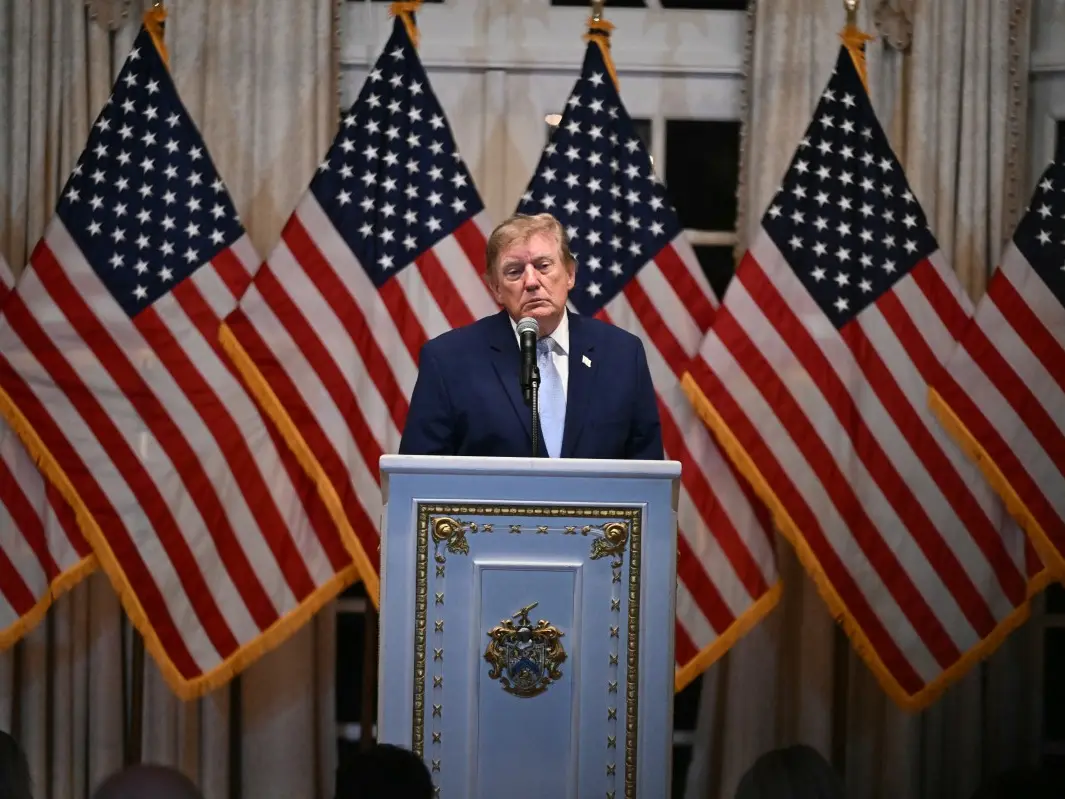
US President Donald Trump speaks during a MAGA Inc. event at his Mar-A-Lago resort in Palm Beach, Florida on October 16, 2026. Photograph: (AFP)
With the US midterms three weeks away, Trump's $5,000 'dividend' promise is back, but the $1.2 trillion price tag has economists alarmed and fiscal hawks in his own party pushing back. Voters want the cheque, yet only 21 per cent expect it. Could it become a reality or remain a promise?
The $1.2 trillion promise: Trump's $5,000 dividend, the economists, the fiscal hawks, and the voters who want the cheque but don't expect it
With less than three weeks to the November 3 midterm elections, President Donald Trump continues to tout his earlier promise of a $5,000 "Trump Dividend" for every adult American citizen, but only if Republicans keep control of both chambers of Congress. First announced at the Republican midterm convention in Dallas on September 9, the pledge comes with no funding source, no authorising mechanism and no timeline.
“If Republicans win the House of Representatives and the Senate in the 2026 Midterm Elections, I'm going to give all adult citizens in the United States of America $5,000,” Trump said in a Truth Social video post on October 3. Most recently, speaking at the Laughlin/Bullhead International Airport in Bullhead City, Arizona, during a campaign rally on Thursday (Oct 15), he reiterated his promise of a $5,000 "Trump Dividend" to adult US citizens. "The Trump dividend that you get, you’ll get it very quickly after the election," he said. By his own admission, the Trump dividend would cost America around $1.2 trillion. Is it merely a campaign promise to push Republicans over the edge and retain House control? Here's what you need to know.
Also read | 'Big items are done' but no signature: How US midterms could decide the India-US trade deal
The $1.2 trillion question
Economists say the numbers don't add up. Sending $5,000 to roughly 270 million adult US citizens would cost about $1.2 trillion, plus hundreds of billions more in interest, according to a Reuters estimate. Notably, the eligibility keeps shifting in Trump's own statements, from "every adult citizen" to "every citizen", a roughly 73 million-person, $400 billion difference in cost estimates.
Trending Stories
&imwidth=280&imheight=210&format=webp&quality=medium)
&imwidth=280&imheight=210&format=webp&quality=medium)
&imwidth=280&imheight=210&format=webp&quality=medium)
&imwidth=280&imheight=210&format=webp&quality=medium)
&imwidth=280&imheight=210&format=webp&quality=medium)
&imwidth=280&imheight=210&format=webp&quality=medium)
&imwidth=280&imheight=210&format=webp&quality=medium)
&imwidth=280&imheight=210&format=webp&quality=medium)

&imwidth=280&imheight=210&format=webp&quality=medium)
&imwidth=280&imheight=210&format=webp&quality=medium)
&imwidth=280&imheight=210&format=webp&quality=medium)
&imwidth=280&imheight=210&format=webp&quality=medium)
&imwidth=280&imheight=210&format=webp&quality=medium)
&imwidth=280&imheight=210&format=webp&quality=medium)
&im=FitAndFill=(700,400)&imwidth=280&imheight=210&format=webp&quality=medium)
&imwidth=280&imheight=210&format=webp&quality=medium)
&imwidth=280&imheight=210&format=webp&quality=medium)
&imwidth=280&imheight=210&format=webp&quality=medium)
&imwidth=280&imheight=210&format=webp&quality=medium)
&imwidth=280&imheight=210&format=webp&quality=medium)
&imwidth=280&imheight=210&format=webp&quality=medium)
&imwidth=280&imheight=210&format=webp&quality=medium)
&imwidth=280&imheight=210&format=webp&quality=medium)
&imwidth=280&imheight=210&format=webp&quality=medium)
&im=FitAndFill=(700,400)&imwidth=280&imheight=210&format=webp&quality=medium)
&imwidth=280&imheight=210&format=webp&quality=medium)
&imwidth=280&imheight=210&format=webp&quality=medium)
&im=FitAndFill=(700,400)&imwidth=280&imheight=210&format=webp&quality=medium)
&imwidth=280&imheight=210&format=webp&quality=medium)
&imwidth=280&imheight=210&format=webp&quality=medium)
&imwidth=280&imheight=210&format=webp&quality=medium)

&imwidth=280&imheight=210&format=webp&quality=medium)
Kent Smetters of the Penn Wharton Budget Model puts the figure at about $1.35 trillion, or $1.15 trillion if payments are capped at households earning $400,000, a threshold suggested by Vice President JD Vance but not officially confirmed yet. Trump himself has acknowledged the size of the bill, calling it "approximately $1 trillion".
The "bill" would add to US inflation. Smetters estimates about $400 billion would be spent within the first two quarters, adding 0.3 to 0.5 percentage points to inflation over the following four quarters.
According to an analysis issued Thursday (Oct 15) by the nonpartisan Committee for a Responsible Federal Budget, the "proposal is fiscally dangerous, economically backwards, and fundamentally unserious". Maya MacGuineas, the committee’s president, in a statement added, "It’s hard to understand how anyone could look at our current fiscal and economic situation and think we need to borrow another $1.2 trillion to send everyone cash."
In a sharp warning about America's fiscal trajectory, MacGuineas said the nation's debt has grown so large that it now equals the size of the entire US economy. Her statement comes as deficits stand at about $2 trillion a year, inflation hovers near 3.5 per cent, and the 10-year Treasury yield approaches 5 per cent. Dismissing the Trump Dividends as a "half-baked political scheme", she argued that it would make things worse on every front: blowing up the deficit, stoking inflation, and pushing the cost of borrowing even higher across the economy.
To put the scale in perspective, the national debt now stands at $40 trillion. That works out to roughly $117,446 for every taxpayer in the country, according to a tracker maintained by the Peter G. Peterson Foundation, a nonpartisan group that monitors federal spending.
Also read | US Midterms 2026: How grocery bills, cost of living are turning the Nov 3 election into a test of Trump
Fiscal hawks push back
The plan has split Trump's own party. Rep. David Schweikert of Arizona said he would "throw everything of my heart and soul" into stopping it, warning it would raise interest rates and "bring the interest rate death spiral sooner to the United States".
Senate Majority Leader John Thune has questioned whether the cheques could clear the 60-vote threshold needed to defeat a filibuster, and has said he would prefer directing any tariff revenue toward deficit reduction rather than new spending.
Others have embraced it. Ohio Senator Bernie Moreno says he is preparing legislation to formalise the dividend after November 3. Conservative economist Stephen Moore, who has advised Trump, captured the uncertainty: "You never know with Trump whether this was just kind of a rhetorical thing, or whether he really meant it."
Voters want the cheque, doubt the delivery
Americans like the idea more than they trust it. An Economist/YouGov poll found only 21 per cent of registered voters believe Trump would actually issue the cheques, while 57 per cent said he would not. Even among Republicans, less than half, 45 per cent, expect him to follow through.
The scepticism is rooted in history. Trump has promised dividends before: a $5,000 "DOGE dividend" in February 2025 that never materialised, and a $2,000 tariff-funded cheque in November 2025 that died after the Supreme Court struck down the tariffs. Even the $1,776 "Warrior Dividend" paid to service members last December was repurposed from military housing stipends, not a bonus.
Also read | 100 victory claims, 200+ days of war: Is Trump's Iran gamble turning into a midterm nightmare?
Smaller cheques, bigger stakes
In the meantime, the administration is handing out smaller payments: $90 one-time cheques to 20.8 million Medicare beneficiaries this month, and $500 "refund" cheques to about 950,000 people who bought unsubsidised Obamacare plans. A Reuters analysis, published October 1, found 71 per cent of that Obamacare money, totalling $339 million, is going to residents of 13 battleground states.
The flurry of cash offers comes as Republicans head into a campaign dominated by concerns about prices and the economy, with Trump's approval rating stuck at 33 per cent and voters favouring Democrats on cost-of-living issues by eight points.
For now, the $5,000 dividend remains a promise without a payment plan. Whether it becomes policy or joins the list of unfulfilled pledges may depend less on the voters who want the cheque and more on the fiscal hawks who would have to pay for it.

