Trump's racism? 10% drop in Indian applications to US Universities in 3 yrs

&imwidth=600&imheight=450&format=webp&quality=medium "Trump's racism? 10% drop in Indian applications to US Universities in 3 yrs")
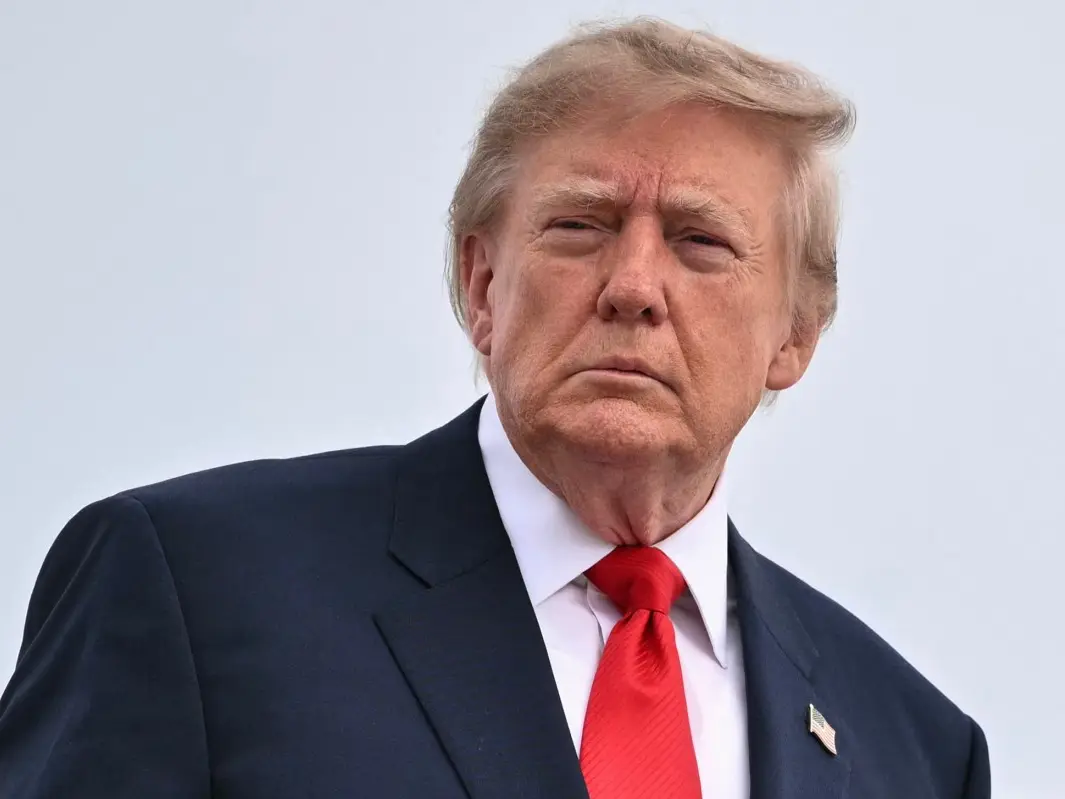
US President Donald Trump Photograph: (AFP)
According to data from College Board, there has been a rise in the number of Indian students taking the SAT, and a small number of those students are sending their applications to Indian universities that are accepting SAT score-based admission.
While the US remains the top destination for Indian students wanting to pursue Undergraduate-level courses abroad, there has been a 10 per cent decline in Indian student applications to the country between 2024-26, SAT entrance exam data shows. "Three years ago, about 80 to 85percent of Indian students' SAT scores were heading to the United States. Now in 2026, that 80 to 85percent is closer to 70 to 75 per cent. So within three years, a 10percent drop, which to us is significant," Mr Rushi Sheth, Vice President, College Board, highlighted in a conversation with this author. College Board has been conducting the SAT exam for 100years.
When this author asked Rushi about the reasons he assigned for this US-specific decline, he cited "changing geopolitical conditions." Different countries create or remove policies, which send different signals. As a result of this, families take time to reflect and re-assess, adjust accordingly, he reasoned.
Interestingly, the 2024-26 period broadly coincides with the ongoing Trump Presidency 2.0. Donald Trump and his officials and supporters have repeatedly made hostile speeches and blatantly racist public remarks against India and its people, while the policies of the Trump administration have further cemented this animosity towards India. It is widely acknowledged that hateful and racist content targeting Indians has been spreading rampantly on controversial US tech mogul Elon Musk's social media platform X(formerly Twitter). Several accounts linked with Elon Musk and Trump's MAGA political movement are known to be creating and spreading such content targeting Indians.
Queried if such a decline in Indian student applications to the US was unprecedented, College Board's VP told this author that similar trends were seen during the 2008-10 economic slowdown and the COVID-19 pandemic, both of which were major global disruptions and crises.
Asked if he saw this US-aversion among a section of Indian students as a temporary or a long-term trend, Sheth replied that he was not a politician and that he did not have a qualified opinion on future policies or geopolitical conditions. "About one generation ago, I imagine most Indian students thought of the SAT as a one-way ticket to the United States. And today, that is no longer true. The SAT is more of a global passport, and I don't think that will ever reverse," he added.
Amid decline in US applications, where are Indian students heading?
Trending Stories
&imwidth=280&imheight=210&format=webp&quality=medium)
&imwidth=280&imheight=210&format=webp&quality=medium)
&im=FitAndFill=(700,400)&imwidth=280&imheight=210&format=webp&quality=medium)
&imwidth=280&imheight=210&format=webp&quality=medium)
&imwidth=280&imheight=210&format=webp&quality=medium)
&imwidth=280&imheight=210&format=webp&quality=medium)
&imwidth=280&imheight=210&format=webp&quality=medium)
&imwidth=280&imheight=210&format=webp&quality=medium)
&imwidth=280&imheight=210&format=webp&quality=medium)
&imwidth=280&imheight=210&format=webp&quality=medium)
&imwidth=280&imheight=210&format=webp&quality=medium)
&imwidth=280&imheight=210&format=webp&quality=medium)
&imwidth=280&imheight=210&format=webp&quality=medium)
&imwidth=280&imheight=210&format=webp&quality=medium)
&imwidth=280&imheight=210&format=webp&quality=medium)
&imwidth=280&imheight=210&format=webp&quality=medium)
&imwidth=280&imheight=210&format=webp&quality=medium)
&imwidth=280&imheight=210&format=webp&quality=medium)
&imwidth=280&imheight=210&format=webp&quality=medium)
&imwidth=280&imheight=210&format=webp&quality=medium)
&imwidth=280&imheight=210&format=webp&quality=medium)
&imwidth=280&imheight=210&format=webp&quality=medium)
&imwidth=280&imheight=210&format=webp&quality=medium)
&imwidth=280&imheight=210&format=webp&quality=medium)
&imwidth=280&imheight=210&format=webp&quality=medium)
&imwidth=280&imheight=210&format=webp&quality=medium)
&im=FitAndFill=(700,400)&imwidth=280&imheight=210&format=webp&quality=medium)
&imwidth=280&imheight=210&format=webp&quality=medium)
&imwidth=280&imheight=210&format=webp&quality=medium)
&imwidth=280&imheight=210&format=webp&quality=medium)
&imwidth=280&imheight=210&format=webp&quality=medium)
&imwidth=280&imheight=210&format=webp&quality=medium)
&imwidth=280&imheight=210&format=webp&quality=medium)
Referring to the 2024-26 period, Rushi mentioned that the number of Indian students taking the SAT had risen during the period. While there has been a drop in applications going to the US, Indian students are applying in larger numbers to Universities in the UK, European Union, Canada, Singapore, among other destinations, he added.
"The one country that's really surprising us with how fast it's growing is Australia... For Indian student applications, Australia has now replaced Canada as the number two destination after the United States. Within the Group of Eight, which are some of the most selective and highly prestigious universities in Australia, six of eight universities give unconditional offers to students based on their SAT scores. That's among the reasons driving this spike in applications heading for Australia," shared Rushi.
Further, he expressed surprise to see Japan as a trending destination among Indian students. He explained that the Japanese government is welcoming talented young men and young women from India to attend university, to learn, to help build jobs that are in high demand and to enter the workforce in Japan. We are seeing more SAT scores heading to Japan than we'd ever seen historically, he said.
When asked about the growth of the SAT exam globally, he said that they are seeing huge uptake in China, India, Vietnam, Egypt, and Uzbekistan.
SAT scores are accepted in a few Indian Universities
According to data from College Board, there has been a rise in the number of Indian students taking the SAT, and a small number of those students are sending their applications to Indian universities that are accepting SAT score-based admission. "There are now 70 universities in India which are accepting the SAT score. Flame and Ashoka are among the Indian universities accepting SAT scores", Rushi added.
Asked specifically if the $111 fee for taking the SAT, plus the associated coaching charges, is affordable for a vast majority of Indian students who wish to apply to Indian universities that accept SAT, Rushi said that SAT has created some partnerships in India to give fee waivers for the SAT registration for students who can demonstrate financial need. "Generally, students who can demonstrate family income of less than 8 lakh rupees are eligible for a reduced fee waiver or a full fee waiver. Students can also access free SAT practice tests online, based on the results of which they can decide their approach towards taking the SAT," he said.
Further, he mentioned that SAT has more than 200 Test centres in India presently, compared to barely 50 metrocity-centric centres about two decades ago.
In the era of all-pervasive AI, is SAT using AI to assess students?
According to Vice President Rushi Sheth, College Board, like any company, is experimenting with AI, but SAT still very much has human design at the centre. "Being a multiple-choice test, machines can score a multiple-choice test, not only for our SAT, but just about any assessment company. With AI, we are still looking into what it can do in terms of evaluation or insights. And these are very exciting technologies. There's nothing that we have even come close to perfecting. And so we will not deploy anything to a student unless it has evidence-based research that supports the value. But we do think, hopefully, AI will allow us to deliver more value to students in terms of insights, career readiness mechanisms, or just new and novel ways of testing. So it's early for us, as I imagine it is for most people, but we're excited to experiment," he elaborated.
