Takaichi's £1.7tn spending plan sparks fears of 'Liz Truss-style' shock: How will it impact Japan, China and India?

&imwidth=600&imheight=450&format=webp&quality=medium "Takaichi's £1.7tn spending plan sparks fears of 'Liz Truss-style' shock: How will it impact Japan, China and India?")
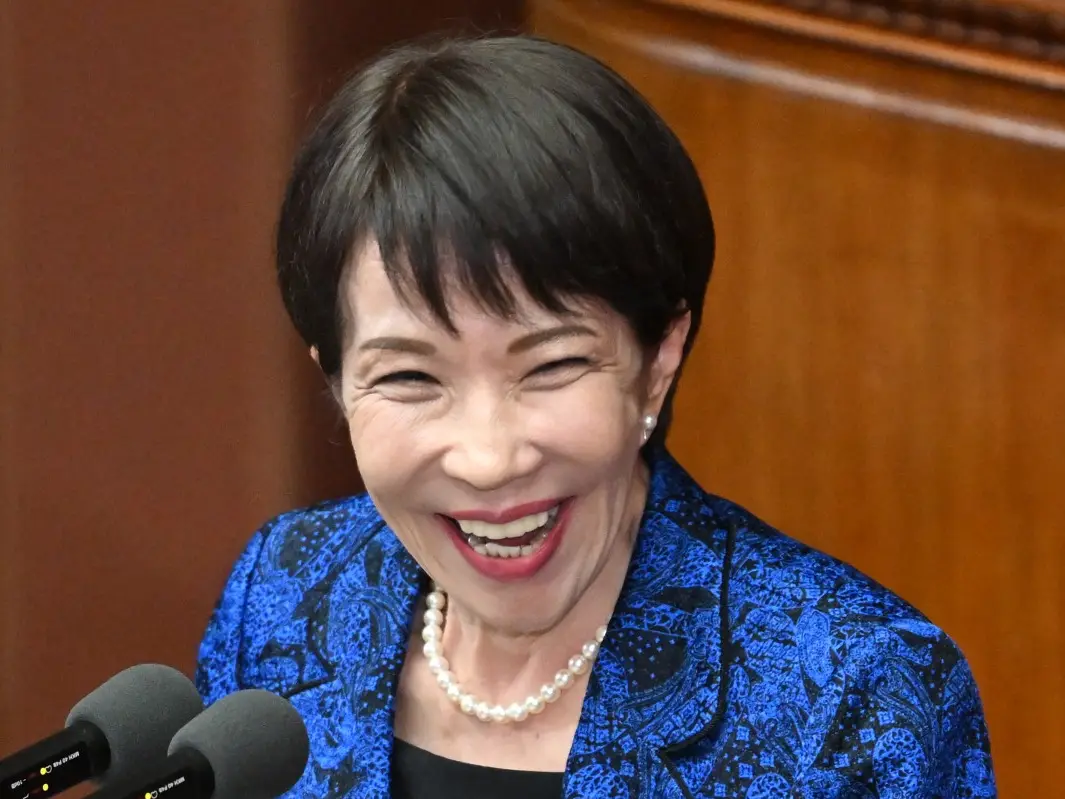
File photo of Japanese Prime Minister Sanae Takaichi. Photograph: (AFP)
Japan PM Sanae Takaichi's determination dates back to the 1991 property market collapse, when the post-export-boom prosperity of Tokyo gave way to bank failures within months.
Japanese Prime Minister Sanae Takaichi is targeting ¥370tn (£1.7tn/$2.3tn) in combined public-private investment across 17 strategic industrial sectors by 2040, covering AI, semiconductors, quantum technology and energy. Takaichi has stated that her investment plan will lift the productive capacity of the economy, keep Japan at the forefront of the AI revolution, and free the economy from its increasing dependence on trade with China.
However, Sanae Takaichi’s coalition government, along with her own party sacred that the decision could blow up the Japanese economy, similar to a Liz Truss-style economic shock. Financial markets are unsettled by the Japanese government's departure from its typically cautious approach, as it moves to rewrite budget rules for a sweeping, largely unfunded investment push.
Takaichi's determination dates back to the 1991 property market collapse, when the post-export-boom prosperity of Tokyo gave way to bank failures within months. A second banking crisis followed before the decade's end, as major financial institutions buckled under bad debt from the earlier crash.
In the late 1980s, Japan's debt-to-GDP ratio was once around 60 per cent, surging to 130 per cent by the 1990s following sector-wide bailouts. Since the 2008 global financial crisis, the economy has largely stagnated, with the government routinely spending roughly 10 per cent more than it collects in taxes, driven partly by an ageing population, pushing debt-to-GDP as high as 260 per cent by 2020. Tighter budgets have since brought that figure down to just below 230% in 2025.
Takaichi stated that her investment plan will lift the productive capacity of the economy, putting Japan ahead of the AI revolution, and providing relief to the country's economy from its increasing dependence on trade with China.
Trending Stories
&imwidth=280&imheight=210&format=webp&quality=medium)
&imwidth=280&imheight=210&format=webp&quality=medium)
&imwidth=280&imheight=210&format=webp&quality=medium)
&imwidth=280&imheight=210&format=webp&quality=medium)
&imwidth=280&imheight=210&format=webp&quality=medium)
&imwidth=280&imheight=210&format=webp&quality=medium)
&imwidth=280&imheight=210&format=webp&quality=medium)
&imwidth=280&imheight=210&format=webp&quality=medium)
&imwidth=280&imheight=210&format=webp&quality=medium)
&imwidth=280&imheight=210&format=webp&quality=medium)
&imwidth=280&imheight=210&format=webp&quality=medium)
&imwidth=280&imheight=210&format=webp&quality=medium)
&imwidth=280&imheight=210&format=webp&quality=medium)
&imwidth=280&imheight=210&format=webp&quality=medium)
&imwidth=280&imheight=210&format=webp&quality=medium)
&imwidth=280&imheight=210&format=webp&quality=medium)
&imwidth=280&imheight=210&format=webp&quality=medium)
&imwidth=280&imheight=210&format=webp&quality=medium)
&imwidth=280&imheight=210&format=webp&quality=medium)
&imwidth=280&imheight=210&format=webp&quality=medium)
&imwidth=280&imheight=210&format=webp&quality=medium)
&imwidth=280&imheight=210&format=webp&quality=medium)
&imwidth=280&imheight=210&format=webp&quality=medium)
&imwidth=280&imheight=210&format=webp&quality=medium)
&imwidth=280&imheight=210&format=webp&quality=medium)
&imwidth=280&imheight=210&format=webp&quality=medium)
&imwidth=280&imheight=210&format=webp&quality=medium)
&imwidth=280&imheight=210&format=webp&quality=medium)
&im=FitAndFill=(700,400)&imwidth=280&imheight=210&format=webp&quality=medium)
&imwidth=280&imheight=210&format=webp&quality=medium)
&imwidth=280&imheight=210&format=webp&quality=medium)
How will it impact Japan?
Takaichi's ¥370tn investment drive aims to keep Japan competitive in AI, semiconductors and advanced manufacturing; however, its unfunded nature has rattled markets, forcing JGB yields to 29-year highs, and driven the yen to a four-decade low against the dollar, raising fears of a Truss-style shock.
Ever since the proposals were unveiled in June, the stock market has experienced a succession of downward steps despite the renewal of hostilities in the Middle East and the prospect of higher oil prices, which could not help. Following the development, several investors sold up their shares almost as soon as the government arrived in office. The most affected shares were of the country's big companies, which include Sony and Toyota Motor Corporation.
Sony is grappling with fierce competition from South Korean and Chinese rivals, while Toyota, having resisted the shift to all-electric vehicles, now risks being outpaced by China's heavily subsidised auto industry. Meanwhile, both domestic and international lenders have driven Japanese government bond yields up to 2.8 per cent, their highest level in 29 years.
The yen has also taken a hit as global confidence in Japan's economic direction wavers. Takaichi's assertive fiscal stance, often likened to recklessness, much like former UK PM Liz Truss, has further weighed on the currency, dragging it down to 163 against the US dollar, a four-decade low.
Much of the rising debt burden stems from inflation, which has climbed alongside the yen's decline, as a weaker currency pushes up costs for imported energy and raw materials. While core inflation has stayed under the Bank of Japan's 2 per cent target for four straight months, analysts expect a jump into the mid-2% range last quarter, driven by higher oil prices following the Iran conflict.
Kelvin Lam of Pantheon Macroeconomics said markets are most concerned about the absence of clarity on how the new spending will be funded, warning that continued ambiguity could trigger a "Liz Truss moment." “The markets were already worried about Japan’s long-term fiscal health, and this plan hasn’t helped.” Takaichi’s conservative coalition government won last autumn with a slim majority, where it received a big boost after she called February’s snap election and gave her a two-thirds majority in the lower house.
Takaichi understands the risks surrounding her initiative, especially now that financial markets have made their doubts clear. Observers are questioning whether a manufacturing-focused strategy can succeed as China moves up the value chain, encroaching on high-tech territory long dominated by Japan, Germany, and the US.
How will it impact China and India?
At the heart of the debate is whether Japan has the means to compete with China and secure a market share substantial enough to sustain itself through the 2030s. While exports climbed 20 per cent year-on-year in June, that growth was largely offset by the yen's decline, leaving the real gain close to negligible.
For China, the plan signals Japan's intent to counter Beijing's dominance in high-tech manufacturing and reduce economic dependence on Chinese supply chains, potentially sharpening competition in semiconductors, EVs and advanced materials as both nations race up the value chain.
For India, the strategy could translate into deeper economic ties, as Japan increasingly treats India as a hedge against China. Recent visits by Takaichi have been framed as a summit about semiconductors and supply chains, as Tokyo seeks to lock India in as a trusted economic-security partner amid mounting global uncertainty. Japan Inc has already announced $12.5 billion in investment across 120 deals spanning semiconductors, AI, clean energy, mobility and manufacturing, positioning India as a key beneficiary of Japan's broader industrial recalibration.

