&imwidth=800&imheight=600&format=webp&quality=medium "Russia's MBIR nuclear research reactor to be ready by 2028; India invited to cooperate")
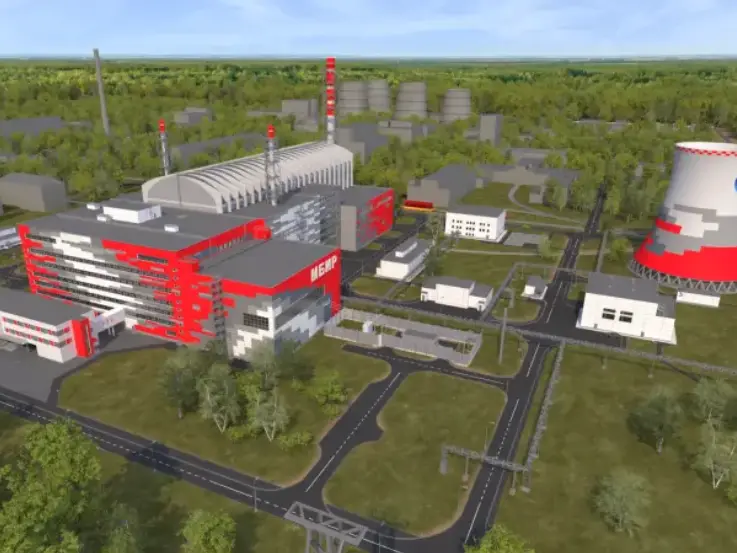
Russian Nuclear Power Agency Rosatom is constructing the MBIR(Multi-Purpose Fast Neutron Research Reactor), which is touted as the largest nuclear research reactor in the world. Being built in Dimitrovgrad at the site of the Research Institute of Atomic Reactors (RIAR, part of Rosatom’s research division), MBIR would be capable of generating 150Megawatts of thermal power and 55Megawatts of electric power, which is an exceptionally high energy output for a research reactor.
Expected to be commissioned in 2028, the MBIR reactor would become the most powerful research reactor in the world, Rosatom said. India has also been invited to join an international consortium based on the reactor and participate in multilateral research programs, added the Russian Nuclear Power Agency.
According to Rosatom, an International Research Centre (IRC), MBIR is being formed based on the MBIR reactor. MBIR will be operated by the International Research Centre (IRC), which is intended to become a global platform for applied and fundamental research. The scientific group will include Russian and foreign scientists and researchers.

The centre's activities will be carried out by the consortium "International Research Centre based on the MBIR Reactor." Russian and foreign partners gain the opportunity to conduct experiments necessary for national programs for the peaceful development of atomic energy, without the need for direct ownership of the reactor facility and corresponding obligations to ensure its safe operation, as well as control and accounting of nuclear materials. This approach allows for flexible use of the reactor resource, meeting the needs of the scientific community participants.
MBIR is a research facility with a multipurpose fast neutron reactor and metal coolant (sodium). It will provide the nuclear industry with a modern and technologically advanced research infrastructure for the next 50 years. According to Rosatom, the characteristics of the MBIR reactor will be best suited for materials science experiments, development of new technologies for the production of radioisotopes and modified materials, testing of fuel, new coolants and much more.
Trending Stories
)
1,200 Indian and US troops begin high-altitude and desert drills
)
800 million years old - Scientists discover 'fingerprints' of supercontinent Gondwana in ancient rocks
)
2,200 people donate Rs 1.5 crore for 'docile' Georgia donkey 'HeeHaw' shot dead by police officer
)
West Bengal IPS officer Bushra Bano transferred after objections to ‘Assalamualaikum’, ‘Inshallah’
)
Water equivalent to two Pacific Oceans could be stashed 2,900 km inside Earth
)
Top military commanders from US, Israel, and 7 Arab nations held secret meeting on Iran War
)
China's property crisis deepens as investment plunges nearly 20%
)
US fires up to 70 interceptors against Iran attack on Jordan, putting supplies under pressure
)
'Like a thug you are using agency to go after..': Kash Patel grilled by Senate Democrats over FBI firings, journalist investigations and hiring policy
)
Salman Khan gives The Revolutionaries a shoutout, watches series with Bhuvan Bam, Nikkhil Advani at Galaxy
&im=FitAndFill=(700,400))
New OTT releases this week (September 14-20, 2026): Lust Stories 3, Waiting Hai, Irumudi- 5 new titles coming on Netflix, Prime Video and more
)
Ex-India all-rounder Yuvraj Singh wants India to avoid 'massive changes' before ODI World Cup 2027
)
OpenAI boss Sam Altman repeats AI 'slow down' call, says world 'right to be afraid'
)
Putin-linked Russian oligarch, Melania links: Why Trump skipped his son’s Bahamas wedding bash?
)
Los Angeles helicopter crash: At least three dead, several injured; NTSB to investigate
)
Trump's name cannot return to Kennedy Center, US judge rules
)
Spanish officer sent home from NATO base over affair with 'Russian spy' | Gravitas
)
'Now Trump is copying us': Shivakumar links US $5,000 plan to Congress guarantees
)
Ed Sheeran’s US tour loses all support acts after Macklemore’s removal | Controversy explained
)
Saudi turns to Israel for intelligence help as Houthi attacks intensify: Report
)
‘Kill all in the name of...’: FBI arrests 21-year-old over alleged ISIS-inspired mass-casualty attack plot
)
India’s imports from Russia jump 57% in five months; China remains top import source
)
Bitter Zelensky snubs Trump for playing politics with Ukraine war | Gravitas
)
Ex-CIA officer caught with gold bars worth $40 million seeks plea deal | Gravitas
)
Saudi Arabia accuses Houthis of drone attack on Mecca, first-ever red alert in Islam's holiest site sparks panic
)
Messi set to play in farewell match on October 6 in Argentina vs Benin friendly
)
Space mines, lasers & robotic arms: Lt Gen Pannu decodes US disclosure of weapons in space
)
Who is Kalyan Bainsla, accused in the Gurugram hit-and-run case involving woman biker?
)
Saudi Arabia discovers 110 million tonnes of Uranium-rich ore in Madinah region
)
US Treasury yields cross 5% as Scott Bessent warns of ‘global issues’ impacting bonds
)
'Definitely feel bad for yourself': Kuldeep Yadav opens up on India Test snubs
)
India summons top Pakistan diplomat after Pak Navy ship collides with Indian warship at high seas
)
‘US military task force aiding Saudi Arabia forces with intel, planning support’: Official
)
Trump's Iran war faces fresh House rebuke; 7 Republicans join Democrats in push to end conflict ahead of midterms
)
Sydney Sweeney defends provocative ad choice, the internet is still not impressed
"We see great potential for deepening cooperation in both large power units and small modular reactors (SMRs) construction projects, as well as in non-energy areas such as nuclear medicine, isotope supply, joint research projects, additive technologies and digital solutions," said Egor Kvyatkovsky, CEO of Rosatom International Network.
At the India Energy Week in Goa, Rosatom presented a comprehensive approach to solving problems in the field of nuclear energy and showed openness to the implementation of joint research projects. The advantages of Rosatom's integrated proposal for large power units and small modular reactors (SMRs) were demonstrated, including a unique Russian technology of Floating Nuclear power plants that can be deployed in countries with long coastlines and developed island territories.