

&imwidth=800&imheight=600&format=webp&quality=medium "Playing with fire, this time over water: Desalination, the lifeline of Gulf, could be Iran war targets if better sense does not prevail")
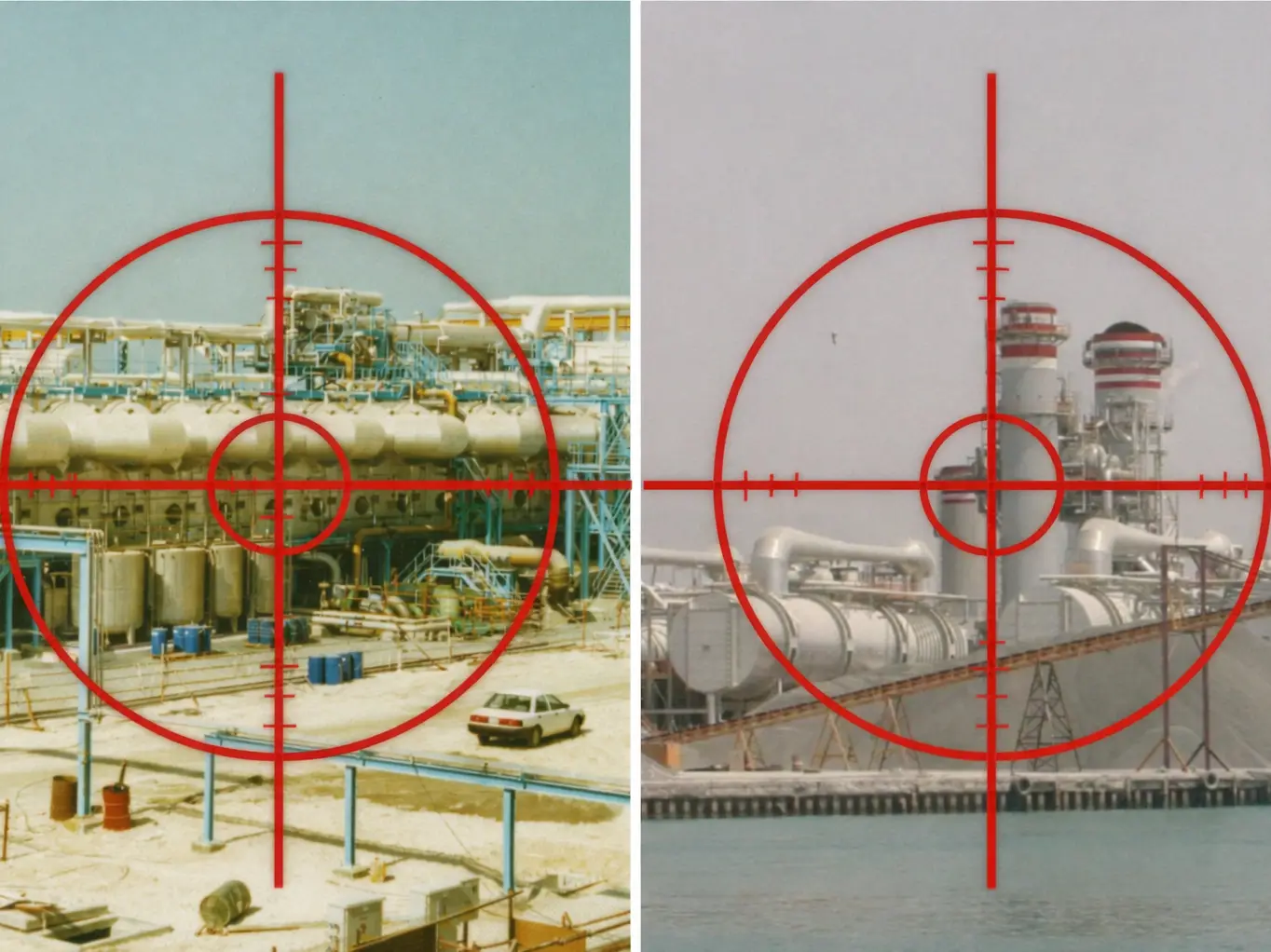
An attack on a desalination plant in Iran, and the US President Donald Trump's threats and Iranian counterthreats, are increasing the risk that water-purifying facilities could be sitting ducks in the ongoing war. For nearly a century, desalination plants, which make the salty water in the region drinkable, have been the lifeline of the Gulf region. Any attack on them would render millions of people without water. Several desalination plants are operated by European and Asian companies, once again giving a global dimension to the Iran-US-Israel war. Here is what you should know about the consequences of a water war:
Desalination is a lifeline for millions of people across the Gulf region
In a region where natural freshwater is virtually non-existent due to an arid climate, minimal rainfall and depleted aquifers, desalination is the lifeline of the Gulf region.
In the UAE, nearly 42 per cent of drinking water comes through desalination plants , and up to 90 per cent in some emirates. The percentage is around 70 per cent in Saudi Arabia. For Qatar, it is 99 per cent of municipal and drinking water. For Kuwait, it is 90 per cent and for Oman, 86 per cent.
Desalination plants also support industry and agriculture
The GCC member countries produce nearly 40 per cent of the world’s desalinated water.
Trending Stories
&im=FitAndFill=(700,400)&imwidth=180&imheight=135&format=webp&quality=medium)
Navratri 2026: 9 days, 9 forms of Goddess Durga and 9 colours- Check the complete list
&imwidth=180&imheight=135&format=webp&quality=medium)
Korean peninsula tensions escalate as North Korea launches multiple ballistic missiles, PACOM says 'no threat to US personnel'
&imwidth=180&imheight=135&format=webp&quality=medium)
Trump weighs firing Kimberly Guilfoyle as US ambassador to Greece amid misconduct allegations: Report
&imwidth=180&imheight=135&format=webp&quality=medium)
Anti-SIR protest in Mumbai: Protestors wear black masks & ribbons in Mumbai
&imwidth=180&imheight=135&format=webp&quality=medium)
UK PM Andy Birnham renews claims of Russian meddling in Brexit vote
&imwidth=180&imheight=135&format=webp&quality=medium)
BCCI rejects venue shift reports, India vs Sri Lanka 1st ODI to remain in Delhi
&imwidth=180&imheight=135&format=webp&quality=medium)
1,500 drones illuminate Mumbai sky as Cordelia Cruises unveils second ship, Cordelia Sky
&imwidth=180&imheight=135&format=webp&quality=medium)
India Rejects Pakistan-China Boundary Commission, Tells Islamabad to Drop 'Theatrics' | GRAVITAS
&imwidth=180&imheight=135&format=webp&quality=medium)
Houthis warns US of 'painful response' if Washington joins Saudi war in Yemen as airlines suspend flights to Saudi Arabia
&imwidth=180&imheight=135&format=webp&quality=medium)
Congress demands action against chief election commissioner
&imwidth=180&imheight=135&format=webp&quality=medium)
Apple HomeView smart home hub may launch soon with A18 chip, display and Siri controls: What to expect
&imwidth=180&imheight=135&format=webp&quality=medium)
'Turn approver, resign, we'll forgive you': Rahul Gandhi claims receiving messages from CEC Gyanesh Kumar
&imwidth=180&imheight=135&format=webp&quality=medium)
'I will not be silenced': Ilhan Omar alleges political intimidation after federal officers search her Washington home
&imwidth=180&imheight=135&format=webp&quality=medium)
Use AI as your ‘second brain’: Meta AI chief Alexandr Wang’s message to young people
&imwidth=180&imheight=135&format=webp&quality=medium)
Robotic surgery, advanced treatment: What is coming to this small Gujarat town?
&imwidth=180&imheight=135&format=webp&quality=medium)
US federal agents raid Dem Rep Ilhan Omar’s home ahead of midterms
&imwidth=180&imheight=135&format=webp&quality=medium)
Pakistan's government blames PTI for rise of terrorism in Khyber Pakhtunkhwa
&imwidth=180&imheight=135&format=webp&quality=medium)
‘This is just the start’: Maaya Rajeshwaran on historic ITF title, confidence boost and future goals
&im=FitAndFill=(700,400)&imwidth=180&imheight=135&format=webp&quality=medium)
How does a robot decide what to do next?
&imwidth=180&imheight=135&format=webp&quality=medium)
ICC penalises West Indies duo Powell, Rutherford for Code of Conduct breach
&imwidth=180&imheight=135&format=webp&quality=medium)
Trump says he 'may' meet North Korean leader Kim Jong Un during upcoming Asia trip
&imwidth=180&imheight=135&format=webp&quality=medium)
'Ouch!!! That must hurt': Kangana Ranaut hails Kamal Haasan's sharp reply to Elon Musk over Starlink row
&imwidth=180&imheight=135&format=webp&quality=medium)
Sidhu Moose Wala’s younger brother wins hearts by recreating late singer’s signature move at Toronto Hologram Show
&imwidth=180&imheight=135&format=webp&quality=medium)
UK school ditches technology, shifts from screen to pen and paper for learning
&imwidth=180&imheight=135&format=webp&quality=medium)
Opposition’s 10 demands in Supreme Court petition range from stay on SIR to audit of voter rolls
&imwidth=180&imheight=135&format=webp&quality=medium)
'I am thoroughly unamused': Judge slams Trump administration after 400 trees cut at Washington golf course
&imwidth=180&imheight=135&format=webp&quality=medium)
Portugal Federation confirms Cristiano Ronaldo’s return to national team despite suspension
&im=FitAndFill=(700,400)&imwidth=180&imheight=135&format=webp&quality=medium)
New OTT releases this week (October 12-18, 2026): Sacrifice, Koffee with Karan S9, Roadies Rebirth- 6 titles coming on Netflix, JioHotstar and more
&imwidth=180&imheight=135&format=webp&quality=medium)
Rishabh Pant ruled out of India A squad for New Zealand tour, Kumar Kushagra named replacement
&imwidth=180&imheight=135&format=webp&quality=medium)
India's Ajit Doval, Iran's Mohsen Rezaei hold talks amid escalating West Asia tensions, discuss 'issues of mutual interest'
&imwidth=180&imheight=135&format=webp&quality=medium)
'Almost certainly': UK Prime Minister Andy Burnham says Iran's IRGC behind RAF Fairford threat
&imwidth=180&imheight=135&format=webp&quality=medium)
Elon Musk pumps $276 million into Republican campaigns ahead of US midterm elections
Without desalination plants, major cities like Dubai, Riyadh, Doha, Kuwait City, Muscat and Basra wouldn't be able to sustain current populations.
The daily per capita demand of up to 500 litres of water relies on desalinated seawater.
Amid population booms and climate change, dependence on desalination has increased for industry, agriculture and for holy sites like Hajj in Saudi Arabia.
Sitting ducks: Attacks on desalination plants can lead to a humanitarian catastrophe
Most desalination plants in the region are highly visible and large, located along coasts.
Many are located directly across the Gulf from Iran, within easy range of its missiles and drones.
In spite of their importance, which everyone knows, careless threats are being made against desalination plants by both sides in the Iran war.
A disruption would cause an immediate humanitarian catastrophe, including dehydration and halted services.
The long-term consequences could include economic collapse and potential mass displacement.
More than 90 per cent of Gulf desalinated water comes from just 56 large plants. A single-point failure could cut supply to millions within days.
Desalination plant attacks are not new, but are rising
Already, several Iranian and Gulf desalination plants have faced direct or indirect strikes. Iran has accused the US of hitting a Qeshm Island plant along the Strait of Hormuz, disrupting water supplies for 30 villages.
Bahrain reported an Iranian drone damaging one of its plants, while at least one person died in a similar attack in Kuwait.
Damage was reported at the UAE’s Fujairah F1 and Kuwait’s Doha West from missiles, drones or debris. Iran has explicitly threatened “irreversible destruction” of Gulf water infrastructure in retaliation for any further strikes on its energy or water systems by adversaries.
This is not the first time. In the 1991 Gulf War, Iraq damaged Kuwait’s desalination plants. Houthi rebels of Yemen have targeted desalination plants of adversaries in the recent past.
The global angle: Dozens of desalination plants are maanged or operated by foreign firms
While up to 80 to 90 per cent of overall Gulf desalination infrastructure is state-owned or operated, dozens of desalination plants in the region have foreign co-ownership or are operated by foreign firms.
Leading players include ENGIE from France, which operates 13 plants across the region with 5.8 million m³/day total output.
Spain's Acciona/GS Inima operates and manages multiple plants in the UAE and Saudi Arabia.
Veolia from France, Mitsubishi and JERA from Japan, and PowerChina are also among the companies operating in the region.

