

&imwidth=800&imheight=600&format=webp&quality=medium "Philippines earthquake: With 60 seismic events a day, why is the Asian nation prone to so much shaking?")
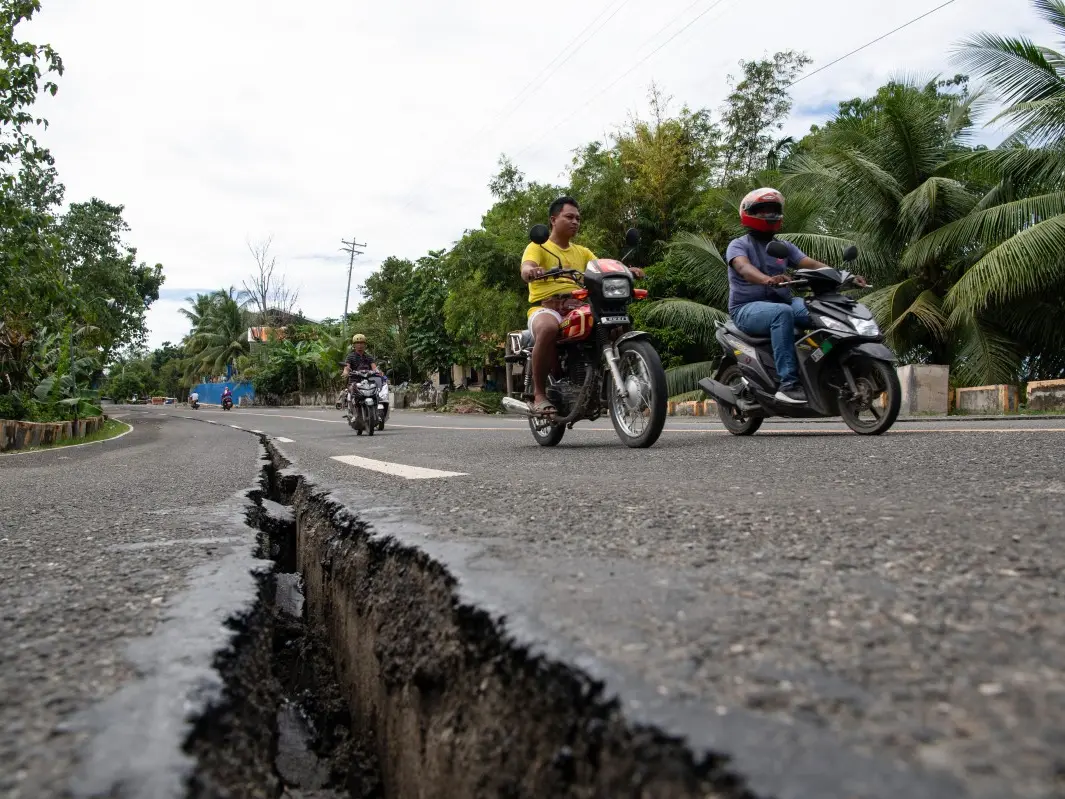
The Philippines was rocked by yet another earthquake on Wednesday (Oct 1), with at least 69 people killed in a magnitude 6.9 tremor centred near Bogo City in northern Cebu. The shallow nature of the quake, detected at a depth of around 5 to 10 kilometres, intensified the shaking felt across Central Visayas, injuring at least 150 people. A state of emergency is in place as search, rescue, and relief operations continue. Hospitals have been overwhelmed, infrastructure has suffered damage, and the power grid in parts of the Visayas region remains strained after 27 power plants tripped offline. Authorities have recorded at least 379 aftershocks following the main shock at least one of which was above magnitude 6. The Southeast Asian nation reportedly experiences an average of 60 seismic events of varying magnitudes every 24 hours. But why is the Philippines so prone to earthquakes and related damage to life and property?
Philippines ground shaking: A country in constant motion
The Philippines is located along the so-called Pacific Ring of Fire, a 40,000-kilometre horseshoe-shaped belt around the Pacific Ocean where 75 per cent of the world's earthquakes and 90 per cent of volcanoes occur. As a result, the country experiences intense seismic activity every year.
Geologically, the archipelago lies within the Philippine Mobile Belt—a tectonically complex region where the Philippine Sea Plate converges with the Eurasian Plate and the Sunda Plate. Subduction zones along the Manila Trench to the west and the Philippine Trench to the east are major sources of large, deep earthquakes and tsunamis. Meanwhile, on land, a number of active faults including the Philippine Fault Zone and the Marikina Valley Fault System generate shallow but destructive earthquakes near population centres.
Trending Stories
&imwidth=180&imheight=135&format=webp&quality=medium)
Asian Games 2026: India face Afghanistan in quarterfinal on Sep 28; Pakistan clash with Hong Kong
&imwidth=180&imheight=135&format=webp&quality=medium)
Myanmar training camp case: US national, 6 Ukrainians allowed to meet their families abroad
&imwidth=180&imheight=135&format=webp&quality=medium)
Bigg Boss 20: Salman Khan schools Rhiti Tiwari over Qazi Touqeer clash, compares her to Dolly Bindra
&imwidth=180&imheight=135&format=webp&quality=medium)
Mushtaq Khan dies at 56: When Welcome actor opened up about his salary for iconic role Ballu
&imwidth=180&imheight=135&format=webp&quality=medium)
LPU students go on rampage, vandalise campus amid widespread protest: What's happening
&imwidth=180&imheight=135&format=webp&quality=medium)
'FIRST LOOK from inside Noah’s Ark': Researchers share video from inside mysterious mound in Turkey
&imwidth=180&imheight=135&format=webp&quality=medium)
‘Attack on Mecca a red line for Pakistan’: Shehbaz Sharif warns Houthis at UN
&imwidth=180&imheight=135&format=webp&quality=medium)
Pakistan deploys over 20,000 security personnel as PTI vows march for Imran Khan's release
&imwidth=180&imheight=135&format=webp&quality=medium)
OpenAI AI Agents hacked 4 websites before Hugging Face, researchers reveal
&imwidth=180&imheight=135&format=webp&quality=medium)
'A terrorist country is asking me that question?': Jaishankar hits back at Pakistani journalist at UN; flags attacks on commercial shipping
&imwidth=180&imheight=135&format=webp&quality=medium)
Trump-Xi summit wrap: Big pageantry, Iran talks, few major developments and more meetings planned
&imwidth=180&imheight=135&format=webp&quality=medium)
Did Hitler kill his niece Geli Raubal? Newly found records reopen a 95-year-old mystery
&imwidth=180&imheight=135&format=webp&quality=medium)
Hawaii braces for Hurricane Nolo: NOAA warns of flash flooding and mudslides
&imwidth=180&imheight=135&format=webp&quality=medium)
'What kind of confession is this?': Pakistan PM Shehbaz Sharif’s 'terrorists would be roaming New York' remark goes viral, raises alarm online. Watch
&imwidth=180&imheight=135&format=webp&quality=medium)
US-Iran war: Trump rejects Iran's Hormuz proposal, reports suggest talks expected next week
&imwidth=180&imheight=135&format=webp&quality=medium)
Bollywood x K-pop crossover! LE SSERAFIM’s Kazuha charms fans with Shah Rukh Khan’s ‘Chammak Challo’ steps
&imwidth=180&imheight=135&format=webp&quality=medium)
Gaza's war turned environmental damage into second crisis
&imwidth=180&imheight=135&format=webp&quality=medium)
‘Serial practitioner of terrorism’: Jaishankar calls out Pakistan’s ‘state-sponsored’ terror at UNGA
&imwidth=180&imheight=135&format=webp&quality=medium)
‘It is all possible’: Putin weighs next steps on Ukraine talks, rules out Europe conflict
&imwidth=180&imheight=135&format=webp&quality=medium)
Prince Harry offers rare glimpse into Archie and Lilibet’s life after UK move
&imwidth=180&imheight=135&format=webp&quality=medium)
Nigeria Navy moves to boost oil security, tackle crude theft and infrastructure threats
&imwidth=180&imheight=135&format=webp&quality=medium)
Donald Trump shares image of Xi's arrival in Washington, carries signs of AI
&imwidth=180&imheight=135&format=webp&quality=medium)
Pentagon quietly adds 37 wounded troops to Iran war tally without explaining when or how
&imwidth=180&imheight=135&format=webp&quality=medium)
US court backs Pentagon's decision to exclude Anthropic over Claude AI restrictions
&imwidth=180&imheight=135&format=webp&quality=medium)
US Supreme Court backs Trump administration's use of SAVE database to check voter citizenship
&imwidth=180&imheight=135&format=webp&quality=medium)
‘Could kill billions...’: Bill Gates backs calls to slow AI development amid fears of catastrophe
&imwidth=180&imheight=135&format=webp&quality=medium)
'Countries far from conflict are penalised': Jaishankar calls for Gulf peace, seafarer safety at UN
&imwidth=180&imheight=135&format=webp&quality=medium)
WATCH | As Shehbaz Sharif claims Pakistan’s ‘victory’ during 2025 conflict, Indian diplomat R Srinivas laughs at UN
&imwidth=180&imheight=135&format=webp&quality=medium)
Outrage erupts after 3-year-old is married to 60-year-old man in Pakistan, link to her sister's murder being probed
&im=FitAndFill=(700,400)&imwidth=180&imheight=135&format=webp&quality=medium)
New Friday OTT releases (September 25, 2026): Don’t Be Shy, Hunkkaar: The Roar, Mango Pachcha- 6 movies and TV shows on Netflix, Prime Video and more
&imwidth=180&imheight=135&format=webp&quality=medium)
Global community 'absent' in Gulf crisis: Saudi at UN calls for freedom of navigation, pre war status for Hormuz
&imwidth=180&imheight=135&format=webp&quality=medium)
Farhan, who went viral for AK47 celebration vs India in Asia Cup, hopes to lead Pakistan beyond Asian Games
&imwidth=180&imheight=135&format=webp&quality=medium)
‘I rejected it’: Trump confirms turning down Iran’s proposal to reopen Hormuz, claims Tehran is losing ‘badly’
&imwidth=180&imheight=135&format=webp&quality=medium)
Russia will achieve Ukraine war aims; Europe doing everything to block peace talks: Lavrov at UN
Philippines and earthquakes: What’s rumbling beneath the ground?
The internal fault systems mentioned above pose significant risks. The Philippine Fault Zone alone stretches over 1,200 kilometres and is capable of producing magnitude 7 or higher earthquakes. In 1990, a magnitude 7.8 earthquake in Luzon, linked to this fault system, killed nearly 2,000 people. The 1976 Moro Gulf earthquake of magnitude 8.0 triggered a tsunami that killed more than 5,000 people.
In addition to interplate quakes caused by tectonic collisions, the Philippines also experiences intraplate earthquakes—those occurring away from tectonic boundaries—due to stress accumulation in the crust. These can occur in areas that appear geologically stable, which means no region can be considered entirely safe.
Philippine earthquakes in numbers: 60 seismic events per day
According to the Philippine Institute of Volcanology and Seismology (PHIVOLCS), the country experiences an average of 20 to 30 detectable earthquakes each day. During periods of heightened activity or following a major tremor, this number can exceed 60 in a 24-hour period, especially when microquakes below magnitude 2.5 are included.
In total, roughly 15,000 to 20,000 earthquakes are recorded across the Philippines each year. Of these, about 100 to 200 are strong enough to be felt, while around 800 to 900 exceed magnitude 4.0. These figures vary depending on aftershock sequences, volcanic activity, and detection thresholds.
No region is safe: How quake risk affects nearly all regions of Philippines
Almost every part of the Philippine archipelago is exposed to some level of earthquake risk. While areas such as parts of Palawan are considered relatively stable, much of the country lies near active faults or subduction zones.
Major urban areas, including Metro Manila, Cebu City, and Davao City, are built near major faults. This increases the potential for devastating impacts when a strong earthquake occurs. Secondary hazards such as tsunamis, landslides, liquefaction, and fires further increase the risks—especially for densely populated, low-lying, and coastal areas.

