Pakistan to chair UN-backed global Borrowers’ Platform as its own debt burden mounts, triggers sarcastic reactions on social media

&imwidth=600&imheight=450&format=webp&quality=medium "Pakistan to chair UN-backed global Borrowers’ Platform as its own debt burden mounts, triggers sarcastic reactions on social media")
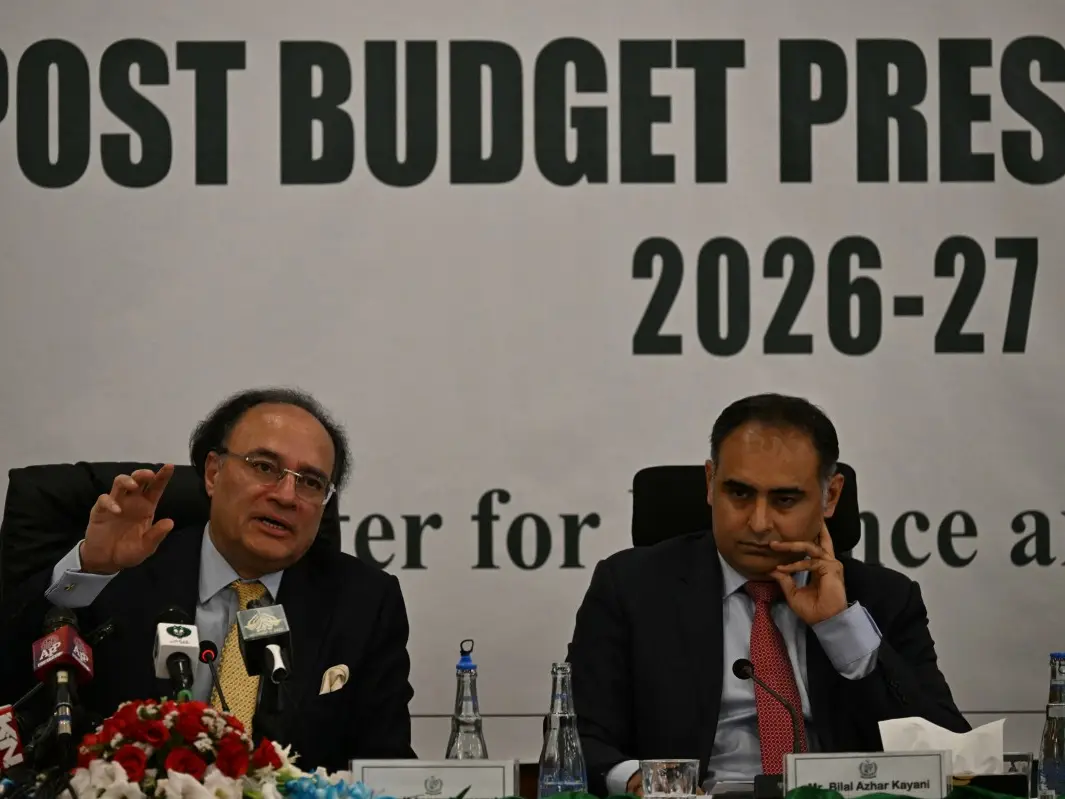
Pakistan's Finance Minister Muhammad Aurangzeb (L), Minister of State for Finance and Railways Bilal Azhar Kayani (R) address a presser a day after presenting the 2026–27 fiscal budget at the Parliament House in Islamabad Photograph: (AFP)
Pakistan takes charge of the UN-backed Borrowers’ Platform as its own debt burden, IMF obligations and external repayment pressures persist
Pakistan has taken on a new diplomatic responsibility: leading international discussions on sovereign debt. For a country that has spent years navigating borrowing pressures, IMF programmes and repayment challenges, the appointment carries considerable significance. Finance Minister Senator Muhammad Aurangzeb assumed the chairmanship of the Governing Council of the Borrowers’ Platform on behalf of Pakistan on Monday, during the World Bank Group–International Monetary Fund annual meetings in Bangkok, Thailand. The appointment was announced by Pakistan’s Finance Division on October 12.
The United Nations-backed initiative aims to help debt-burdened developing countries exchange expertise, strengthen debt-management practices and improve their participation in international discussions on development finance. However, the platform is not intended to function as a collective bargaining forum for negotiating with creditors. Pakistan’s new role places Islamabad at the centre of discussions about how developing economies can borrow responsibly, manage repayment obligations and ensure that debt financing supports long-term economic growth rather than undermining public spending.
The challenge is particularly relevant for Pakistan, which has faced persistent fiscal pressures, substantial external financing requirements and repeated negotiations with international lenders. Aurangzeb has outlined Pakistan’s priorities for the platform’s 2026–27 work plan, including improving debt-management practices, sharing experiences of economic reforms and exploring innovative financing instruments for development. He has emphasised that debt should remain a tool for economic progress rather than become an obstacle to it.
The platform’s Governing Council, its highest political and decision-making body, held its first meeting on October 12 in Bangkok, bringing together finance ministers, central bank governors and senior officials from developing countries. Launched in April 2026 with support from United Nations Secretary-General António Guterres, the initiative has attracted 31 formal members, according to the information provided. UN Trade and Development, known as UNCTAD, serves as its secretariat. Guterres has described the economic conditions confronting developing countries as a ‘perfect storm’, pointing to geopolitical conflicts, trade disruptions, climate pressures, inadequate financing and mounting debt-servicing obligations.
Pakistan’s long-running debt dilemma
Trending Stories
&imwidth=280&imheight=210&format=webp&quality=medium)
&imwidth=280&imheight=210&format=webp&quality=medium)
&imwidth=280&imheight=210&format=webp&quality=medium)
&imwidth=280&imheight=210&format=webp&quality=medium)
&im=FitAndFill=(700,400)&imwidth=280&imheight=210&format=webp&quality=medium)
&imwidth=280&imheight=210&format=webp&quality=medium)
&imwidth=280&imheight=210&format=webp&quality=medium)
&imwidth=280&imheight=210&format=webp&quality=medium)
&imwidth=280&imheight=210&format=webp&quality=medium)
&imwidth=280&imheight=210&format=webp&quality=medium)
&imwidth=280&imheight=210&format=webp&quality=medium)
&imwidth=280&imheight=210&format=webp&quality=medium)
&imwidth=280&imheight=210&format=webp&quality=medium)
&imwidth=280&imheight=210&format=webp&quality=medium)
&imwidth=280&imheight=210&format=webp&quality=medium)
&im=FitAndFill=(700,400)&imwidth=280&imheight=210&format=webp&quality=medium)
&imwidth=280&imheight=210&format=webp&quality=medium)
&imwidth=280&imheight=210&format=webp&quality=medium)
&imwidth=280&imheight=210&format=webp&quality=medium)
&im=FitAndFill=(700,400)&imwidth=280&imheight=210&format=webp&quality=medium)
&imwidth=280&imheight=210&format=webp&quality=medium)
&imwidth=280&imheight=210&format=webp&quality=medium)
&imwidth=280&imheight=210&format=webp&quality=medium)
&imwidth=280&imheight=210&format=webp&quality=medium)
&imwidth=280&imheight=210&format=webp&quality=medium)
&imwidth=280&imheight=210&format=webp&quality=medium)
&imwidth=280&imheight=210&format=webp&quality=medium)
&imwidth=280&imheight=210&format=webp&quality=medium)
&imwidth=280&imheight=210&format=webp&quality=medium)
&imwidth=280&imheight=210&format=webp&quality=medium)
&im=FitAndFill=(700,400)&imwidth=280&imheight=210&format=webp&quality=medium)
&imwidth=280&imheight=210&format=webp&quality=medium)
&imwidth=280&imheight=210&format=webp&quality=medium)
&imwidth=280&imheight=210&format=webp&quality=medium)
&imwidth=280&imheight=210&format=webp&quality=medium)
Pakistan’s debt trajectory over the past two decades illustrates the difficulties of balancing government spending, economic development and external financing requirements. During the Pakistan Peoples Party government from 2008 to 2013, the country’s reported national debt increased from approximately PKR 6.4 trillion to PKR 15.1 trillion. Under Nawaz Sharif, who took office following the 2013 general election, Pakistan’s external debt rose from $52.4 billion to $75.3 billion over five years. Financing requirements associated with the China-Pakistan Economic Corridor, alongside other economic obligations, formed part of the broader borrowing picture.
During Imran Khan’s tenure, which started after the 2018 election, external debt increased further, from $75.3 billion to $110.6 billion, according to the figures cited in the original account. These developments unfolded under different administrations and reflected a combination of government financing needs, infrastructure investment, economic pressures and external vulnerabilities. China subsequently emerged as Pakistan’s largest bilateral creditor. An IMF report placed Chinese lending at approximately 30 per cent of Pakistan’s foreign debt in 2022. Chinese financing has provided Islamabad with an important source of funding for infrastructure and other economic requirements. At the same time, the scale of the relationship has highlighted the importance of managing repayments, securing foreign currency and maintaining adequate external reserves.
The 2023 economic crisis exposed Pak’s vulnerabilities
Pakistan’s financial pressures became particularly acute during the economic crisis of 2023. Declining foreign exchange reserves, a sharply weakening rupee and soaring inflation intensified concerns about the country’s capacity to meet its financial obligations. The government sought assistance from the International Monetary Fund while negotiating additional financial support from friendly countries, including China, Saudi Arabia and the United Arab Emirates. The crisis also exposed the domestic consequences of fiscal adjustment. Higher taxes, rising living costs and substantial debt-servicing expenses placed additional pressure on households as policymakers attempted to stabilise the economy.
China’s loan rollovers offer relief, but repayments remain a challenge
In June 2025, China rolled over $3.4 billion in commercial loans to Pakistan, including a $2.1 billion deposit with the State Bank of Pakistan and the refinancing of a $1.3 billion commercial loan that had already been repaid, according to a report citing a source in Pakistan’s Finance Ministry. The rollover helped Islamabad meet an IMF requirement to maintain foreign exchange reserves above $14 billion by June 30, 2025.
However, such arrangements also demonstrate the continuing importance of refinancing in Pakistan’s external financial strategy. Rolling over loans can provide breathing room, but it does not necessarily reduce the principal owed. According to the figures cited in the original account, Pakistan’s total external debt and liabilities stand at approximately $138.8 billion, including $92.2 billion in external public debt owed directly by the government. These obligations involve multilateral institutions, including the World Bank, the Asian Development Bank and the IMF, as well as bilateral partners, particularly China, followed by Saudi Arabia.
Pakistan repaid $4.46 billion in external debt principal during the 2026 fiscal cycle. Its annual external debt-servicing obligations are estimated at between $21.5 billion and $23 billion. Around $12 billion of those obligations reportedly comprise deposits from friendly countries, including Saudi Arabia, China and the UAE, which are generally rolled over rather than repaid in cash. Pakistan has also fully repaid its $3.45 billion deposit debt to the UAE, according to the figures cited in the original account.
What Pakistan’s Borrowers’ Platform presidency means
Pakistan’s new position provides an opportunity to help shape discussions about the challenges facing developing economies with substantial borrowing requirements. The platform’s priorities include improving debt-management systems, sharing lessons from economic reforms and exploring financing mechanisms that can support development without creating unsustainable repayment pressures. However, the chairmanship does not itself provide new funding, cancel existing liabilities or change Pakistan’s obligations under its IMF programme. Its stated purpose is cooperation, knowledge-sharing and technical assistance rather than collective negotiations with creditors.
Pakistanis react with sarcasm
The announcement prompted a wave of sarcastic reactions on social media, with some Pakistanis questioning the significance of the new responsibility given the country’s own debt difficulties. Khurram Mushtaq, the former chairman of MEPCO, the government-owned Multan Electric Power Company, commented on X, “Well, at least we got the presidency out of this excuse.” Former Sindh governor Mohammad Zubair offered a shorter response, “Wow, what an honour.”

