

&imwidth=800&imheight=600&format=webp&quality=medium "Pakistan-Afghan Taliban clashes erupt again in Khyber Pakhtunkhwa: Why are these neighbours exchanging deadliest fire in years")
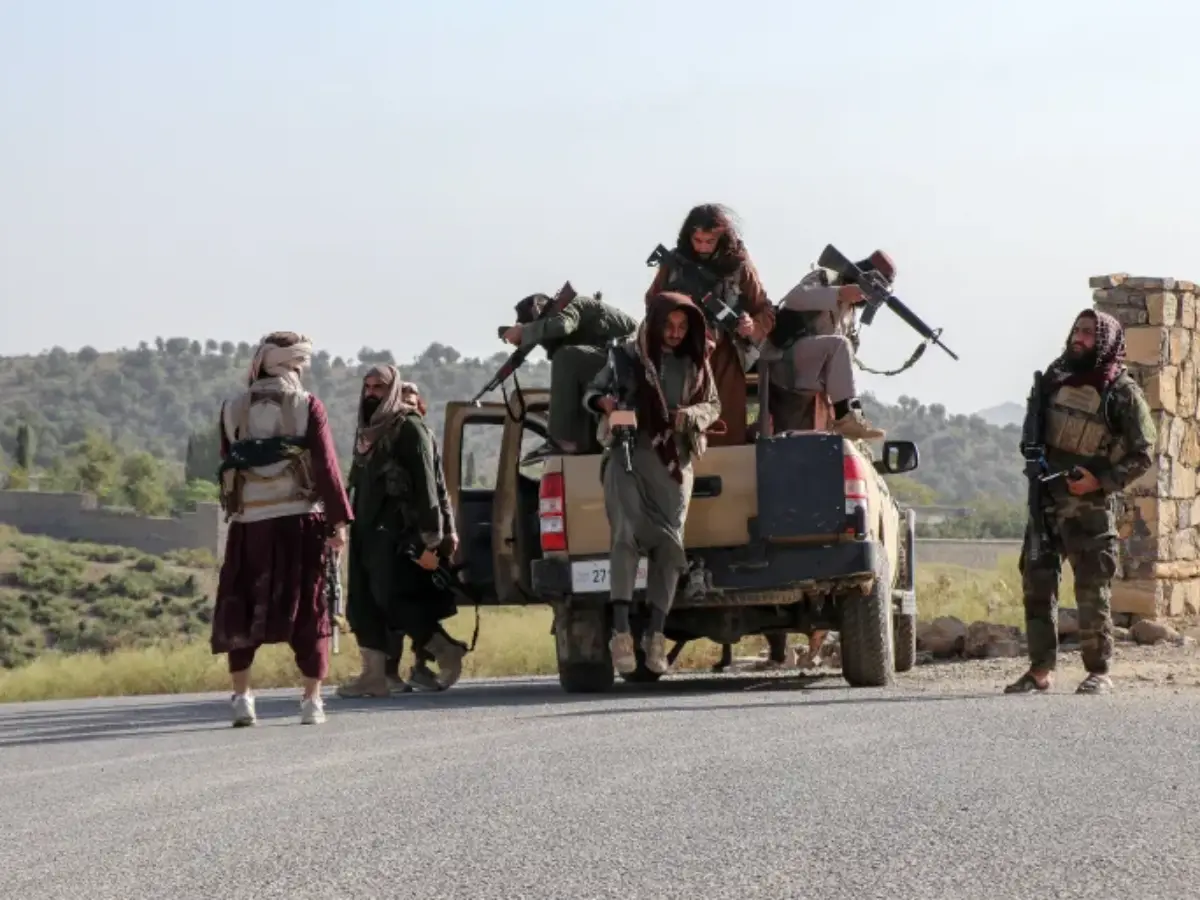
In a major escalation on Tuesday night (Oct 14-15), clashes once again broke out between Pakistani security forces and the Afghan Taliban along the border in Kurram district of Khyber Pakhtunkhwa. Pakistani state media accused Afghan troops of starting “unprovoked” gunfire, which Pakistani forces said they successfully pushed back, damaging Afghan tanks and military positions. A deputy police spokesperson from Afghanistan’s Khost province confirmed the fighting but did not provide further details. Reports suggested that a senior Fitna al-Khawarij commander was killed.
Read More | Afghan foreign minister Amir Khan Muttaqi invites Indian investors to invest in Afghanistan
This incident marks the second firing exchange within a week along the extensive Afghanistan-Pakistan border. According to Pakistan’s official media, Afghan troops and Pakistani Taliban militants jointly attacked a Pakistani post without provocation, leading to a strong Pakistani military response in Kurram district, Khyber Pakhtunkhwa province. Pakistani officials also said their forces destroyed a large Pakistani Taliban training camp during these operations.
Despite no immediate statement from Pakistan’s military, tensions have been high since Saturday, when several border regions saw fighting that resulted in numerous casualties on both sides. After mediation by Qatar and Saudi Arabia, the Taliban halted its military operations around midnight.
Read more | Afghan FM Muttaqi blames ‘technical issue’ for not inviting women journos; holds second presser with women
Trending Stories
&imwidth=180&imheight=135&format=webp&quality=medium)
Premier League: Haaland wants Manchester City to 'try to enjoy the situation and win the game'
&imwidth=180&imheight=135&format=webp&quality=medium)
'Nidal Hasan's firing-squad execution to be livestreamed', says Pentagon; first US military execution since 1961
&imwidth=180&imheight=135&format=webp&quality=medium)
Trump's naked 23-karat gold statue unveiled near European Parliament
&imwidth=180&imheight=135&format=webp&quality=medium)
‘Never-ending flow of cheap labour’: JD Vance hits back at Indian-origin Congresswoman over US green card curbs for major tech companies
&imwidth=180&imheight=135&format=webp&quality=medium)
Thai Actors Fourth Nattawat, Gemini Norawit face racism accusations from Indian fans over viral Bollywood act
&imwidth=180&imheight=135&format=webp&quality=medium)
Nigeria govt rolls out 30-day NNPC petrol discount, insists it is not a subsidy
&im=FitAndFill=(700,400)&imwidth=180&imheight=135&format=webp&quality=medium)
Fastest-growing Asian economies in 2026: Who tops the chart? Where does India rank?
&imwidth=180&imheight=135&format=webp&quality=medium)
A Love Other Than Yours: The temptation to cheat and what pushes people over the edge
&imwidth=180&imheight=135&format=webp&quality=medium)
Russia president Putin promises to 'do everything' to help settle Middle East conflict as US-Iran negotiations stall
&imwidth=180&imheight=135&format=webp&quality=medium)
‘Wait till you discover the other guy’: Rahul Gandhi takes a swipe as Musk's 'Ambani real boss of India' remark triggers X subscription cancellations
&imwidth=180&imheight=135&format=webp&quality=medium)
BTS agency HYBE announces first-ever Weverse Con Festival in India
&imwidth=180&imheight=135&format=webp&quality=medium)
Trump has a new 'enemy': Anyone who calls it 'artificial intelligence'. Here's what we wants instead
&imwidth=180&imheight=135&format=webp&quality=medium)
India at UN: Pak allows terror groups to operate from its soil
&imwidth=180&imheight=135&format=webp&quality=medium)
Air India, Air India Express increase fuel surcharge on domestic, international flights amid rising ATF costs
&imwidth=180&imheight=135&format=webp&quality=medium)
'Something truly catastrophic will happen': Former OpenAI researchers sound the alarm, claim they were fired for prioritising AI safety
&imwidth=180&imheight=135&format=webp&quality=medium)
Scientists find highly radioactive nuclear particles at Chernobyl 40 years after the disaster
&imwidth=180&imheight=135&format=webp&quality=medium)
Nana Patekar's #MeToo controversy: From Tanushree Dutta’s allegations to court ruling
&imwidth=180&imheight=135&format=webp&quality=medium)
Pakistan denies reports of PAF jets being used in attacks against Iran-backed Houthis in Yemen
&imwidth=180&imheight=135&format=webp&quality=medium)
New York ICE shooting sparks protests as Mamdani to call on Trump to halt ICE operations
&imwidth=180&imheight=135&format=webp&quality=medium)
Atlantic hurricane Isaias could make landfall as a strong Category 2 storm, tornado warnings issued
&im=FitAndFill=(700,400)&imwidth=180&imheight=135&format=webp&quality=medium)
From Kramatorsk buses to Yandex fire: Russia-Ukraine war in the last 48 hours
&imwidth=180&imheight=135&format=webp&quality=medium)
AUS vs SA: 'That's fine,' says Cummins on Khawaja's book contents about Sandpapergate
&imwidth=180&imheight=135&format=webp&quality=medium)
Who is Nana Patekar's wife Neelakanti? The bank officer who earned Rs 2,500 when he earned Rs 50
&imwidth=180&imheight=135&format=webp&quality=medium)
KATSEYE’s Sophia Laforteza to return in 2027 after hiatus, agency issues statement
&imwidth=180&imheight=135&format=webp&quality=medium)
French students light European bonfire, protests erupt in Belgium, Italy & Greece | Gravitas
&imwidth=180&imheight=135&format=webp&quality=medium)
France student protests: Over 500 arrested, govt promises 3,000 substitute teachers
&imwidth=180&imheight=135&format=webp&quality=medium)
Arizona congressional candidate claims she was sexually assaulted while repairing signs
&imwidth=180&imheight=135&format=webp&quality=medium)
New Cold War: Why is China buying more gold? Explained
&imwidth=180&imheight=135&format=webp&quality=medium)
OpenAI shuts down Russian, Iranian influence operations using ChatGPT to spread propaganda
&imwidth=180&imheight=135&format=webp&quality=medium)
'Understood consequences of a few mistakes': Ishan Kishan reflects on journey back to India team
&im=FitAndFill=(700,400)&imwidth=180&imheight=135&format=webp&quality=medium)
435 House seats, 35 Senate races: The numbers behind US midterms 2026
&imwidth=180&imheight=135&format=webp&quality=medium)
Zendaya gives The Odyssey white lace jacket a stylish twist at Paris Fashion Week 2026
&imwidth=180&imheight=135&format=webp&quality=medium)
SC asks Centre to frame mechanism against unethical pharma marketing practices
&imwidth=180&imheight=135&format=webp&quality=medium)
US suspends Microsoft, Infosys, Tata, Wipro from green card programme over alleged H-1B abuse
&imwidth=180&imheight=135&format=webp&quality=medium)
Man prays to Satan at an Iowa city council, pastor rushes to 'reverse the curse'
&imwidth=180&imheight=135&format=webp&quality=medium)
Trump honours Microsoft CEO Satya Nadella with top technology honour amid immigration scrutiny
&imwidth=180&imheight=135&format=webp&quality=medium)
Flydubai flight attack: Indian pilot Smit Machchhar to receive Israel's highest civilian bravery award for saving 174 lives
Meanwhile, Both sides reported very different casualty figures. Kabul claimed it killed 58 Pakistani soldiers in retaliation for repeated border violations, while Pakistan reported fewer losses and claimed heavy casualties suffered by Taliban-linked militants. Islamabad maintains it targets Tehreek-e-Taliban Pakistan (TTP) hideouts, accusing Kabul of sheltering the group, a charge denied by the Afghan government, which says it does not allow its territory to be used against other nations.
Why are these neighbours exchanging deadliest fire in years
Pakistan and Afghanistan share a long, complicated history shaped by their rugged 1,600-mile border, known as the Durand Line, which has been a source of frequent clashes. Pakistan supported the Taliban during their insurgency against the Afghan government in the early 2000s, aiming to influence the region’s political landscape. But, historically, Pakistan has blamed the Afghan Taliban government for harbouring the Tehrik-i-Taliban Pakistan (TTP), a militant group blamed for many attacks inside Pakistan. Since the Taliban’s takeover of Kabul in 2021, violence in Pakistan has increased, heightening tensions between the two neighbours. The return of the Tehrik-i-Taliban Pakistan (TTP) intensified violence, with hundreds of attacks targeting Pakistani forces. In response to recent assaults, Pakistan closed major border crossings and made clear it will not tolerate Afghan soil being used for attacks.
Adding to the complexity is the “India factor.” Pakistan sees India as a rival vying for influence in Afghanistan, especially after the Taliban’s foreign minister visited India and New Delhi announced plans to reopen its embassy in Kabul. This development heightens Pakistan’s security concerns on both its eastern and western borders.

