OpenAI CEO testifies before US Congress, calls regulation of artificial intelligence ‘critical’

OpenAI CEO
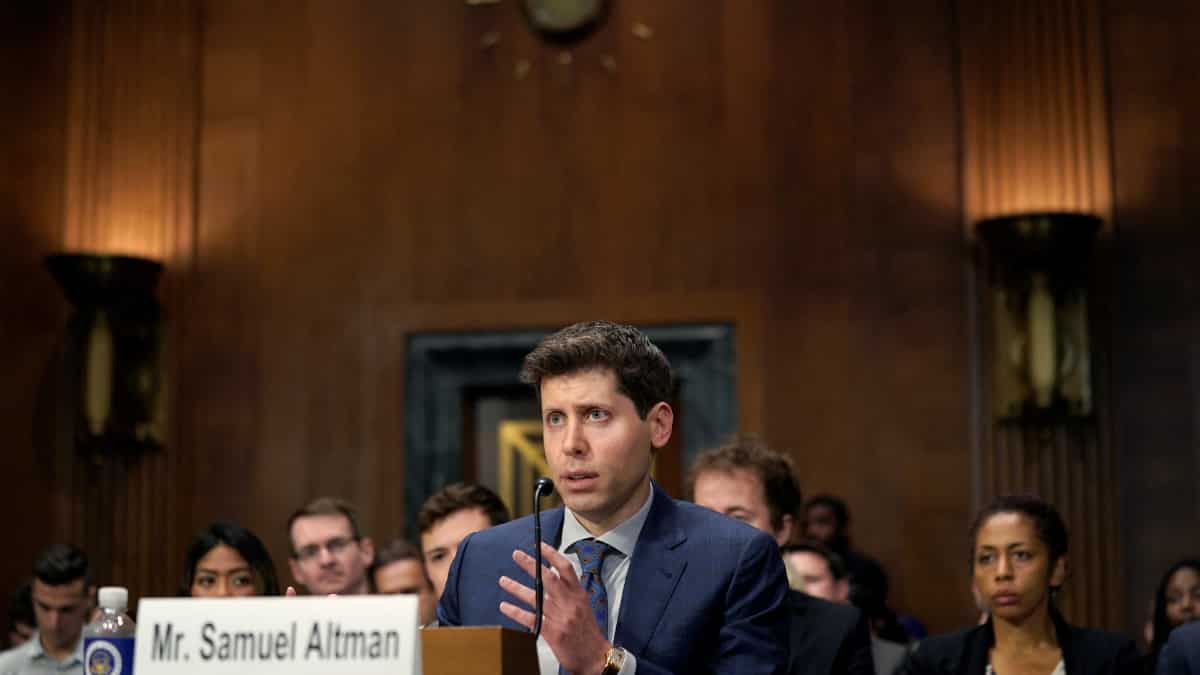
The chief executive of OpenAI, the startup which created ChatGPT, Sam Altman, addressed a panel of United States lawmakers, on Tuesday (May 16), and said that regulation of the “increasingly powerful models” of artificial intelligence is “critical” to mitigate the risks the technology poses. Altman also spoke about how the use of AI to interfere with election integrity is a “significant area of concern”.
Altman’s warnings and concerns over AI
“OpenAI was founded on the belief that artificial intelligence has the potential to improve nearly every aspect of our lives, but also that it creates serious risks,” said Altman while addressing a Senate judiciary subcommittee hearing.

This comes as many companies across the board from companies large and small have raced to bring increasingly sophisticated models of AI to market, which has raised concerns among critics and industry experts who have warned about how the technology can exacerbate societal harms including factors like misinformation and prejudice.
ALSO WATCH |Gravitas: How Italy is tackling the AI threat
While expressing concerns Altman also spoke about how AI is also beneficial to society and said that in time, generative AI developed by OpenAI will “address some of humanity’s biggest challenges, like climate change and curing cancer.”
&imwidth=180&imheight=135&format=webp&quality=medium)
'Baseless and misconceived': India issues statement after Elon Musk's 'oligarchs' claim over Starlink delay
&imwidth=180&imheight=135&format=webp&quality=medium)
‘You earned that love’: Messi’s wife shares heartfelt message as football icon bids farewell to international stage
&imwidth=180&imheight=135&format=webp&quality=medium)
‘Team first and team ahead’: India coach Gambhir pens heartfelt wish for chief selector Ajit Agarkar
&imwidth=180&imheight=135&format=webp&quality=medium)
BJP chief Nitin Nabin calls Rahul Gandhi ‘anarchist’, says Oppn ‘spreading poison’ in society
&imwidth=180&imheight=135&format=webp&quality=medium)
Trump's naked 23-karat gold statue unveiled near European Parliament
&imwidth=180&imheight=135&format=webp&quality=medium)
Nana Patekar: Remembering a legend of the Indian cinema
&imwidth=180&imheight=135&format=webp&quality=medium)
Thai Actors Fourth Nattawat, Gemini Norawit face racism accusations from Indian fans over viral Bollywood act
&imwidth=180&imheight=135&format=webp&quality=medium)
Captain Smit Machchhar on feet again, walks 10 steps as recovery continues after Flydubai flight attack
&imwidth=180&imheight=135&format=webp&quality=medium)
Ronaldo sends 'a hug' after Messi says he misses 'wearing the blue and white'
&imwidth=180&imheight=135&format=webp&quality=medium)
Trump distances himself from senior political advisers over work for pro-Russian government
&imwidth=180&imheight=135&format=webp&quality=medium)
A Love Other Than Yours: The temptation to cheat and what pushes people over the edge
&imwidth=180&imheight=135&format=webp&quality=medium)
Narendra Modi Stadium bomb threat declared hoax; India & Australia U19 squads safe
&imwidth=180&imheight=135&format=webp&quality=medium)
US midterms 2026: Why the Latino vote could shape control of Congress
&imwidth=180&imheight=135&format=webp&quality=medium)
BTS agency HYBE announces first-ever Weverse Con Festival in India
&imwidth=180&imheight=135&format=webp&quality=medium)
US Midterms 2026: Barack Obama hits campaign trail to boost Democratic candidates
&imwidth=180&imheight=135&format=webp&quality=medium)
Shia LaBeouf and Mia Goth head for divorce after nearly 10 years
&imwidth=180&imheight=135&format=webp&quality=medium)
Who is DogeDesigner? All we know about the X account that sparked India-Musk-Starlink ‘oligarchs’ controversy
&imwidth=180&imheight=135&format=webp&quality=medium)
Nicolas Maduro, wife likely to face new charges over alleged torture of US citizens: Report
&imwidth=180&imheight=135&format=webp&quality=medium)
Christa Pike wakes after failed execution, asks 'Where am I and who are you?'
&imwidth=180&imheight=135&format=webp&quality=medium)
Christa Pike 'angry' and 'confused' after failed execution; judge orders to preserve evidence
&imwidth=180&imheight=135&format=webp&quality=medium)
Nigerian President Bola Ahmed Tinubu hails Modi’s 25-year leadership milestone, calls for deeper Nigeria-India strategic ties
&im=FitAndFill=(700,400)&imwidth=180&imheight=135&format=webp&quality=medium)
US midterms 2026: 10 leaders and candidates to watch in the battle for Congress
&imwidth=180&imheight=135&format=webp&quality=medium)
Nana Patekar's #MeToo controversy: From Tanushree Dutta’s allegations to court ruling
&imwidth=180&imheight=135&format=webp&quality=medium)
Atlantic hurricane Isaias could make landfall as a strong Category 2 storm, tornado warnings issued
&imwidth=180&imheight=135&format=webp&quality=medium)
Veteran actor Nana Patekar dies at 75 after suffering cardiac arrest
&imwidth=180&imheight=135&format=webp&quality=medium)
Musk alleges ‘oligarchs’ blocking Starlink in India, here is what we know so far
&imwidth=180&imheight=135&format=webp&quality=medium)
Lightning strikes IndiGo Patna-Lucknow flight at 17,000 feet, damages nose; all 110 safe
&imwidth=180&imheight=135&format=webp&quality=medium)
Mall of America attack: FBI arrests man over alleged ISIS-inspired mass shooting plot with AK-47 and 200 rounds
&imwidth=180&imheight=135&format=webp&quality=medium)
France holds talks with Taliban government amid diplomatic outreach
&imwidth=180&imheight=135&format=webp&quality=medium)
IndiGo flight struck by lightning at 17,000 feet, nose of Patna-Lucknow flight damaged
&imwidth=180&imheight=135&format=webp&quality=medium)
US readying to strike Iran? Report suggests Trump preparing to put on show of strength ahead of US midterms
&im=FitAndFill=(700,400)&imwidth=180&imheight=135&format=webp&quality=medium)
World’s top vehicle producers: Top 10 countries making the most cars. Check where India stands
&imwidth=180&imheight=135&format=webp&quality=medium)
Trump to honour Elon Musk, Sergey Brin and Jensen Huang with top science honour at White House. Check the full list here
&imwidth=180&imheight=135&format=webp&quality=medium)
'We don't think so': Trump says Russian plague lab worker's death not linked to bio-weapon
&imwidth=180&imheight=135&format=webp&quality=medium)
Sri Lankan Tamil worker gets death sentence in Saudi Arabia over blasphemy, calls for pardon intensify
&imwidth=180&imheight=135&format=webp&quality=medium)
France protests: How a Gen Z school movement turned into a political war | The Verdict
However, given the risks of the technology, “we think that regulatory intervention by governments will be critical to mitigate the risks of increasingly powerful models,” said the CEO of OpenAI.
What did the Senators say?
Notably, the session opened with Subcommittee Chairman Senator Richard Blumenthal, Connecticut Democrat, playing a recording of a rather convincing AI version of himself reading out remarks crafted by ChatGPT. Blumenthal chairs the Senate Judiciary Committee’s subcommittee on privacy, technology and the law.
ALSO READ |World Health Organization issues warning, says AI in healthcare poses risks, could be misused
“What if I had asked it, and what if it had provided, an endorsement of Ukraine surrendering or (Russian President) Vladimir Putin’s leadership?” said Blumenthal. He also spoke about how companies developing AI should test their systems and disclose known risks before releasing them to the general public.
AI technology is now more than “just research experiments. They are no longer fantasies of science fiction, they are real and present,” said the subcommittee chairman.
US Senator Cory Booker, one of many lawmakers who is a part of the committee which is questioning how best to regulate AI, noted there is no way to “put this genie in the bottle” as the use of AI is exploding globally.
ALSO READ |'Time is running out' as Biden, McCarthy meet over debt ceiling deadlock
Meanwhile, Republican senator, Josh Hawley of Missouri called AI “transformative in ways we can’t even imagine,” adding that it has implications for Americans’ elections, jobs, and security. He added, “This hearing marks a critical first step towards understanding what Congress should do.”
What does he propose?
Altman has called for “rules, guidelines, on what’s expected in terms of disclosure from a company providing a model,” in the context of elections and AI. Furthermore, he also suggested that the US should consider licensing and testing requirements for the development of AI models.
He went on to propose the formation of a regulation agency which would license the most powerful AI systems, in the US or globally, which would have the authority to “take that license away and ensure compliance with safety standards.” He added, “I think the US should lead here and do things first, but to be effective we do need something global.”
ALSO READ |AI helped this Japanese CEO's firm soar nearly 50%. Know how
Altman also said that companies should have the right to say if they do not want their data to be used for AI training while material on the public web would be fair game. He was also asked his opinion on which AI should be subject to licensing, and said a model that can persuade or manipulate a person’s belief would certainly be an example of a “great threshold”.
On the other hand, Christina Montgomery from International Business Machines Corp (IBM) who was also present for the hearing called for a “precision regulation” approach as opposed to an AI-focused regulator. This would mean “establishing rules to govern the deployment of AI in specific use-cases, not regulating the technology itself,” as quoted by The Associated Press.
(With inputs from agencies)
WATCH WION LIVE HERE
You can now write for wionews.com and be a part of the community. Share your stories and opinions with us here.