

&imwidth=800&imheight=600&format=webp&quality=medium "Operation Sindoor to West Asia war: India’s aviation sector sees turbulent FY26")
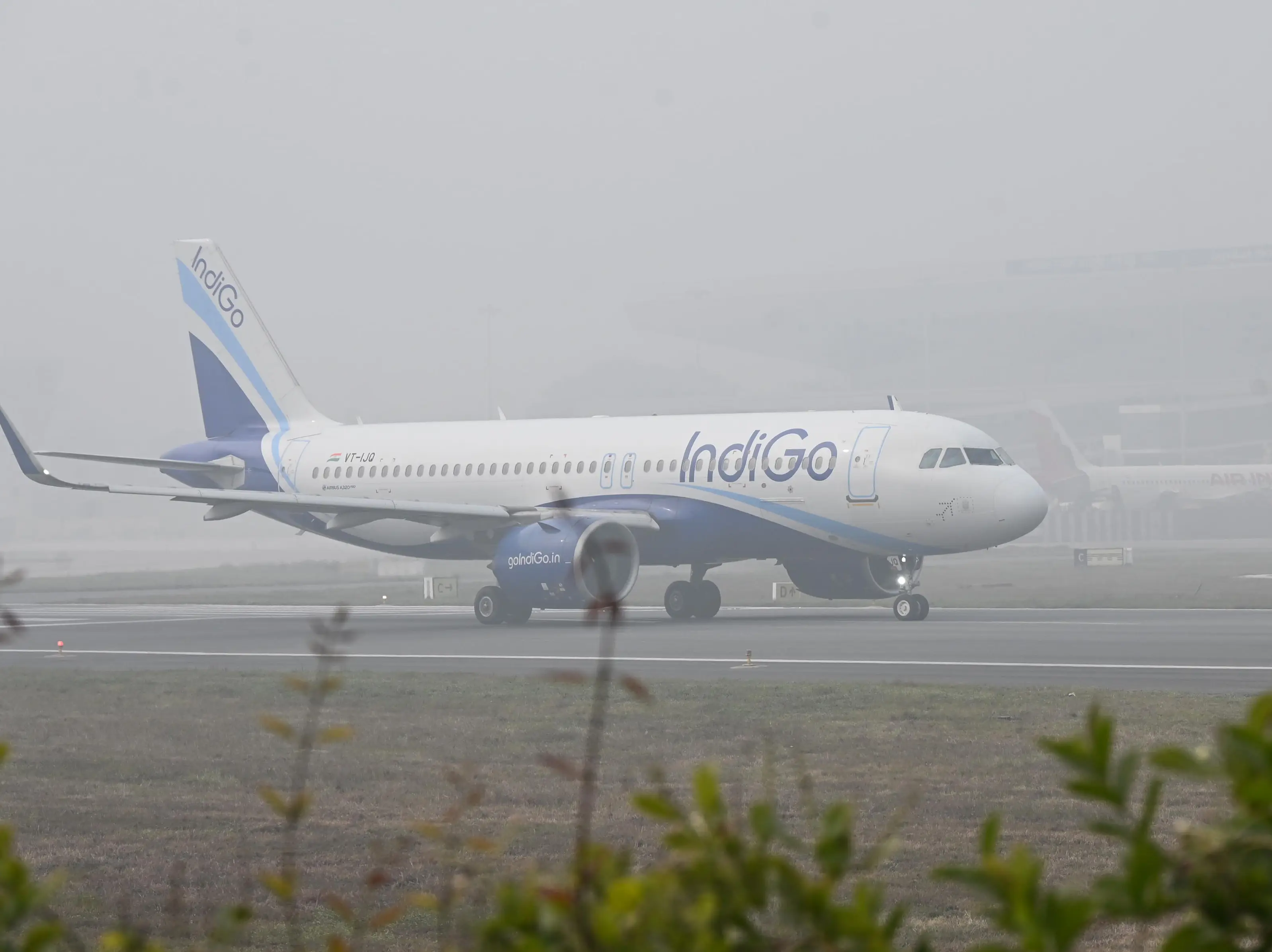
As FY26 ends, the ‘fasten seatbelt’ sign is still on for India’s aviation sector. Starting with the Pahalgam attack, Operation Sindoor in April 2025, to the West Asia conflict in March 2026, the sector was marred with multiple internal and external shocks. Rating agency ICRA had earlier projected that the industry would undergo a loss of Rs 17,000 to Rs 18,000 crore or about $2.16 billion. Here’s a look at key events that shaped the turbulent fiscal year 2025-2026 for the aviation industry
April 2025: Pahalgam attack
It was a shaky take-off for Indian airlines in the financial year 26. It started with the Pahalgam terror attack in Jammu and Kashmir. Travel agencies indicated nearly 90 percent bookings for Jammu and Kashmir were cancelled by tourists over safety concerns. Following the attack, airlines like Air India and IndiGo waived off cancellation and rescheduling fees. Special flights from Srinagar to several destinations were also added.
May 2025: Operation Sindoor
India’s military strike against terror camps in Pakistan followed in May 2025. At least 32 airports in northern India were shut. Major carriers, including IndiGo, Air India, SpiceJet, and Akasa Air, suspended services in the region. It was an unplanned closure, leading to widespread flight cancellations and re-routings.
June 2025: Air India Ahmedabad crash
Trending Stories
&imwidth=180&imheight=135&format=webp&quality=medium)
Blasts heard in Sanaa as Saudi-led coalition warns civilians to evacuate; Houthis vow retaliation
&imwidth=180&imheight=135&format=webp&quality=medium)
China's counter-surveillance industry booms amid heightened espionage fears | Gravitas
&imwidth=180&imheight=135&format=webp&quality=medium)
Saudi Arabia strikes Yemen oil sites as Houthi missiles target Riyadh; 'limited fire' breaks out at Aramco
&im=FitAndFill=(700,400)&imwidth=180&imheight=135&format=webp&quality=medium)
Navratri 2026: 9 days, 9 forms of Goddess Durga and 9 colours- Check the complete list
&imwidth=180&imheight=135&format=webp&quality=medium)
Trump accuses Houthis of driving up oil prices before US midterms, warns of consequences
&imwidth=180&imheight=135&format=webp&quality=medium)
New Delhi rejects Beijing’s claims and remarks on Ladakh location naming exercise
&imwidth=180&imheight=135&format=webp&quality=medium)
US Midterms 2026: In Alaska, cost-of-living anxiety meets strangest ballot in high-stakes Senate race
&imwidth=180&imheight=135&format=webp&quality=medium)
CMs Vijay-Naidu meet in Vijayawada, discuss water sharing, river-linking
&imwidth=180&imheight=135&format=webp&quality=medium)
'Don't ever mess with nature!': Trump’s tiger attack post triggers social media backlash as victim's family issues heartbreaking tribute
&imwidth=180&imheight=135&format=webp&quality=medium)
OpenAI employee arrested by FBI after allegedly hiding recording device in office
&imwidth=180&imheight=135&format=webp&quality=medium)
1,500 drones illuminate Mumbai sky as Cordelia Cruises unveils second ship, Cordelia Sky
&imwidth=180&imheight=135&format=webp&quality=medium)
Pope Leo XIV diagnosed with lung cancer after surgery, Vatican says 'successful surgery and recovering'
&imwidth=180&imheight=135&format=webp&quality=medium)
Delhi Police arrest Cockroach Janta Party's Saurav Das, Ashutosh Ranka, Ajinkya Shinde in Jantar Mantar case, to be produced before court
&imwidth=180&imheight=135&format=webp&quality=medium)
Pakistan to chair UN-backed global Borrowers’ Platform as its own debt burden mounts, triggers sarcastic reactions on social media
&imwidth=180&imheight=135&format=webp&quality=medium)
Suicidal man survives jump from 11th floor in Japan, could now be tried for murder
&imwidth=180&imheight=135&format=webp&quality=medium)
Robot gropes girl, makes thrusting movements in bizarre crime in Germany
&imwidth=180&imheight=135&format=webp&quality=medium)
France accuses Musk of ‘online harassment’ of European leaders, warns of poll interference
&imwidth=180&imheight=135&format=webp&quality=medium)
MI5 chief warns Russia is UK’s ‘aggressor number one’ as Iran and AI threats grow
&imwidth=180&imheight=135&format=webp&quality=medium)
'Turn approver, resign, we'll forgive you': Rahul Gandhi claims receiving messages from CEC Gyanesh Kumar
&imwidth=180&imheight=135&format=webp&quality=medium)
Trump reconsidering calling off Nidal Hasan's execution livestream. Here's why
&imwidth=180&imheight=135&format=webp&quality=medium)
‘My president, I mean my husband’: Trump's new press secretary Katie Zacharia's first briefing goes off the rails in 14 minutes
&im=FitAndFill=(700,400)&imwidth=180&imheight=135&format=webp&quality=medium)
IMF World Economic Outlook: 10 economies to watch for growth in FY27 and FY28 - Where does India stand?
&imwidth=180&imheight=135&format=webp&quality=medium)
Marco Rubio to visit India next week, focus on energy cooperation and strategic ties
&imwidth=180&imheight=135&format=webp&quality=medium)
Is the AI chip boom already over? Global semiconductor stocks slide as investors question unbridled spending
&imwidth=180&imheight=135&format=webp&quality=medium)
L Murugan resigns as Union Minister, expresses wish to return to grassroots
&imwidth=180&imheight=135&format=webp&quality=medium)
'Ouch!!! That must hurt': Kangana Ranaut hails Kamal Haasan's sharp reply to Elon Musk over Starlink row
&imwidth=180&imheight=135&format=webp&quality=medium)
Girl 'dead' for 8 hours wakes up at her own funeral, dad insists she wasn't breathing
&imwidth=180&imheight=135&format=webp&quality=medium)
Sidhu Moose Wala’s younger brother wins hearts by recreating late singer’s signature move at Toronto Hologram Show
&imwidth=180&imheight=135&format=webp&quality=medium)
UK school ditches technology, shifts from screen to pen and paper for learning
&im=FitAndFill=(700,400)&imwidth=180&imheight=135&format=webp&quality=medium)
New OTT releases this week (October 12-18, 2026): Sacrifice, Koffee with Karan S9, Roadies Rebirth- 6 titles coming on Netflix, JioHotstar and more
&imwidth=180&imheight=135&format=webp&quality=medium)
UEFA Champions League: Atletico Madrid sink Manchester United as Viking FK hold Bayern Munich to 3-3 draw
&imwidth=180&imheight=135&format=webp&quality=medium)
Anupam Kher joins Ranbir Kapoor's Ramayana as Jatayu, new poster unveiled
&imwidth=180&imheight=135&format=webp&quality=medium)
Measles kills again: 6 dead in Pennsylvania as America faces its worst outbreak in decades | Gravitas
&imwidth=180&imheight=135&format=webp&quality=medium)
Ken Paxton's Dubai night out with two US fugitives sparks political storm as Texas Senate race tightens
&imwidth=180&imheight=135&format=webp&quality=medium)
Mundhe: Fight against unsafe food goes on
&imwidth=180&imheight=135&format=webp&quality=medium)
Cornell University suspends fraternity parties over 2024 gang rape allegations
Come June 2025, an Air India plane bound for London crashed in Ahmedabad, minutes after taking off. All but one of the 242 people on board were killed, while 19 others on the ground also perished. Air India cancelled 83 flights in the week following the crash. Affected routes included Delhi-Dubai, Delhi-Paris, and Ahmedabad-London. The Directorate General of Civil Aviation (DGCA) ordered strict inspections of Air India’s Boeing 787-8 fleet. Operations were severely impacted by both maintenance checks and the unavailability of aircraft, leading to passenger inconvenience and delays. Air India began a partial resumption of services from August 1, with plans to fully restore operations by October 1.
November 2025: Full implementation of FDTL norms
Stricter flight duty time limitations or FDTL norms kicked in. Announced in January 2025 that year, the norms were implemented in phases starting from July 1. Full implementation in November, led to a shortage of pilots and cabin crew in December. The norms reduced flying hours and increased rest times.
December 2025: IndiGo flight disruptions
Citing the revised norms, IndiGoexperienced massive and sustained flight disruptions. The airline cancelled thousands of flights between December 3 and 10. There was severe chaos at major airports like Bengaluru and Delhi. Daily cancellations peaked above 1,000 at one point. Over 16.2 lakh domestic passengers were affected. Nearly 9.8 lakh people faced cancellations, and 6.4 lakh experienced long delays. This forced the airline to offer compensation vouchers of Rs 10,000 to severely impacted passengers, in addition to statutory compensation. The DGCA penalised IndiGomore than Rs 22 crore for direct failures and continued non-compliance.
December 2025: Windows outage
The implementation of stricter pilot duty rules collided with a global Windows outage and chronic supply chain delays that left 130 aircraft grounded. The result? Indigo’s third-quarter profits plummeted by 78 per cent, and the government was forced to step in with emergency 'reboot' exemptions. One-time temporary exemption from FDTL norms was granted to IndiGofollowing the disruption. Three months after the crisis, Indigo’s CEO Pieter Elbers quit with immediate effect. Earlier in Feb 2026, IndiGoannounced it had decided to comply with the revised norms.
Feb-March 2026: West Asia war
Come February 28, 2026, U.S. and Israel forces struck Iran. Aviation schedules the world over were shaken. Flight operations into and out of the Gulf have been disrupted. By March 9, the 'war premium' hit home, as fuel charges were slapped onto every ticket. A spike in global crude prices, closure of busy aviation hubs, and sweeping airspace restrictions across West Asia collectively landed a heavy blow to the airline industry.
Aviation sector losses to top Rs 18,000 cr, says expert
Kinjal Shah, Senior Vice President and Co-Group Head, Corporate Ratings, ICRA Limited, said multiple factors drove losses for the industry during the fiscal year. One is airspace closures; 15-20 per cent of Indian international flights to West Asia are facing airspace closure, she explained.
The second reason is the re-routing of long-haul flights, which led to additional fuel burn.
Another factor is the depreciation of the Indian rupee against the U.S. dollar. This is because roughly 35-50 per cent of the cost of airlines is denominated in dollars. Shah added that it is likely that aviation turbine fuel (ATF) prices from April will see a sharp increase. For FY26, the impact would largely stem from reduced international passenger traffic and rupee depreciation, she said.While ICRA has not revised its forecast of a Rs 17,000 crore to Rs 18,000 crore loss for the industry for FY26, Shah said the agency expects a downward bias.
Triple threat for India’s aviation sector
The 'triple threat' of the June tragedy, the December operational chaos, and now the near $100-per-barrel oil reality has been devastating for India’s aviation sector. With the Strait of Hormuz blocked, ATF prices didn't just rise—they doubled. Air India's London flights were forced into 12-hour detours, while Indigo's leased Norse aircraft were barred from Gulf airspace entirely. Against this backdrop, airlines are no longer just chasing growth; they’re fighting for stability after a turbulent year. With IndiGo’s stock down over 15% since February 28, Air India facing massive losses, and fuel costs pushing ticket prices higher, the road ahead for FY27 remains anything but certain.
