‘I thought I was protecting them’: War-torn Gaza sees surge in early marriages, reports say

&imwidth=600&imheight=450&format=webp&quality=medium "‘I thought I was protecting them’: War-torn Gaza sees surge in early marriages, reports say")
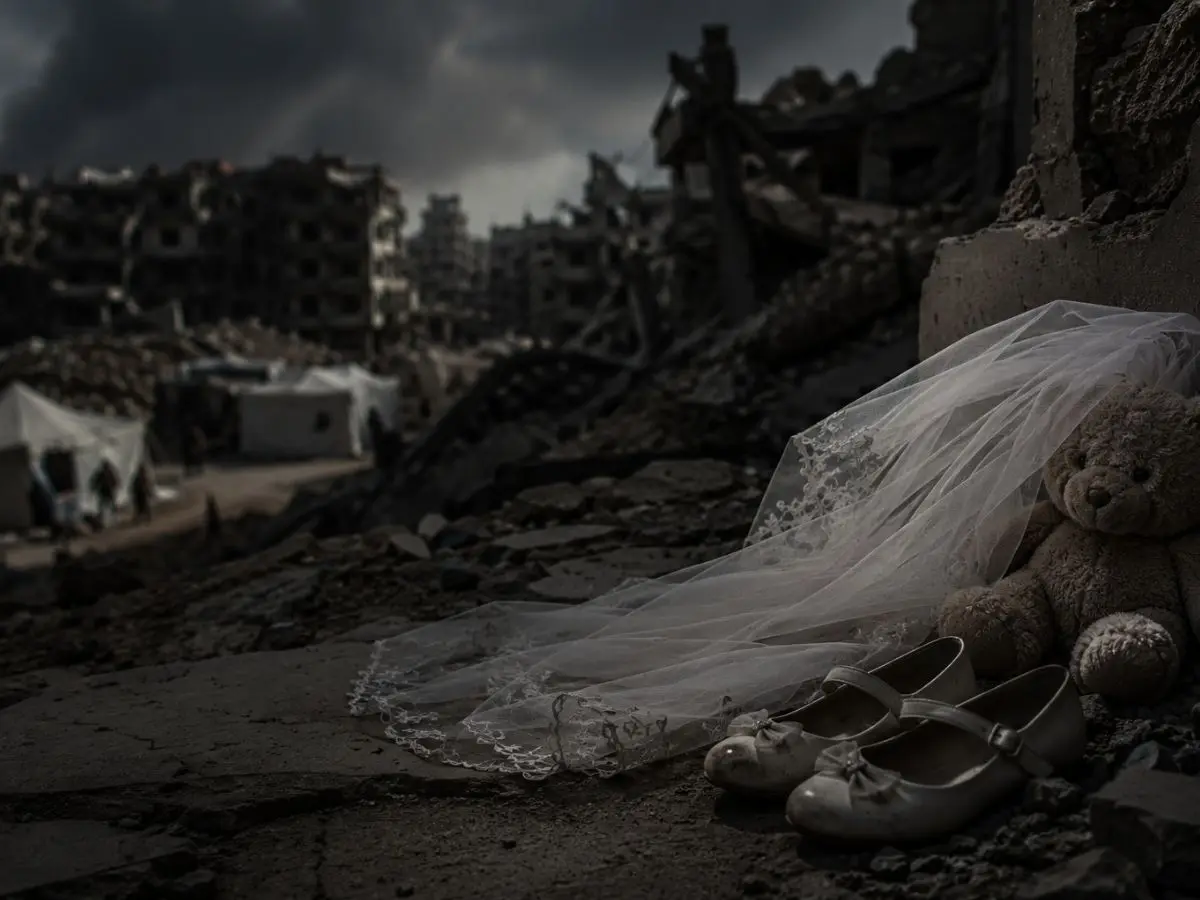
Photograph: (AI Generated)
Data from the Palestinian Central Bureau of Statistics showed that 17.8 per cent of marriages in 2022 involved girls under 18, down from more than 22 per cent in 2015.
The war in Gaza is driving a rise in early marriages, with families facing displacement, poverty and insecurity increasingly marrying off teenage daughters in the hope of providing protection and financial stability, according to an investigation and official data from Gaza. The report, based on interviews with six girls aged between 13 and 16 and their families, found that many parents viewed marriage as a way to shield daughters from the dangers of life in overcrowded displacement camps. However, several girls described experiences of abuse, dangerous pregnancies and miscarriages after being married at a young age.
“I thought I was protecting them,” said Majda, a mother whose husband and eldest son were killed during the war. “Fear was slaughtering me.” the Associated Press reported that she later married off her daughters, aged 13 and 14, to men in their twenties. The girls said they faced abuse after the marriages.
A Reversal of a Declining Trend
Child and early marriages had been gradually declining in Gaza before the conflict that followed Hamas’ October 7, 2023 attack on Israel. Data from the Palestinian Central Bureau of Statistics showed that 17.8 per cent of marriages in 2022 involved girls under 18, down from more than 22 per cent in 2015.
That trend now appears to have reversed. Figures compiled by Gaza’s Supreme Shariah Court showed that 20.6 per cent of the 35,474 marriages recorded during 2024 and 2025 involved girls under 18. The data included 627 marriages involving girls younger than 15. Humanitarian organisations cited by AP said the actual number may be higher because many marriages have gone unregistered amid the disruption caused by the war.
Trending Stories
&imwidth=280&imheight=210&format=webp&quality=medium)
&im=FitAndFill=(700,400)&imwidth=280&imheight=210&format=webp&quality=medium)
&imwidth=280&imheight=210&format=webp&quality=medium)
&imwidth=280&imheight=210&format=webp&quality=medium)
&imwidth=280&imheight=210&format=webp&quality=medium)
&imwidth=280&imheight=210&format=webp&quality=medium)
&imwidth=280&imheight=210&format=webp&quality=medium)
&imwidth=280&imheight=210&format=webp&quality=medium)
&imwidth=280&imheight=210&format=webp&quality=medium)
&imwidth=280&imheight=210&format=webp&quality=medium)
&imwidth=280&imheight=210&format=webp&quality=medium)
&imwidth=280&imheight=210&format=webp&quality=medium)
&imwidth=280&imheight=210&format=webp&quality=medium)
&imwidth=280&imheight=210&format=webp&quality=medium)
&imwidth=280&imheight=210&format=webp&quality=medium)
&imwidth=280&imheight=210&format=webp&quality=medium)
&imwidth=280&imheight=210&format=webp&quality=medium)
&imwidth=280&imheight=210&format=webp&quality=medium)
&im=FitAndFill=(700,400)&imwidth=280&imheight=210&format=webp&quality=medium)
&im=FitAndFill=(700,400)&imwidth=280&imheight=210&format=webp&quality=medium)
&imwidth=280&imheight=210&format=webp&quality=medium)
&imwidth=280&imheight=210&format=webp&quality=medium)
&imwidth=280&imheight=210&format=webp&quality=medium)
&imwidth=280&imheight=210&format=webp&quality=medium)
&imwidth=280&imheight=210&format=webp&quality=medium)
&imwidth=280&imheight=210&format=webp&quality=medium)
&imwidth=280&imheight=210&format=webp&quality=medium)
&imwidth=280&imheight=210&format=webp&quality=medium)
&im=FitAndFill=(700,400)&imwidth=280&imheight=210&format=webp&quality=medium)
&imwidth=280&imheight=210&format=webp&quality=medium)
&imwidth=280&imheight=210&format=webp&quality=medium)
&imwidth=280&imheight=210&format=webp&quality=medium)
&imwidth=280&imheight=210&format=webp&quality=medium)
&imwidth=280&imheight=210&format=webp&quality=medium)
&imwidth=280&imheight=210&format=webp&quality=medium)
Marriage Seen as Protection and Survival
Many families interviewed by AP said the decision was driven by fear, economic pressure and uncertainty rather than tradition alone. Nearly all of Gaza’s population has been displaced at least once during the conflict, with large numbers living in temporary shelters or tent camps.
Some girls told AP they agreed to marry because schools had largely stopped functioning and they saw little prospect of continuing their education. “Marriage felt like the only sense of normalcy I could restore to my life,” one 17-year-old girl told the news agency. Under Gaza’s legal framework, the minimum marriage age is 17, although exceptions can be granted with parental consent and judicial approval.
Growing Concerns Over Long-Term Impact
Women's rights groups and aid organisations have warned that girls who marry young face greater risks of domestic violence, health complications and interrupted education.
Amal Siyam, director of the Women’s Affairs Center in Gaza, was qujoted saying that younger girls are often more vulnerable to abuse and exploitation. She also noted that divorce rates in early marriages remain high, leaving many girls returning to their families with children while still in their teens. The report highlighted how the war has reshaped daily life for many families across Gaza, with economic hardship, displacement and insecurity influencing decisions that were becoming less common before the conflict. While the reasons vary from family to family, experts say the rise in early marriages reflects the wider social pressures created by the ongoing war.