&imwidth=800&imheight=600&format=webp&quality=medium "India’s organic waste economy could reach $51 billion and create 2.6 million jobs by 2047, says CEEW study")
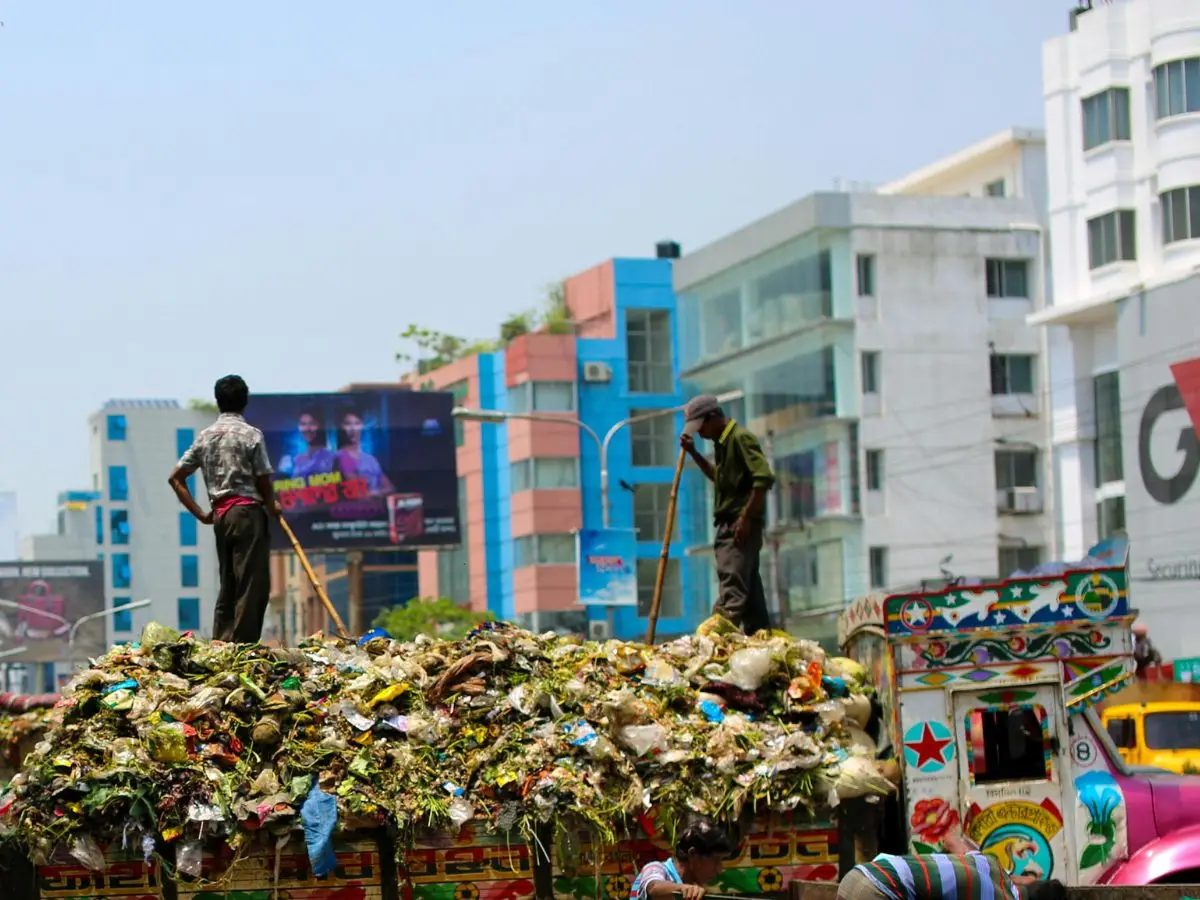
India’s rapidly expanding urban organic waste stream could evolve into a major economic and environmental asset by 2047, according to a new study by the Council on Energy, Environment and Water (CEEW), published on Friday. The analysis finds that, under an enabling policy framework, the country’s organic waste sector could unlock a market opportunity of nearly $51 billion and generate 26 lakh direct jobs. Organic waste, comprising kitchen, market, horticulture, fruit and vegetable, meat, and other biodegradable material, currently forms a large share of municipal solid waste. CEEW notes that better collection, segregation, and processing could transform it into compost, biogas, and biomethane, supporting both resource recovery and climate goals.
Scale of Opportunity: Markets, Emissions, and Investment Needs
The study models three pathways for India’s urban organic waste sector: business-as-usual, accelerated policy, and an ambitious green transition scenario. Under the accelerated policy pathway, India would require around $24 billion in cumulative investment by 2047 to scale up processing infrastructure. This scenario assumes full collection and processing of organic municipal waste through a combination of composting and biomethanation, potentially reducing emissions by approximately 68 million tonnes of carbon dioxide equivalent (MtCO₂e) by 2047.

CEEW highlights that this transition could support new markets for compost, compressed biogas (bio-CNG), fermented organic manure, and liquid fermented organic manure, alongside job creation in plant operations, feedstock handling, and maintenance services. At present, composting accounts for about 96 per cent of treatment capacity, while biomethanation remains at just 4 per cent.
Policy Landscape and Institutional Framework
Trending Stories
)
Justice eludes Air India 1985 bombing victims as Canada probe goes 'inactive' | Gravitas
)
Trump revives India-Middle East-Europe economic corridor as India emerges central to West Asia’s future: What is it?
)
Erdogan again raises Kashmir issue at UNGA, calls for dialogue under UN Charter
)
Major League Soccer referee sacked for sexist comment about female match referee
)
Trump signs Greenland security deal with Denmark, paving way for two new US military bases
)
IND vs JPN T20I: How an overturned wide became point of difference between India's win and a tie
)
Trump-Xi summit: From trade to Taiwan, what will the US and Chinese presidents discuss in Washington?
)
Cyclone Arnab: Landfall expected before midnight tomorrow as IMD issues orange alerts across six states
)
ICC plans T20I expansion and fewer ODIs in 2027–2031 FTP cycle: Report
)
US-China tech war: Businesses in the front line
)
Gravitas | Boosting NHS productivity could save 20,600 lives in UK annually: Report
)
Nor'easter could batter 13 US states this week. What you should know
)
WION Iconic Tourism Summit: Seychelles envoy says India partnership is important for Seychelles
)
US and China vie for AI dominance as calls grow for regulation | Gravitas
)
Yemen clashes kill 154 people in two days as cornered Saudi battles Houthi offensive | Gravitas
)
China to test supersonic jet that moves at Mach 2, double the speed of sound
)
Bomb scare in New York amid UNGA: Suspicious suitcase found near UN headquarters
)
IND vs JPN, one-off T20I: Japan captain Kendel on pushing India to the brink - ‘It was special’
)
Mikel Arteta verbally agrees to three-year extension with Arsenal after title-winning Premier League season
)
WION Iconic Tourism Summit and Awards 2026: Key voices to discuss India’s tourism future
)
WION Iconic Tourism Summit and Iconic Awards 2026: India's travel economy leaders gather in Delhi
&im=FitAndFill=(700,400))
New OTT releases this week (September 21-27, 2026): Shaque: Trust No One, Hunkkaar, Don’t Be Shy- 5 new titles coming to Netflix, Prime Video and more
)
81st UN General Assembly: Burnham announces UK-US AI defence tie-up
)
Trump calls on nations to quit ‘rogue’ and ‘out-of-control’ International Criminal Court, rips UN
)
Infections transmitted from pregnant woman linked to autism risk
)
'What kind of confession is this?': Pakistan PM Shehbaz Sharif’s 'terrorists would be roaming New York' remark goes viral, raises alarm online. Watch
)
Elephants hide behind trees, stage surprise attack on poachers targeting rhinos in South Africa
)
IIT Bombay professor Suryanarayana Doolla sent on leave amid Sahil Wakode death probe
&im=FitAndFill=(700,400))
National Film Awards 2026: Kartik Aaryan, Mammootty, Yami Gautam, Randeep Hooda and other key winners
)
El Niño 2026 heats up to become strongest in 1,000 years
)
Anne Hathaway to run in supporting race for Nolan's epic
)
Over 4,200 books withdrawn from circulation in J&K colleges, 94% from Kashmir
)
From Gaddafi tearing up UN Charter to Trump’s ‘escalatorgate’: Most unforgettable UNGA moments
)
Explainer: Why rare-earth export licences and Board of Trade are US priorities ahead of Trump-Xi summit
)
Asia prepares for record El Nino, food shock
)
Forget apps: Qualcomm CEO says AI agents will change how we use smartphones
)
Four female students raped during 'Red Zone' at California university. What we know
The report underscores that India already has a strong institutional base, with around 16 ministries and government bodies engaged in organic waste management through multiple schemes and programmes. These include the Swachh Bharat Mission–Urban, the National Bioenergy Programme, and GOBARdhan initiative.
However, the study stresses that coordination remains a key challenge. It calls for improved data systems, stronger enforcement of source segregation, and contracts that reward quality outcomes rather than volume alone. According to CEEW, “cities need reliable waste data, assured segregated feedstock, and credible offtake markets for compost and bio-CNG.”
High-Impact Transition Scenario and Key Recommendations
In the most ambitious scenario, where India achieves 100 per cent collection and processing of urban organic waste, the market opportunity could rise to $62 billion, with emissions reduction potential of around 101 MtCO₂e by 2047. However, CEEW cautions that this would require capital-intensive, mechanised systems and robust end-product markets.
The study also notes that waste-sector emissions rose by 226 per cent between 1994 and 2020, highlighting the urgency of reform. CEEW recommends five priority actions: ensuring source segregation, improving data systems, shifting to performance-based procurement, strengthening workforce capacity, and developing stable markets for end products. It also calls for innovative financing tools such as green bonds, hybrid annuity models, and expanded public–private partnerships to support scale-up.