

&imwidth=800&imheight=600&format=webp&quality=medium "'Coffin homes' to crammed public apartments: Hong Kong fire that left 55 dead brings focus on city's chronic housing crisis")
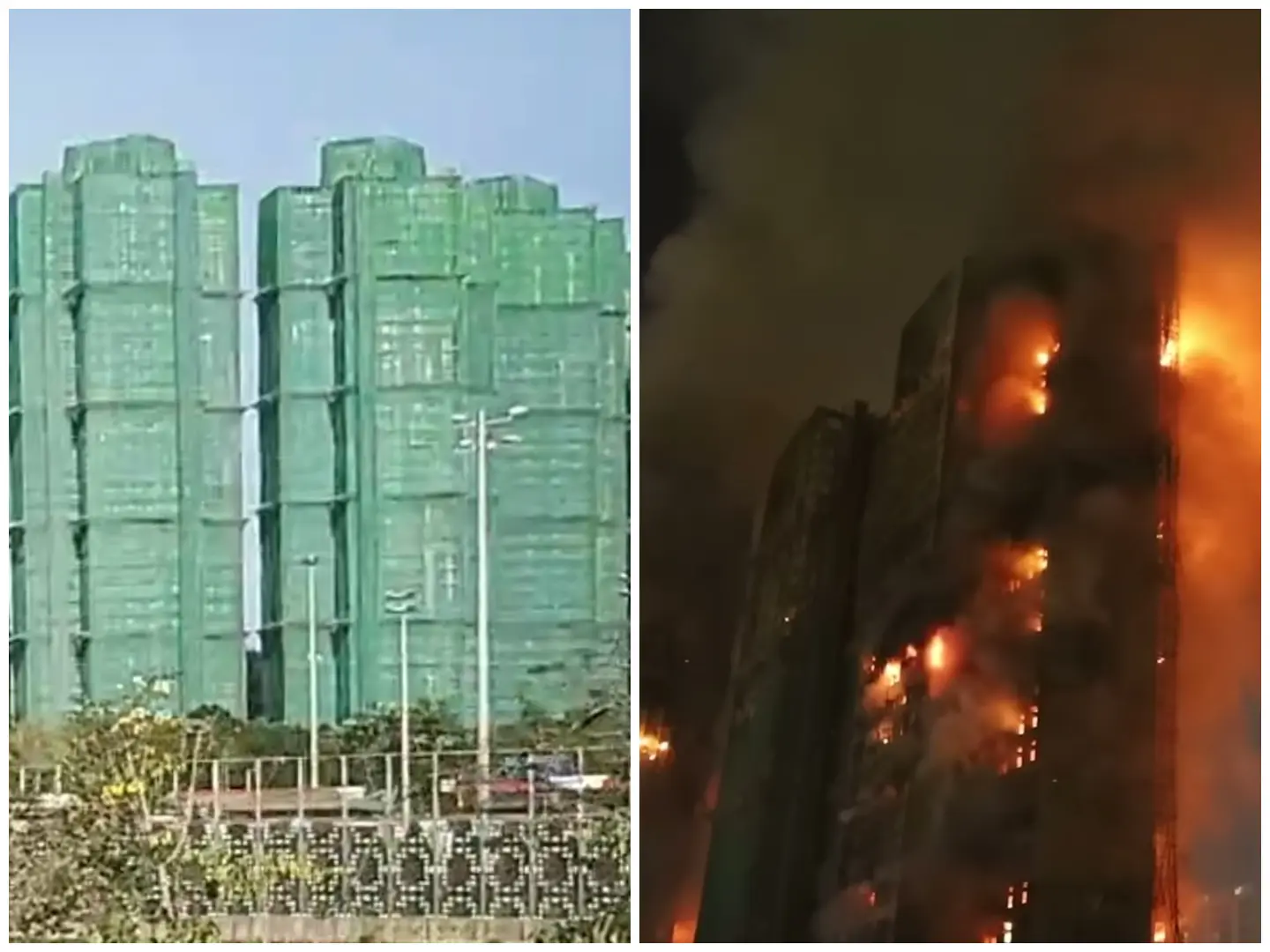
At least 55 people have died in the Hong Kong apartment fire on Wednesday (Nov 26), with 275 others missing and hundreds left homeless overnight. The Wang Fuk Court building fire in Tai Po District is a stark reflection of Hong Kong's housing crisis, where skyrocketing prices make private accommodation impossible for local residents, who then depend on public housing and so-called 'coffin homes'.
Hong Kong has one of the world's most severe housing shortages
Median home prices are 20 times higher than the annual household income of Hong Kongers. Amid the glitzy towers of the financial hub, most commoners can't afford a place to call home, depending instead on public housing. But there, the average waiting time for a public rental flat in could be up to 5.5 years.
‘Coffin homes’ with six square metres for a person: The poor face the brunt of the housing crisis
Low-income, working poor and elderly populations end up living in overcrowded subdivided flats or SDUs that have only 65 square feet or 6 square metres of space per person. There were around 108,200 such subdivided flats or SDUs in Hong Kong as of 2021, housing over 220,000 people.
Many of these flats lack proper ventilation or fire escapes. In many cases, toilets and bathrooms are shared by multiple families.
The SDUs, also known as “coffin homes”, "cubicle apartments" or "cage homes," could be as small as 15 square feet. They are often stacked like bunks in wire-mesh enclosures, and notorious fire traps too, with narrow corridors blocking evacuation. Flammable materials like polystyrene are used in construction, and shared wiring overloads electricity circuits.
Trending Stories
&imwidth=180&imheight=135&format=webp&quality=medium)
IND-W vs ZIM-W, 2nd ODI: Harmanpreet Kaur, Vaishnavi Sharma star in India's 121-run win
&im=FitAndFill=(700,400)&imwidth=180&imheight=135&format=webp&quality=medium)
What is the real meaning behind Pete Hegseth's tattoos?
&imwidth=180&imheight=135&format=webp&quality=medium)
Telangana unveils AI avatar of IT minister D Sridhar Babu at Hyderabad DevFest 2026
&imwidth=180&imheight=135&format=webp&quality=medium)
'This is humiliation': Vijay Deverakonda under fire over controversial marriage proposal remark on Koffee With Karan 9
&imwidth=180&imheight=135&format=webp&quality=medium)
Pahalgam, Gulmarg record season’s first sub-zero temperatures as winter chill intensifies in Kashmir
&imwidth=180&imheight=135&format=webp&quality=medium)
Govinda breaks silence on divorce rumours with Sunita Ahuja, calls her his first love
&imwidth=180&imheight=135&format=webp&quality=medium)
Indian embassy warns nationals in Saudi Arabia against filming missile strikes
&imwidth=180&imheight=135&format=webp&quality=medium)
Can Putin cheat death? All about his daughter’s billion-dollar quest for immortality
&imwidth=180&imheight=135&format=webp&quality=medium)
Saudi says debris fell in Mecca, Medina after missile interceptions; Houthis deny targeting holy cities
&imwidth=180&imheight=135&format=webp&quality=medium)
Netanyahu warns Israelis of ‘existential threat’ from Iran, posts AI image of nuclear strike
&imwidth=180&imheight=135&format=webp&quality=medium)
Trump revives ‘shithouse countries’ slur, targets Abdul El-Sayed and Ilhan Omar at Georgia rally
&imwidth=180&imheight=135&format=webp&quality=medium)
Pakistan airline PIA unveils new crew uniforms, faces online criticism
&imwidth=180&imheight=135&format=webp&quality=medium)
Kerala judge's 17-year-old son allegedly driving Mercedes kills scooter rider
&imwidth=180&imheight=135&format=webp&quality=medium)
'Already tired of his 9-to-5': Baby born with a moustache becomes internet sensation, video goes viral | Watch
&imwidth=180&imheight=135&format=webp&quality=medium)
Bigg Boss 20: Rohit Shetty indirectly reacts to firing at his Mumbai home
&imwidth=180&imheight=135&format=webp&quality=medium)
Tiger Shroff’s team calls report on actor’s reaction to Mumbai attack ‘completely untrue’
&imwidth=180&imheight=135&format=webp&quality=medium)
Horrific video shows the moment 18-year-old fell to her death from Mexico amusement park ride
&imwidth=180&imheight=135&format=webp&quality=medium)
Russia-Ukraine drone attacks kill 6, injure 31 across both countries
&imwidth=180&imheight=135&format=webp&quality=medium)
'I promised Gautam & Kotak Sir that...': Tilak Varma opens up on match-winning mindset against NZ
&imwidth=180&imheight=135&format=webp&quality=medium)
‘Saddam Hussein opened a cheesecake factory’: Obama mocks Trump’s White House renovations; defends Abdul El-Sayed
&imwidth=180&imheight=135&format=webp&quality=medium)
Anthropic's leaked AI bill would act only at 50 deaths or $1bn in harm
&imwidth=180&imheight=135&format=webp&quality=medium)
China's dancing robot turns violent bodyguard, lifts cars and fights intruders - Watch
&im=FitAndFill=(700,400)&imwidth=180&imheight=135&format=webp&quality=medium)
Why do some fighter jets have two engines while others use one?
&imwidth=180&imheight=135&format=webp&quality=medium)
Byeon Woo Seok makes first public appearance as Sung Jin Woo for Solo Leveling at Netflix Korea’s 10th anniversary event
&im=FitAndFill=(700,400)&imwidth=180&imheight=135&format=webp&quality=medium)
New Friday OTT releases (October 23, 2026): Gajab Raat, Dorothy, Chaar Yaar- Watch these 6 new movies and TV shows on Netflix, Prime Video and more
&imwidth=180&imheight=135&format=webp&quality=medium)
'Clear overkill': Putin rejects claims Russia is behind mass protests in Europe
&imwidth=180&imheight=135&format=webp&quality=medium)
'If it was up to me, it wouldn't have ended like this': James Anderson opens up on Lancashire exit
&imwidth=180&imheight=135&format=webp&quality=medium)
‘Do I make a deal or finish them off’: What Trump said on resuming Iran strikes
&imwidth=180&imheight=135&format=webp&quality=medium)
Javed Akhtar backs Rashmika Mandanna after Koffee With Karan 9 accent trolling, calls out ‘linguistic superiority’
&imwidth=180&imheight=135&format=webp&quality=medium)
WATCH | Langur walks into Odisha repair shop, hugs shopkeeper; internet reacts to heartwarming video
&imwidth=180&imheight=135&format=webp&quality=medium)
Nagpur man fails to pay rent, allegedly prints fake Rs 500 notes worth Rs 37 lakh
&imwidth=180&imheight=135&format=webp&quality=medium)
Venezuelan opposition leader María Machado returns home after over 10 months in exile
&imwidth=180&imheight=135&format=webp&quality=medium)
‘Modi ka baap bhi jayega,’ Kharge loses cool at party event in Patna; BJP slams him
&imwidth=180&imheight=135&format=webp&quality=medium)
Why Europe’s protests are about more than austerity and rising costs
&imwidth=180&imheight=135&format=webp&quality=medium)
Kim Kardashian, Kris Jenner turn heads with Bold looks at All’s Fair season 2 premiere in Rome
Fire safety violations: A perennial problem in Hong Kong residential buildings
According to government data, fire safety violations are found in more than 60 per cent of inspected buildings. Fire incidents in the past, like the 2017 Cheung Sha Wan blaze, killed residents trapped in these mazes.
Also read: Hong Kong high-rise fire continues to burn; death toll rises to 55, hundreds still unaccounted for
The Wang Fuk Court fire: A public housing estate from the 1980s
Wednesday's fire took place not in a 'coffin home', but a government-run public housing estate. Still, it exemplifies the housing crisis and hazards across all low-income housing in the city.
The Wang Fuk Court was built in 1983 as subsidised home-ownership units. It had some 4,800 residents, living in nearly 2,000 apartments across eight 31-storey towers.
An estimated 36 per cent of the residents were aged over 65.
The blaze started when the external bamboo scaffolding - that covered the entire estate - caught fire during renovation. The fire also brought to light the poor or deferred maintenance situation in these decades-old public housing buildings, strained by underfunding.
Once the fire started, it went all the way up to the top of the towers, exacerbated by flammable foam boards on windows and non-compliant netting. The fire eventually spread to seven towers, trapping residents amid intense heat and smoke.
The Wang Fuk Court fire was Hong Kong's deadliest fire since the Garley Building fire of 1996 that killed 41 people. The fire in 2008 at the Cornwall Court resulted in four deaths.
Even coffin homes are unaffordable for some
With coffin homes going on rent for up to HK$140 per square foot, even that is unaffordable for some. This makes nearly 45 per cent of Hong Kong residents dependent on public estates like Wang Fuk, which are overcrowded and ageing. According to reports, many of these public housing units lack modern water sprinklers or wide exits to facilitate escape in the event of a fire.
A rapidly ageing population made evacuation difficult
Hong Kong's rapidly ageing population, with nearly 25 aged over 65, is living in large numbers in public housing units. Given their reduced mobility, evacuations were difficult: many victims could not descend the stairs quickly enough.
Among this deadly cocktail of factors is the slow progress in phasing out substandard housing units by 2049. According to media reports, only 47 per cent of Hong Kong's public housing targets were met since 2014, even as coffin homes mostly remain illegal and unregulated.

