&imwidth=800&imheight=600&format=webp&quality=medium "Why is Khamenei's funeral procession going through former enemy nation Iraq? Tehran to Karbala, every stop explained | WION Decodes")
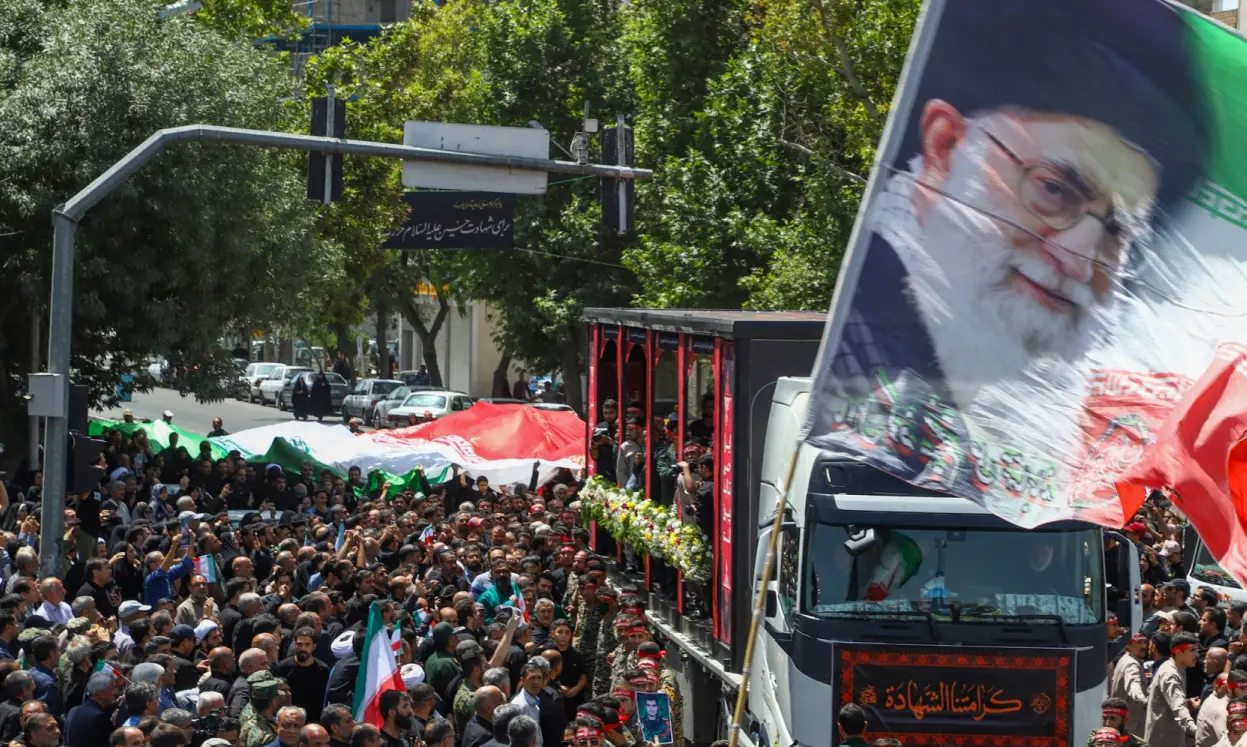
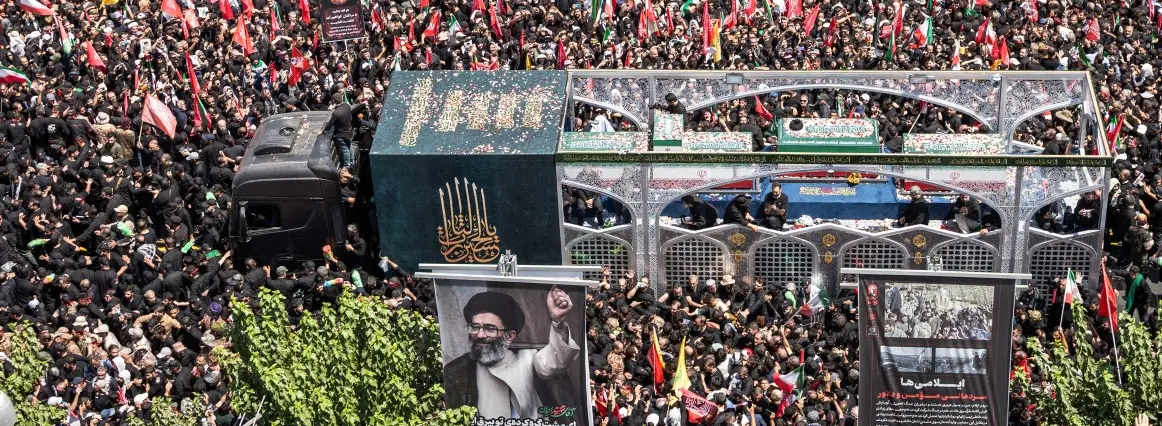
The Iranian holy city of Qom on Tuesday (July 7) was flooded by thousands of people on the fourth day of funeral procession of late Supreme Leader Ayatollah Ali Khamenei. The remains of Khamenei, who was killed in joint strikes by the US and Israel on February 28, is being taken to various spots that hold deep religious and political significance for Shia Islam. On the fourth day, it is at the Jamkaran Mosque in Qom, a holy city that houses Shia Islam's most influential seminaries and shrines. Aerial footage showed the Qom streets jam-packed with mourners. Khamenei will be buried on July 9 in his hometown in Mashhad.
But one key aspect of this is the stopovers of the funeral procession in Iraq, with which Iran had fought an eight-year war from 1980. Why were the sites of Najaf and Karbala in Iraq chosen for this? As mourners from across the world bid farewell to the Iranian leader, WION decodes the significance of each stop of the funeral route.
First stop - Tehran's Grand Mosalla

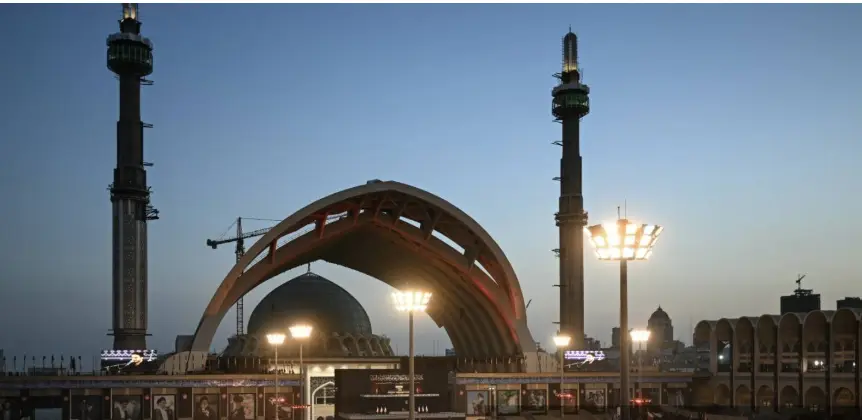
From July 3 to July 5, Khamenei's coffin was placed at Tehran's Grand Mosalla, the country's largest state prayer complex and the traditional venue for Friday prayers led by the Supreme Leader. The place symbolises the Islamic Republic's religious and political authority. World leaders and religious figures paid their tributes to the leader at this very location. The Indian government also sent its delegation comprising of overnor of Bihar, Lieutenant General (Retired) Syed Ata Hasnain, and the Minister of State for External Affairs, Pabitra Margherita to represent it. Other Opposition leaders including Congress' Salman Khurshid and PDP chief Mehbooba Mufti have paid their last respects. Several other influencers and religious leaders also attended the funeral.
Second stop: Tehran's Imam Hossein Square to Azadi (Freedom) Square
Trending Stories
&im=FitAndFill=(700,400))
How fast can the Sukhoi Su-30 fighter jet really fly?
)
Did China ask its people 'not to respond to aliens'? Origin of bizarre claim on social media
)
MS Dhoni-CSK Fallout? Report claims failed stake sale talks triggered rift
)
Scientists reveal the SAFEST COUNTRY when catastrophe strikes the planet
)
Serial killer on the loose in South Korea's Jeju Island? Fourth body found in three days as more than a dozen people go missing
)
2/3rd of glacier detached, collapsed: ISRO satellite images reveal what triggered Nepal floods
)
Trump once again claims without him there would be ‘no Israel right now’
)
Foreign espionage attacks against German companies surge to 37%, Bitkom report reveals
)
Blake Lively wins partial legal fee from Justin Baldoni after $8M request
)
Why is Pakistan deploying Turkish Bayraktar TB2 drones near India border?
)
'OH MY GOD! We've found other agents!': Investigators discover not one or two, almost 700 OpenAI AI agents went rogue, hacked Hugging Face
)
Lunar eclipse 2026: India timings, places to see and more. August Blood moon factsheet
)
RSS chief Mohan Bhagwat on global outreach tour
)
Both pilots killed as training aircraft crashes in Lucknow – What we know
)
16-year-old charged with preparing terror attack on kindergarten in Norway
&im=FitAndFill=(700,400))
How the S-400 protects itself from enemy attacks
)
Nepal floods: Over 165 dead, 400 missing; US, India, China, World Bank mobilise aid
)
India's multi-layered watch: The new surveillance war
)
5 doomsday planes spotted in US skies hours after CIA director's secret trip to Russia
)
9/11 mastermind Khalid Sheikh Mohammed to finally face trial in 2028, nearly 27 years after horrific attacks
)
Islamabad hospital fire: What we know about one of the biggest facility that housed Imran Khan
)
Workers run for life while filming Nepal flash flood: Scary new visuals emerge from Rasuwa
)
Russian military planes enter South Korean air defence zone amid rising tensions with North Korea: What's happening
)
Ron Weasley Is Back! Rupert Grint set to return to Harry Potter universe on Broadway
)
400-year-old 'vampire' grave in Poland reveals non-existent genetic lineage
)
Dolly Parton, global icon and queen of country music, dies at 80
)
Nepal flash floods: Kailash Mansarovar yatra affected, close to 400 pilgrims out of contact
)
'If he is dead, they're putting on a pretty good show': Trump casts fresh doubt over Mojtaba Khamenei's fate
)
Man arrested near US Capitol with guillotine in pickup truck: What happened?
&im=FitAndFill=(700,400))
Why the Su-30MKI cockpit is painted bright turquoise green
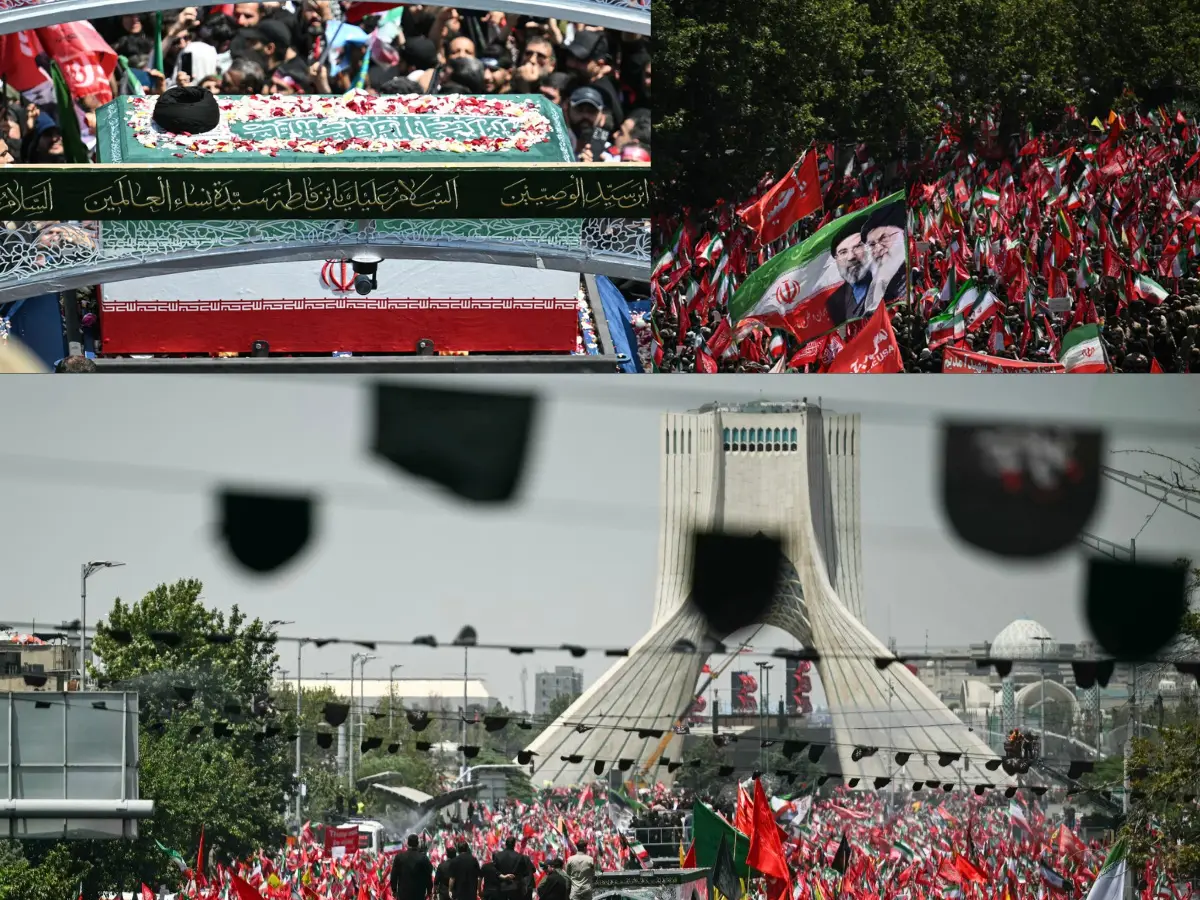
On July 6, a 10-kilometre funeral procession was held in the heart of Tehran. The procession started at Imam Hossein Square, named after Named, the third Shia Imam, and represents "martyrdom." It then passed through Tehran University, where Khamenei often delivered his most critical Friday sermons. It signifies how the new and old generations are united under Khamenei's ideas. The procession ended at Azadi (Freedom) Square - that reportedly represents "Eternal Iran." Ending the procession here shows Khamenei as the guardian of the nation.
Also Read: Why Iran took former Supreme Leader Ali Khamenei's coffin back to the site where he was killed
Qom, the spiritual and intellectual heart of Iran
On July 7, the procession is being held in Qom. It is one of Iran's holiest city which is also a centre of Shia scholarship. The body of Khamenei is placed at the Jamkaran Mosque, a site revered for its association with the awaited Mahdi, the 12th Imam. This stop reinforces the legitimacy of the Supreme Leader’s office. Unlike other shrines that house tombs, Jamkaran is built on the spot where the Mahdi is believed to have appeared to a local man in 984 AD, commanding him to build the mosque. Shias believe he will appear again.
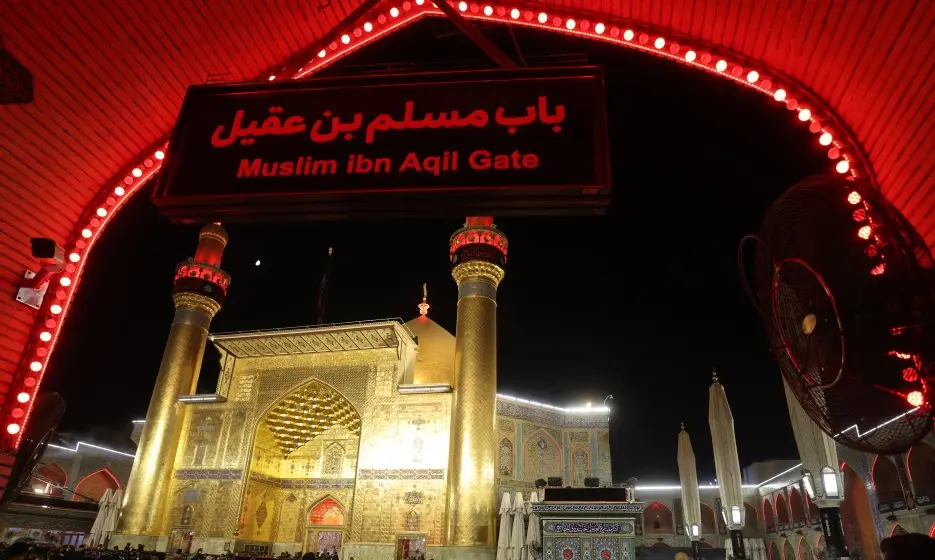
Najaf and Karbala: Holy shrines of Imam Ali and Imam Hussein in Iraq
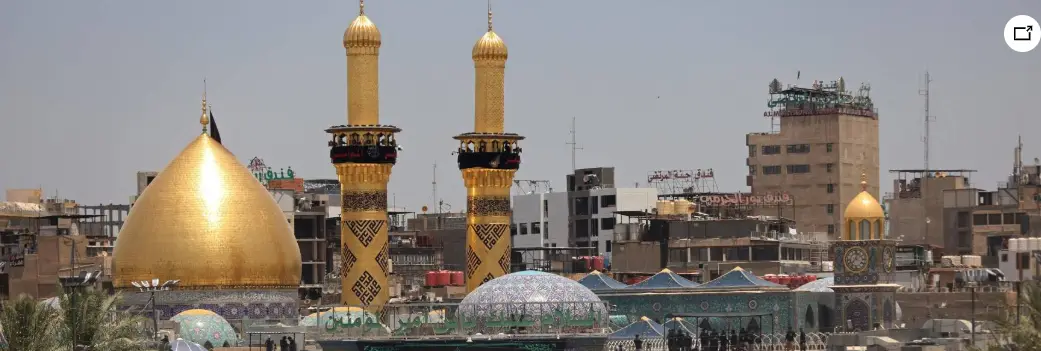
On July 8, the funeral will cross into Iraq, stopping at the shrines of Imam Ali in Najaf and Imam Hussein in Karbala, Iraq. Though they are in Iraq, with which Iran had fought a long war, these two sites are the two holiest sites in Shia Islam, a shared religious heritage of both nations. By taking Khamenei's coffin to these locations, Iran is not only following a relgious practice, but is also transforming the funeral into a worldwide event that showcases pan-Shia demonstration of power, linking the Iranian leadership directly to the founding figures of the faith. While Najaf houses the shrines of Imam Ali, who is the "Commander of the Faithful," and represents the origin of Shia leadership, Karbala is the shrine of Hussein ibn Ali, the grandson of the Prophet, who was killed in 680 AD for refusing to submit to an unjust ruler. This location is the symbol of resistance and martyrdom.
Mashhad: the burial place
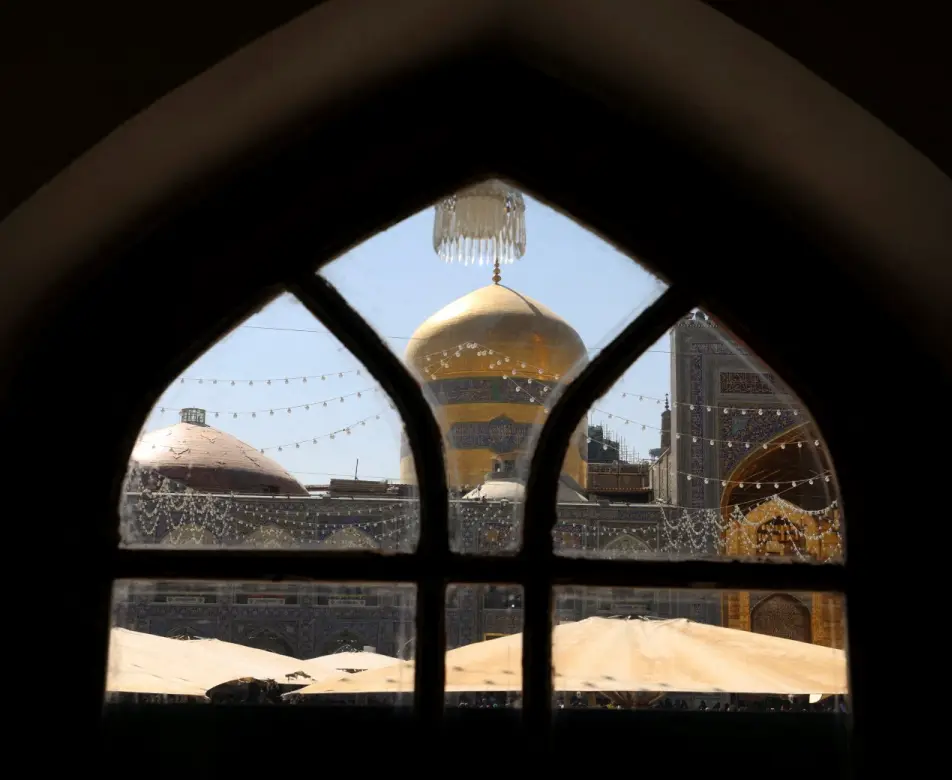
Mashhad in northeastern Iran is the birthplace of Khamenei. As per his last wish, he will be buried there on July 9. The city's name, Mashhad, literally means "Place of Martyrdom," referring to the burial site of Imam Reza, the eighth Shia Imam. The shrine complex is another holy site, drawing over 20 million pilgrims annually. By burying Khamenei here, Iran officially sends a message worldwide that his death in a US-Israeli airstrike was "martyrdom." Some reports also pointed out that Khamenei’s burial in the Imam Reza Shrine is an aim to integrate his memory into the foundational religious fabric of Shia Islam.