‘Fingers on the trigger’: Iran issues sharp warning to US over peace deal boundaries

&imwidth=600&imheight=450&format=webp&quality=medium "‘Fingers on the trigger’: Iran issues sharp warning to US over peace deal boundaries")
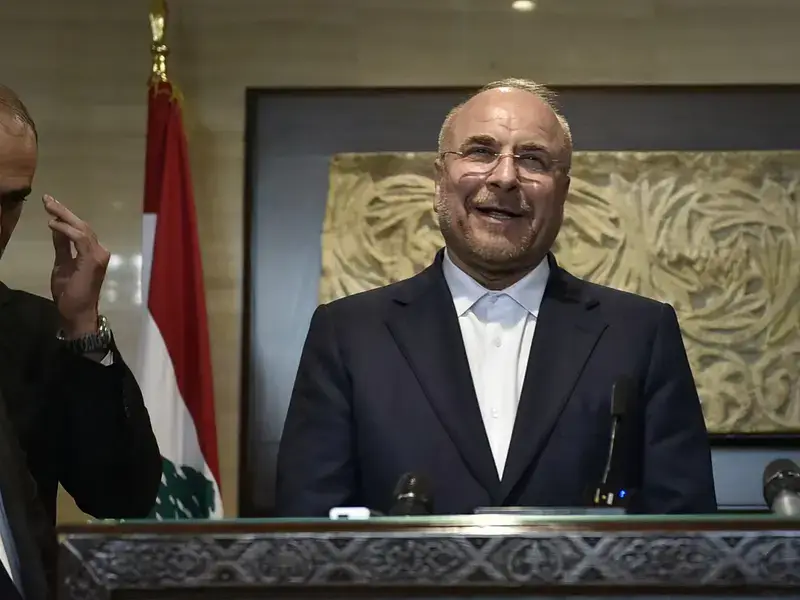
‘Fingers on the trigger’: Iran issues sharp warning to US over peace deal boundaries Photograph: (Credit: AFP)
Iran’s chief negotiator warns future US talks are bound by Tehran’s "red lines." Explore the details of the fragile Swiss peace accord and the latest updates.
Following a memorandum of understanding signed by US President Donald Trump and Iranian President Masoud Pezeshkian to end a regional war that began on February 28 with US-Israeli strikes, Iranian officials emphasised adherence to the nation's “red lines.” Iran's chief negotiator, Mohammad Bagher Ghalibaf, stated that future talks with the United States remain bound by these red lines to protect Iranian interests. Published by the IRNA news agency, Ghalibaf said, "As we have shown in the past path of negotiations, we are steadfast in fulfilling the conditions and red lines set, and in achieving the interests of the Iranian nation. If the enemy seeks to be excessive, we have proven that our fingers are on the trigger and we have no hesitation in giving a crushing response to the enemy."
These remarks followed a message on state television from Iran's Supreme Leader, Ayatollah Mojtaba Khamenei. Khamenei approved the US-Iran deal despite holding a "different view," clarifying that direct negotiations do not mean accepting the enemy's perspective. In response, Foreign Minister Abbas Araghchi and President Pezeshkian both pledged that Iran's foreign policy would protect the nation's rights, dignity, and authority while adhering to its red lines.
Also read: 60-day clock 'officially starts today' for final US-Iran peace accord, announces JD Vance
The signed agreement establishes a framework for 60 days of detailed negotiations regarding sanctions relief and Iran's nuclear programme, including a commitment from Tehran not to develop nuclear weapons. Additionally, the deal halts the Middle East war across all fronts, lifts a two-month US naval blockade on Iranian ports, and requires Iran to reopen the Strait of Hormuz without charge for 60 days. A scheduled first meeting in Switzerland was postponed, leaving the start date for final settlement talks unclear.
Also read: US-Iran peace deal: Inside the 14-point MoU that ended over 108 days of war | WION Decodes
Trending Stories
)
)
)
)
)
)
)
&im=FitAndFill=(700,400))
&im=FitAndFill=(700,400))
&im=FitAndFill=(700,400))
)
)
)
&im=FitAndFill=(700,400))
)
)
)
)
)
)
)
)
&im=FitAndFill=(700,400))
)
&im=FitAndFill=(700,400))
&im=FitAndFill=(700,400))
)
&im=FitAndFill=(700,400))
)
&im=FitAndFill=(700,400))
)
&im=FitAndFill=(700,400))
&im=FitAndFill=(700,400))
)
&im=FitAndFill=(700,400))
&im=FitAndFill=(700,400))
Meanwhile, Iranian conservatives expressed deep scepticism toward US intentions, fearing Iran might surrender vital leverage before securing compensation. Hossein Shariatmadari, editor-in-chief of the ultraconservative Kayhan newspaper, told state television that the US does not honour commitments, suggesting the Strait of Hormuz should be used to obtain compensation. Furthermore, Ebrahim Rezaei, spokesman for parliament's national security commission, stated on X that parliament would oppose any "lawlessness" if reports regarding UN watchdog inspections of Iranian nuclear facilities prove true.

