

&imwidth=800&imheight=600&format=webp&quality=medium "Federal judge rules Trump’s $100,000 fee for H-1B visas unlawful, strikes it down")
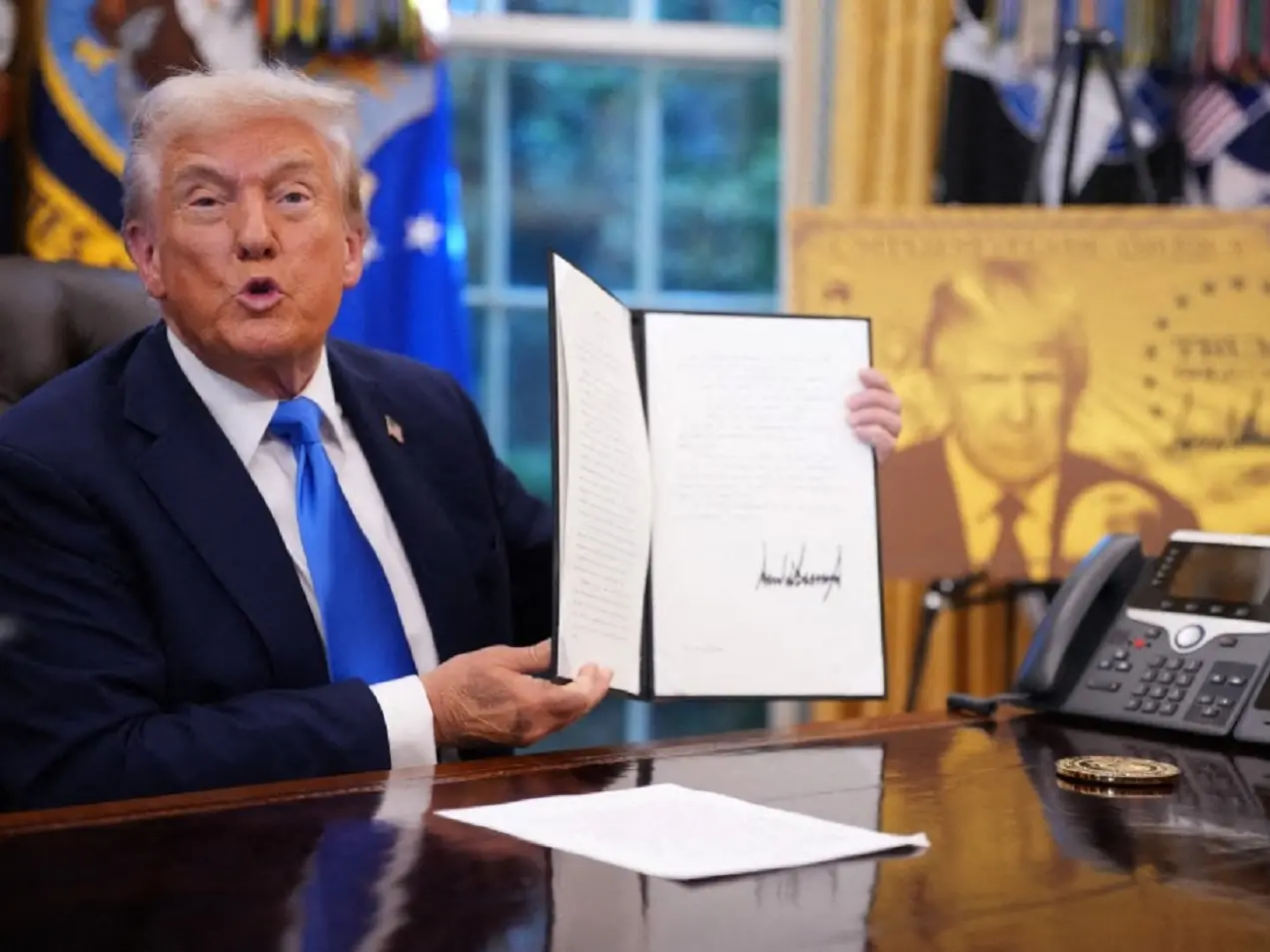
A federal judge on Monday struck down the $100,000 fee that US President Donald Trump had imposed last year on new H-1B visas for highly skilled foreign workers, concluding that it constituted an unlawful tax that Congress never authorised.
US District Judge Leo Sorokin in Boston issued the ruling in a lawsuit filed by 20 Democratic state attorneys general challenging a fee Trump announced in September that dramatically raised the cost of obtaining H-1B visas.
The H-1B programme offers 65,000 visas annually, with another 20,000 visas for workers with advanced degrees, approved for three to six years. Earlier, employers seeking a visa for a foreign worker typically paid about $2,000 to $5,000 in fees depending on various factors.
Also Read: Israeli strikes made Iran stop attacks, fight against Tehran, Hezbollah ‘not over’: Netanyahu
The fees hike has discouraged H-1B visa requests, according to court filings. As of February 15, US Citizenship and Immigration Services had received just 85 payments of the $100,000 fee, the administration said in a March filing.
However, the Department of Homeland Security (DHS) Secretary, Markwayne Mullin, told a Senate panel recently that more than 200,000 applicants seeking H-1B visas to work in the US paid $100,000 for expedited processing during fiscal year 2026.
Trending Stories
&imwidth=180&imheight=135&format=webp&quality=medium)
Priyanka Chopra celebrates Dussehra 2026 with Nick Jonas and daughter Malti Marie | See pics
&imwidth=180&imheight=135&format=webp&quality=medium)
Diljit Dosanjh's Oct 30 Delhi show hits roadblock, Delhi Police denies permission
&imwidth=180&imheight=135&format=webp&quality=medium)
China's dancing robot turns violent bodyguard, lifts cars and fights intruders - Watch
&imwidth=180&imheight=135&format=webp&quality=medium)
Will Rohit and Kohli play ODI World Cup 2027? BCCI president Manhas says board 'not in a position to comment'
&imwidth=180&imheight=135&format=webp&quality=medium)
Rafale Marine fighter begins flight trials in Goa ahead of Indian Navy induction
&imwidth=180&imheight=135&format=webp&quality=medium)
Feds obtain DNA evidence that could prove Ilhan Omar married her brother: Report
&imwidth=180&imheight=135&format=webp&quality=medium)
16-foot doomsday fish in Chile triggers fears that the next earthquake is coming
&imwidth=180&imheight=135&format=webp&quality=medium)
US midterms 2026: What polls and prediction markets indicate about Congress
&imwidth=180&imheight=135&format=webp&quality=medium)
Pakistan signs another defence pact even as Makkah Alliance shows no teeth. This time, it's with Qatar, Indonesia, Turkey
&im=FitAndFill=(700,400)&imwidth=180&imheight=135&format=webp&quality=medium)
New OTT releases this week (October 19-25, 2026): Gajab Raat to Chaar Yaar-8 titles to watch during Dussehra week on Netflix, Prime Video and more
&imwidth=180&imheight=135&format=webp&quality=medium)
Why websites around the world are suddenly going offline? What you need to know about PHP
&imwidth=180&imheight=135&format=webp&quality=medium)
From Agni-V to Project Kusha: How are India’s indigenous missile systems and defence shield reshaping modern warfare
&imwidth=180&imheight=135&format=webp&quality=medium)
Are the US and Israel preparing for another major attack on Iran? Here's what report claims
&imwidth=180&imheight=135&format=webp&quality=medium)
Ranbir Kapoor apologises for Dussehra speech slip, clarifies remark at Ramayana event
&imwidth=180&imheight=135&format=webp&quality=medium)
'Gyanu must go': CJP's Saurav Das, Ashutosh Ranka after release, despite Jantar Mantar protest undertaking
&imwidth=180&imheight=135&format=webp&quality=medium)
US-Iran war: Bibi, Trump gamble on new Iran war to save themselves in polls
&imwidth=180&imheight=135&format=webp&quality=medium)
Viral video shows cross falling on Colombia priest, no official confirmation | WATCH
&imwidth=180&imheight=135&format=webp&quality=medium)
Australia police arrest former national 100m champ Jake Doran for alleged child abuse
&imwidth=180&imheight=135&format=webp&quality=medium)
Kolkata airport: CISF detects ₹1.13 crore in US dollars hidden in bags of 2 Bangkok-bound passengers
&imwidth=180&imheight=135&format=webp&quality=medium)
EU probes Booking.com under Digital Services Act
&imwidth=180&imheight=135&format=webp&quality=medium)
'Father of all bombs' vs 'mother of all bombs': Iran threatens US with new weapon as Trump hints at MOAB strike
&imwidth=180&imheight=135&format=webp&quality=medium)
WATCH: Woman IPS officer fires several rounds of AK-47, ignites debate online
&imwidth=180&imheight=135&format=webp&quality=medium)
‘I caution the president...’: Trump’s ex-press secretary warns after Zacharia’s exit
&imwidth=180&imheight=135&format=webp&quality=medium)
'It's a crime not to see this scene': Tehran puts Trump 'behind bars'
&imwidth=180&imheight=135&format=webp&quality=medium)
US to get 850 F-35 stealth fighter jets under 10-year Pentagon-Lockheed deal
&imwidth=180&imheight=135&format=webp&quality=medium)
'You are a dummy, you are a stupid person': Trump loses temper with CNN, ABC reporters after questions about Russia sanctions
&imwidth=180&imheight=135&format=webp&quality=medium)
US midterms 2026: Trump's approval rating hits record low as Democrats gain ground
&imwidth=180&imheight=135&format=webp&quality=medium)
Meta slapped with $25 billion fine in New Mexico over Facebook data practices, company plans appeal
&imwidth=180&imheight=135&format=webp&quality=medium)
Ilhan Omar breaks silence over alleged marriage to her brother; Trump thinks it's 'really good answer'
The administration argued that the fee constituted a monetary penalty that the president had lawful authority to impose under federal immigration law to restrict the entry of certain foreign nationals. Trump administration officials projected it as an initiative to encourage companies to hire Americans instead.
The Trump administration contended that the judge had no authority to get involved in the visa fee dispute. The Justice Department claimed Trump’s action was unreviewable for multiple reasons and the judge should toss the states’ case.
But Sorokin, who was appointed by Democratic President Barack Obama, concluded that the fee was not a penalty but a tax that the Republican president lacked any authorisation from Congress to issue.
“Here, the substance and application of the $100,000 payment reveal that it is a tax, regardless of what the payment is called,” he wrote.
The president had dramatically raised the cost of visas for highly skilled workers in an executive order last year.
On June 3, Mullin said the DHS has the authority to waive a new $100,000 H-1B visa fee in certain cases, offering potential relief to employers facing high recruitment costs.
Speaking at his first Senate budget hearing as DHS secretary, Mullin also said the department can consider fee waivers on a case-by-case basis after Senator Susan Collins of Maine pointed out that a rural hospital had to pay the fee to hire a surgeon from abroad after failing to find a qualified US candidate. “We do have some authority and flexibility to be able to waive some of this on a case by case,” Mullin said.

