Explained | The Iran-Pakistan gas pipeline: History, controversy and impediments

Iran Pakistan pipeline explainer
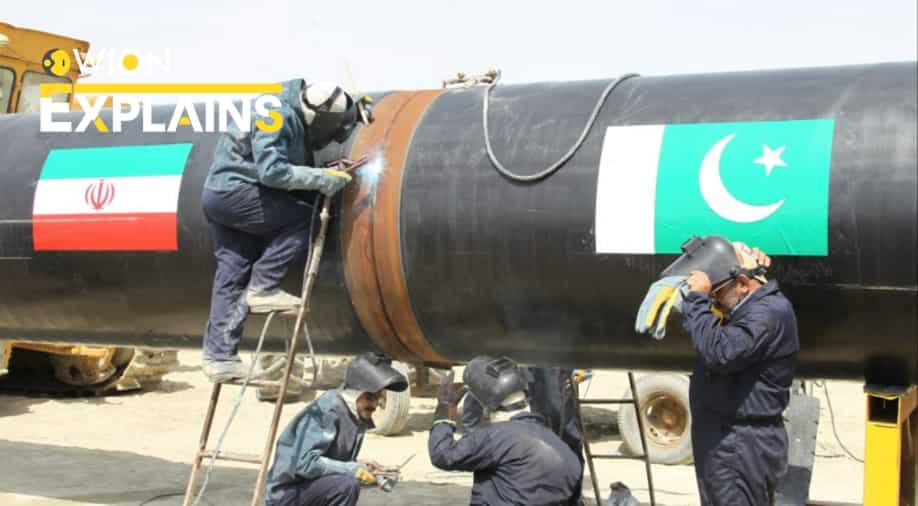
The ambitious Iran-Pakistan gas pipeline has been shelved. The project has thepotential to change the energy and perhaps the political landscape of the region but it has now been shelved, apparently under US pressure. India was part of the project initially but it withdrew more than a decade ago, citing security and gas pricing concerns.
The shelving of the pipeline has come just when Pakistan is struggling to put its cash-strapped economy back on track.
The initial years

Discussions over the pipeline between Iran and Pakistan began in the year 1995. Both countries signed an agreement in 1995. It was initially decided that a pipeline would be constructed from the South Pars gas field to Karachi. It was later proposed by Iran that the pipeline should be extended to India. An initial agreement was signed between Iran and India in 1999.
The geopolitical element
Initially, India was keen on the pipeline as it was seen as an effective way to attain energy security. But doubts within Indian circles remained as the pipeline was going to pass through Pakistan and depending upon a regional foe for energy security was considered a move too risky. That Iran almost always finds itself at odds with the US was also a big concern.
)
AI models chose to harm humans to stop ‘pain,’ alarming study raises fresh safety questions
)
New Zealand farms shift to carbon forests: Carbon credits fuel a land rush reshaping rural life
)
Putin's United Russia party wins 355 seats in Duma election; 4 other parties cross threshold to enter parliament
)
J&K Assembly Session begins amid chaos: BJP, ruling alliance clash as statehood demand dominates
)
Samsung raises Galaxy S26 prices by Rs 20,000: Here’s what each model now costs
)
IND vs JPN one-off T20I: India survive scare from Japan to win five-over a side match by 2 runs
)
Trump's helipad event overshadowed by audio failure as major TV networks suspend pool coverage
)
40-foot waves crash into cruise ship in dangerous stretch near Antarctica. Watch
)
FIFA chief Infantino wants to reform governing body with consultation from federations
)
$110 billion Warner Bros merger: Paramount reaches settlement with 12 US states
)
Anti-AI activists storm summit, say 'incompetent' leaders are leading us into a disaster - 'We need a vote'
)
Report: Zelensky meets CIA chief Ratcliffe at Shannon airport, weeks after his secret Moscow trip
)
India at UNGA81: Jaishankar warns global order under 'growing stress', pushes for ‘reformed multilateralism’
)
Jailer 2: Vidya Balan joins Rajinikanth's upcoming film as Kantha | Watch
)
Asian Games 2026: India women's cricket team beats Sri Lanka by 147 runs for first gold
&im=FitAndFill=(700,400))
National Film Awards 2026: Kartik Aaryan, Mammootty, Yami Gautam, Randeep Hooda and other key winners
)
'Needs time away from the international scene': England white-ball captain Brook on pacer Brydon Carse's future
)
Two infants die after fire breaks out at RIMS newborn care unit in Telangana's Adilabad
)
US and China vie for AI dominance as calls grow for regulation | Gravitas
)
Microsoft executive called AI training the ‘largest theft of labour in human history’
)
Randeep Hooda arrives in Gujarat for his first National Film Award: ‘Very grateful’
)
Saudi Arabia exits China-led mBridge digital currency platform amid Saudi-Houthi conflict
)
Pilot recreates Mona Lisa in sky over Oklahoma and Arkansas in four-hour flight: VIDEO
)
Explainer: Why rare-earth export licences and Board of Trade are US priorities ahead of Trump-Xi summit
)
'Lot of things to learn from experienced players': Jayasuriya backs Rohit, Virat for 2027 ODI World Cup
)
‘0% chance’: Nvidia CEO Jensen Huang dismisses AI extinction fears by 2030
)
How Zaheer Khan came to be CSK's head coach of IPL 2027
)
IND vs JPN, one-off T20I: Japan captain Kendel on pushing India to the brink - ‘It was special’
)
From ‘communist’ to ‘great mayor’: Trump praises Mamdani after New York meeting, discusses immigration and housing
)
Samay Raina-Mukesh Chhabra controversy explained: What happened over girlfriend joke on India's Got Latent?
)
Oil slips to $98 as Saudi Arabia restarts East-West oil pipeline
&im=FitAndFill=(700,400))
New OTT releases this week (September 21-27, 2026): Shaque: Trust No One, Hunkkaar, Don’t Be Shy- 5 new titles coming to Netflix, Prime Video and more
)
Raaka creates history! Allu Arjun’s film secures Guinness World Record ahead of release
)
Key accused in Bihar's Jamui molestation case, arrested after police shoot him in leg
)
US-Iran war, peace deals and more: What to expect from Trump's UNGA 2026 speech
)
UK PM Burnham agrees to 'defensive' military support for Saudi Arabia against Houthis
&im=FitAndFill=(700,400))
Anant Nag to recieve Dadasaheb Phalke Award: From Ankur to Nishant- Revisit his best films and iconic performances on OTT
)
Indonesian groups sue govt over wildfires as haze crosses borders, nearly 900,000 hectares burned
)
UK banks are rethinking financial crime detection because of algorithm
In the initial years, the gas pipeline from Iran was also seen as something that cancounter China's plans with respect to Gwadar and Afghanistan. But in those years, the US-led coalition was firmly in charge of affairs in Afghanistan.
Another element was that of regional geopolitical rivalry between Saudi Arabia and Iran. Though there has been a thaw in relations between Iran and Saudi Arabia now, in the 2000 and 2010s the rivalry had sprouted many issues in the region.
Watch | Cash-strapped Pakistan abandons Iran gas pipeline project; US pressure over sanctions | Details
The Iran-Pakistan gas pipeline was perceived in Saudi Arabian circles as an event that would bring Iran and Pakistan closer.
It has been reported that Saudi Arabia tried to pressure Pakistan to abandon the gas pipeline in 2012 and offered oil supplies and also an oil facility and an oil terminal.
In 2011, Iran announced that it had finished construction of a portion of the pipeline on its side and that it awaited completion on the Pakistani side. Iran had said that if Pakistan did not complete construction on its side by the year 2014, it will have to pay a penalty. The penalty was reportedly as huge as USD 1 million per day.
The pipeline was also beset with other problems. In 2012, the Pakistani finance ministry said that there was not much enthusiasm among private investors for the pipeline project. The ministry even mulled imposing a tax on consumers to remedy this.
The project faced opposition from the US almost all the time. The US, which has historically been the benefactor of Pakistan and poured billions of dollars over the years, was reportedly not happy with the prospect that Pakistan would join hands with Iran, the geopolitical foe of the US.
Pakistan did try to weather the pressure. In 2012, Pakistan's Foreign Minister Hina Rabbani Khar said that Pakistan will not buckle under the pressure the US exerted. She said that the Iran-Pakistan gas pipeline project was in the national interest of Pakistan and that it will be completed 'at any cost'.
The completion of the project involved another headache for Pakistan. Part of the pipeline passed through the restive Balochistan province.
Balochistan province has seen insurgency for a long time and the region also has elements that want to see it independent of Pakistan. The insurgents have in the past attacked Pakistani forces and even installations.
China is involved in the development of Gwadar Port in Pakistan. Gwadar is in Balochistan province. The port is being developed by China as a part of its China-Pakistan Economic Corridor (CPEC) project. There have been attacks on Chinese nationals involved in CPEC as well.
Also Read | Pakistan temporarily halts multi-billion dollar gas pipeline project with Iran amid US pressure: Report
Another international developmentthat has been an impediment to the gas pipeline is the US-Iran equation. The relations between the two countries had thawed after the Iran nuclear deal struck in the year 2015. The deal unravelled when then-US President Donald Trump took the US out of it and re-introduced sanctions on the Islamic Republic.
The re-introduced sanctions proved to be detrimental as they werea deterrent to Pakistan when it came to the construction of the pipeline.
Dawn, a Pakistani news outlet, has reported that Pakistan expressed an inability to pursue the project as long as US sanctions on Iran remain or Washington tacitly green-lights Islamabad to go ahead with the project. The project has been stalled in spite of an acute energy shortage in the South Asian nation of 240 million people.
Pakistan has issued a Force Majeure and Excusing Event notice to Iran under the Gas Sales and Purchase Agreement (GSPA), which resultantly suspends Pakistan’s obligations under the GSPA, according to a written testimony Minister of State for Petroleum Musadik Malik has given to the National Assembly.
(With inputs from agencies)
You can now write for wionews.com and be a part of the community. Share your stories and opinions with us here.
WATCH WION LIVE HERE