

&imwidth=800&imheight=600&format=webp&quality=medium "Europe plans ‘coalition of the willing’ for Strait of Hormuz security mission — but without US")
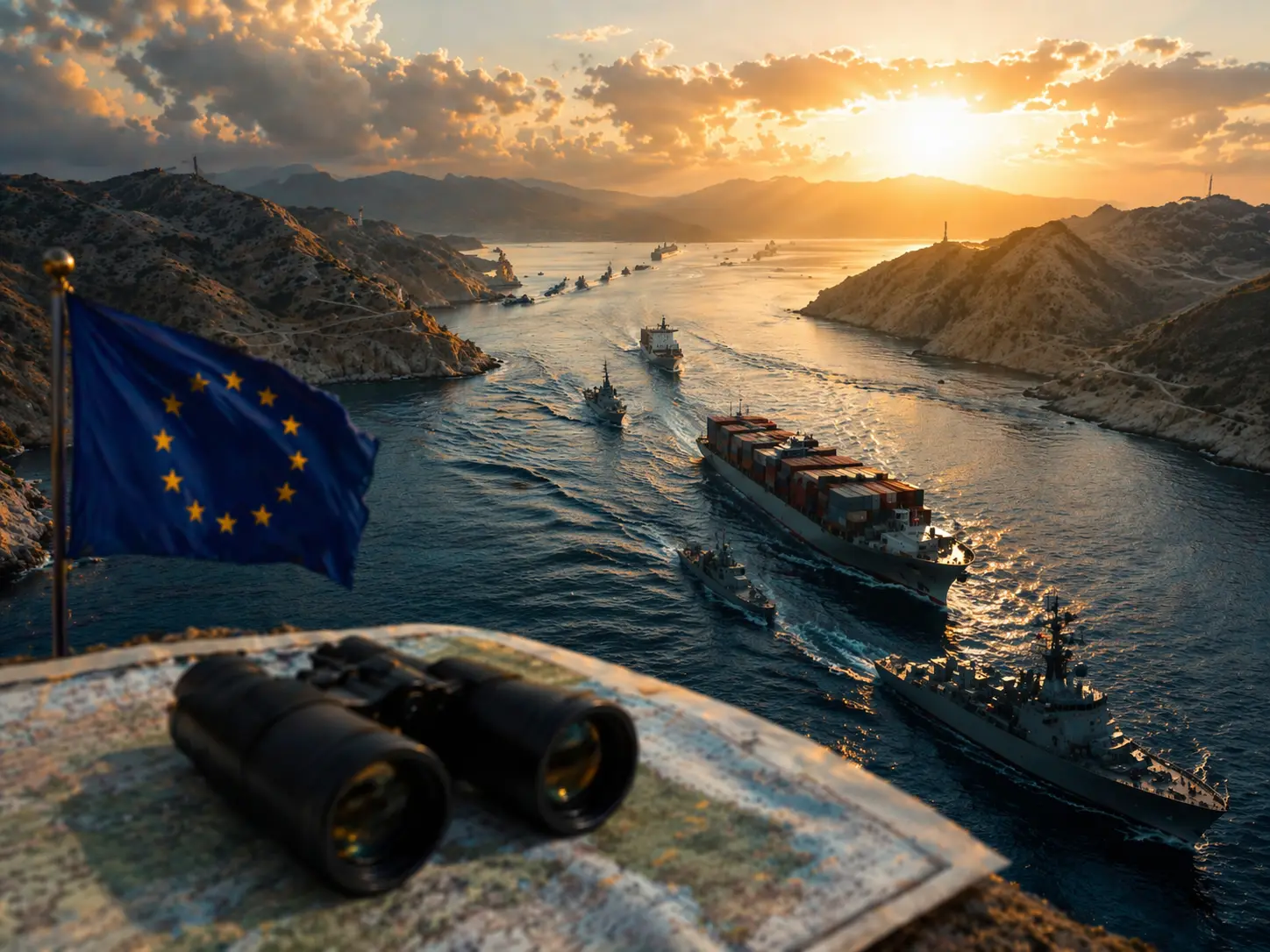
European nations are quietly working on a post-conflict maritime strategy to secure one of the world’s most critical trade arteries, the Strait of Hormuz, while deliberately keeping the United States out of the mission. According to officials, the proposed coalition would focus on restoring confidence in commercial shipping once hostilities in the region subside. The effort would include mine-clearing operations, naval escorts, and surveillance, but only after the fighting ends.
French President Emmanuel Macron made the position clear, stating the mission would exclude nations directly involved in the conflict. He emphasized that it would be an international defensive effort, not aligned with “belligerent” parties such as the US, Israel, or Iran. French Foreign Minister Jean-Noel Barrot reinforced the conditional nature of the plan, saying, “The mission we are referring to could only be deployed once calm has been restored and hostilities have ceased.” He added that coordination with regional powers like Iran and Oman would be essential, suggesting that Tehran’s approval may be a prerequisite.
The proposal has already drawn interest from key European players, including Germany, which has traditionally been cautious about overseas military engagements. Berlin’s potential involvement could significantly expand the scale and capability of the mission, given its strong financial resources and specialized naval assets. Later this week, Macron and UK Prime Minister Keir Starmer are expected to convene a virtual summit with dozens of countries to discuss the initiative. Notably, the United States will not be part of these discussions. China and India have been invited, though their participation remains uncertain.
Also Read: Rohingya boat tragedy: 250 missing after vessel capsizes in Andaman Sea en route to Malaysia
A strategic divide with Washington
The exclusion of the US highlights growing transatlantic tensions. European leaders have been reluctant to support Washington’s more aggressive approach, including calls from US President Donald Trump to forcibly reopen the strait or blockade Iranian ports. Macron dismissed such ideas as impractical, arguing that reopening the waterway by force would be “unrealistic” and expose vessels to significant risks, including missile threats.
Trending Stories
&imwidth=180&imheight=135&format=webp&quality=medium)
'My name has always been Ilhan Omar': Congresswoman hits back at Trump, calls him a 'creep'
&imwidth=180&imheight=135&format=webp&quality=medium)
Gravitas | US attack could trigger WW III: Russian planes in Tehran, Israeli jets, US warships in action
&imwidth=180&imheight=135&format=webp&quality=medium)
Viral video shows cross falling on Colombia priest, no official confirmation | WATCH
&imwidth=180&imheight=135&format=webp&quality=medium)
US Navy, Marine Corps boards defy Trump's transgender military ban, vote to retain troops
&imwidth=180&imheight=135&format=webp&quality=medium)
Will the US attack Iran this weekend? Trump's envoy says, 'absolutely'
&imwidth=180&imheight=135&format=webp&quality=medium)
Fauzi teaser out: Prabhas takes on the British Empire in patriotic avatar | Watch
&imwidth=180&imheight=135&format=webp&quality=medium)
India-China face-off continues near Arunachal’s Taksing, reveals ITBP chief in first official confirmation of tensions
&imwidth=180&imheight=135&format=webp&quality=medium)
Nairobi building collapse: Several feared trapped after 16-storey structure crumbles; rescue operation underway
&imwidth=180&imheight=135&format=webp&quality=medium)
Pakistan airline PIA unveils new crew uniforms, faces online criticism
&imwidth=180&imheight=135&format=webp&quality=medium)
Did Neha Bora call for Bangladesh-like GenZ protest, 'anarchy' in India? WION Fact-checks viral claim
&imwidth=180&imheight=135&format=webp&quality=medium)
'Already tired of his 9-to-5': Baby born with a moustache becomes internet sensation, video goes viral | Watch
&imwidth=180&imheight=135&format=webp&quality=medium)
Horrific video shows the moment 18-year-old fell to her death from Mexico amusement park ride
&imwidth=180&imheight=135&format=webp&quality=medium)
'Black triangle' UFO flying at 1,800mph spotted over sensitive US site: Latest Trump admin UFO file dump
&imwidth=180&imheight=135&format=webp&quality=medium)
IND-W vs ZIM-W, 1st ODI: Rawal, Charani star in India’s nine-wicket win over Zimbabwe
&imwidth=180&imheight=135&format=webp&quality=medium)
Massive 7.2 magnitude quake off Vanuatu triggers tsunami warning for coasts within 300 km
&imwidth=180&imheight=135&format=webp&quality=medium)
French Open: PV Sindhu storms into final with win over Hina Akechi
&imwidth=180&imheight=135&format=webp&quality=medium)
Google Fitbit Air’s new health guardian feature tracks trends: How it works
&imwidth=180&imheight=135&format=webp&quality=medium)
US midterms 2026: Trump revises Canada tariffs as Susan Collins faces tight re-election race in Maine
&imwidth=180&imheight=135&format=webp&quality=medium)
US midterms 2026: Viral video claims Lindsey Graham paid underage men for sex; clip released weeks before his sister's Senate race
&imwidth=180&imheight=135&format=webp&quality=medium)
IND vs NZ 2nd T20I: Shreyas Iyer on brink of breaking Rohit Sharma’s record
&imwidth=180&imheight=135&format=webp&quality=medium)
AI deepfakes are spreading online: Why is removing them so difficult?
&imwidth=180&imheight=135&format=webp&quality=medium)
China's dancing robot turns violent bodyguard, lifts cars and fights intruders - Watch
&imwidth=180&imheight=135&format=webp&quality=medium)
Global cybersecurity alert: PHP flaws trigger website shutdowns as hack attempts surge into millions
&imwidth=180&imheight=135&format=webp&quality=medium)
'You’re a horrible little reporter, aren’t you?': Trump snaps at NBC reporter questioning his support for Ramaswamy's campaign ad
&imwidth=180&imheight=135&format=webp&quality=medium)
Chemical warehouse explosion in Mexico: Several injured in multiple blasts, 1,000 evacuated in León
&imwidth=180&imheight=135&format=webp&quality=medium)
US charges two former FBI officials with lying to Congress about Hunter Biden probes. 'Politically motivated' Trump grievance or something else?
&im=FitAndFill=(700,400)&imwidth=180&imheight=135&format=webp&quality=medium)
How smart robots and AI assemble vehicles in 20 hours
&im=FitAndFill=(700,400)&imwidth=180&imheight=135&format=webp&quality=medium)
New Friday OTT releases (October 23, 2026): Gajab Raat, Dorothy, Chaar Yaar- Watch these 6 new movies and TV shows on Netflix, Prime Video and more
&imwidth=180&imheight=135&format=webp&quality=medium)
Anthropic security chief issues grim cyberattack warning: ‘It’s going to get a lot worse’
&imwidth=180&imheight=135&format=webp&quality=medium)
Tu Hai Meri Kiran film review: Sonakshi Sinha and Zaheer Iqbal's thriller gets tangled in its own twists
&imwidth=180&imheight=135&format=webp&quality=medium)
First Lady Melania Trump secures ceasefire between Russia, Ukraine in Oleshky: White House
&imwidth=180&imheight=135&format=webp&quality=medium)
Negotiators from Ukraine, Russia, United States to meet in Abu Dhabi: Zelensky
&imwidth=180&imheight=135&format=webp&quality=medium)
Farooq Abdullah says Pakistan’s raising of Kashmir issue keeps pressure on Delhi
&imwidth=180&imheight=135&format=webp&quality=medium)
Emmanuel Macron calls Paris suburb shooting a 'racist terrorist attack' after one killed, several injured
Many European governments also fear being dragged into a broader conflict that lacks public support at home. Trump, however, has criticized Europe’s cautious stance and warned that the U.S. could reconsider its commitment to NATO if allies fail to step up.
What the plan looks like
The proposed European-led mission has three key objectives:
- Clear the backlog of stranded vessels currently stuck in the strait
- Conduct large-scale demining operations, as Iran is believed to have mined parts of the waterway early in the conflict
- Provide ongoing naval escorts and surveillance to ensure safe passage for commercial ships
Demining is expected to be a major undertaking. While the US has reduced its minesweeping capabilities, European nations collectively operate more than 150 such vessels, giving them a strategic advantage in this area. The mission is likely to mirror the EU’s Red Sea operation, known as Operation Aspides, which deployed rotating naval assets to protect commercial shipping from Houthi attacks.
Disclaimer: WION takes utmost care to accurately and responsibly report ongoing conflicts in West Asia involving Israel, Iran, the US, Gulf nations, and non-state actors like Hezbollah, Hamas, Houthis, Islamic State, and others. Claims and counterclaims, disinformation and misinformation are being made online and offline. Given this context, WION cannot independently verify the authenticity of all statements, social media posts, photos, and videos.

