Economic cost of obesity set to reach 3.3 per cent of global GDP by 2060: Study

Obesity
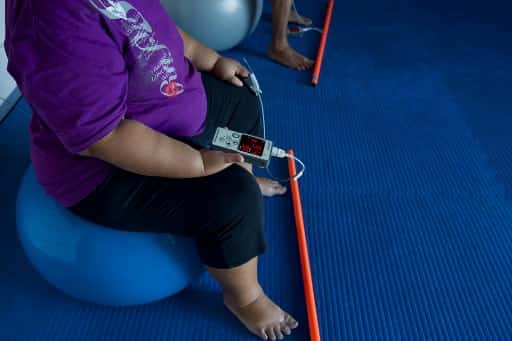
Overweight and obesity prevalence is set to cost the global economy 3.3 per cent of GDP by 2060, according to a new study by the World Obesity Federation and RTI International. The study, which was peer-reviewed and published today in BMJ Global Health, analyses the current economic impact of overweight and obesity in 161 countries. It provides the first-ever country-specific global estimate of the economic impacts of the non-communicable disease (NCD), mainly due to avoidable healthcare costs of cancer, diabetes and cardiovascular disease attributable to obesity.
The study found that if the number of people living with obesity remained at 2019 levels, US$2.2 trillion could be saved. A five per cent reduction in the projected prevalence of the NCD between 2020 and 2060 would result in an average of US$429 billion in global annual savings.
Also Read |Obesity growing in India and fertility is dipping: National Family Health Survey

China, the United States and India are expected to have the biggest increase in cost to GDP. It is predicted to cost China over $10 trillion, the United States over $2.5 trillion and India nearly $850 billion (2.47% of GDP). Other countries with the economic costs of overweight and obesity projected to exceed $100 billion include Germany, Canada, Australia, Brazil, the United Kingdom and Japan. Of all those countries, it is expected to cost the United Arab Emirates the highest proportion of GDP (11.04 per cent).
Estimates suggest that obesity is currently costing 2.19 per cent of global GDP. The estimated economic loss per capita in 2019 ranges from US$6 in lower-income countries and US$1,110 in higher-income countries.
Johanna Ralston, CEO, World Obesity Federation said, “These estimates of the economic impact of overweight and obesity should alarm governments across the world. The persistent stigmatisation of people living with obesity and policies that do not reflect the most recent evidence have led to failing approaches that ignore obesity’s root causes."
&imwidth=180&imheight=135&format=webp&quality=medium)
Fauzi teaser out: Prabhas takes on the British Empire in patriotic avatar | Watch
&imwidth=180&imheight=135&format=webp&quality=medium)
Google Fitbit Air’s new health guardian feature tracks trends: How it works
&im=FitAndFill=(700,400)&imwidth=180&imheight=135&format=webp&quality=medium)
New Friday OTT releases (October 23, 2026): Gajab Raat, Dorothy, Chaar Yaar- Watch these 6 new movies and TV shows on Netflix, Prime Video and more
&imwidth=180&imheight=135&format=webp&quality=medium)
'You’re a horrible little reporter, aren’t you?': Trump snaps at NBC reporter questioning his support for Ramaswamy's campaign ad
&imwidth=180&imheight=135&format=webp&quality=medium)
Microsoft AI diagnoses complex medical cases more than twice as accurately as doctors, study finds
&imwidth=180&imheight=135&format=webp&quality=medium)
'Already tired of his 9-to-5': Baby born with a moustache becomes internet sensation, video goes viral | Watch
&imwidth=180&imheight=135&format=webp&quality=medium)
'My name has always been Ilhan Omar': Congresswoman hits back at Trump, calls him a 'creep'
&imwidth=180&imheight=135&format=webp&quality=medium)
Massive 7.2 magnitude quake off Vanuatu triggers tsunami warning for coasts within 300 km
&imwidth=180&imheight=135&format=webp&quality=medium)
Horrific video shows the moment 18-year-old fell to her death from Mexico amusement park ride
&imwidth=180&imheight=135&format=webp&quality=medium)
Jenna Ortega plans TV break after Wednesday: ‘I want to leave time for new things’
&imwidth=180&imheight=135&format=webp&quality=medium)
First Lady Melania Trump secures ceasefire between Russia, Ukraine in Oleshky: White House
&imwidth=180&imheight=135&format=webp&quality=medium)
Viral video shows cross falling on Colombia priest, no official confirmation | WATCH
&imwidth=180&imheight=135&format=webp&quality=medium)
Chemical warehouse explosion in Mexico: Several injured in multiple blasts, 1,000 evacuated in León
&im=FitAndFill=(700,400)&imwidth=180&imheight=135&format=webp&quality=medium)
Why do army tanks have different types of armour?
&imwidth=180&imheight=135&format=webp&quality=medium)
India-China face-off continues near Arunachal’s Taksing, reveals ITBP chief in first official confirmation of tensions
&imwidth=180&imheight=135&format=webp&quality=medium)
US charges two former FBI officials with lying to Congress about Hunter Biden probes. 'Politically motivated' Trump grievance or something else?
&imwidth=180&imheight=135&format=webp&quality=medium)
US midterms 2026: Trump revises Canada tariffs as Susan Collins faces tight re-election race in Maine
&imwidth=180&imheight=135&format=webp&quality=medium)
AI deepfakes are spreading online: Why is removing them so difficult?
&imwidth=180&imheight=135&format=webp&quality=medium)
Emmanuel Macron calls Paris suburb shooting a 'racist terrorist attack' after one killed, several injured
&imwidth=180&imheight=135&format=webp&quality=medium)
Iran targeting US diplomats? Intelligence warns of 'advanced' assassination plots: Report
&imwidth=180&imheight=135&format=webp&quality=medium)
IND vs NZ 2nd T20I: Shreyas Iyer on brink of breaking Rohit Sharma’s record
&imwidth=180&imheight=135&format=webp&quality=medium)
Will the US attack Iran this weekend? Trump's envoy says, 'absolutely'
&imwidth=180&imheight=135&format=webp&quality=medium)
Global cybersecurity alert: PHP flaws trigger website shutdowns as hack attempts surge into millions
&imwidth=180&imheight=135&format=webp&quality=medium)
Nairobi building collapse: Several feared trapped after 16-storey structure crumbles; rescue operation underway
&imwidth=180&imheight=135&format=webp&quality=medium)
US midterms 2026: Viral video claims Lindsey Graham paid underage men for sex; clip released weeks before his sister's Senate race
&imwidth=180&imheight=135&format=webp&quality=medium)
Five killed, several injured after explosion in Bihar's Siwan as firecrackers catch fire
&imwidth=180&imheight=135&format=webp&quality=medium)
US Navy, Marine Corps boards defy Trump's transgender military ban, vote to retain troops
&imwidth=180&imheight=135&format=webp&quality=medium)
Anthropic security chief issues grim cyberattack warning: ‘It’s going to get a lot worse’
&imwidth=180&imheight=135&format=webp&quality=medium)
Gravitas | US attack could trigger WW III: Russian planes in Tehran, Israeli jets, US warships in action
&imwidth=180&imheight=135&format=webp&quality=medium)
IND-W vs ZIM-W, 1st ODI: Rawal, Charani star in India’s nine-wicket win over Zimbabwe
&imwidth=180&imheight=135&format=webp&quality=medium)
Pakistan airline PIA unveils new crew uniforms, faces online criticism
&imwidth=180&imheight=135&format=webp&quality=medium)
China's dancing robot turns violent bodyguard, lifts cars and fights intruders - Watch
&imwidth=180&imheight=135&format=webp&quality=medium)
'This is humiliation': Vijay Deverakonda under fire over controversial marriage proposal remark on Koffee With Karan 9
&imwidth=180&imheight=135&format=webp&quality=medium)
Scientists make digital nose that can sniff and send scents over the internet
&imwidth=180&imheight=135&format=webp&quality=medium)
Tu Hai Meri Kiran film review: Sonakshi Sinha and Zaheer Iqbal's thriller gets tangled in its own twists
&imwidth=180&imheight=135&format=webp&quality=medium)
Did Neha Bora call for Bangladesh-like GenZ protest, 'anarchy' in India? WION Fact-checks viral claim
The study also says that total economic costs are likely to increase by four times in high-income countries whereas the increase is expected to be between 12-25 times in low and middle-income countries. In the WHO Europe region, they are expected to more than double compared with a 26-fold increase in the WHO Western Pacific Region.
Also Read |Diabetes drug helps people with obesity to lose weight significantly, says study
Both direct and indirect costs were analysed in the study. The former includes medical and non-medical expenses while the latter includes the costs in the process of seeking formal healthcare, such as the cost of travel for patients and caregivers. Other indirect costs include economic loss from premature mortality, missed days of work, and reduced productivity while at work.
Medical fees makes up nearly all (99.8 per cent) of direct costs on average across all countries. The cost of premature mortality contributes to a significant portion (69.1 per cent on average) of all indirect costs. Indirect costs have a greater impact on GDP than direct costs (61-88 per cent vs 12-39 per cent across income groups respectively).
The World Obesity Federation estimated earlier this year that one billion people will be living with obesity by 2030. Last year with RTI International, the organisation launched a pilot study for the economic impact of overweight and obesity, focusing on eight countries. The World Obesity Federation is calling for world leaders at the United Nations General Assembly to address the root cause of obesity through systemic solutions, rather than focusing on individual responsibility.
"This study has highlighted the need for urgent, concerted and holistic action to address the global rise in overweight and obesity prevalence. We can alter this through the right policy and private sector attention to reduce factors in the environment that can cause the non-communicable disease," Ralston said.
(With inputs from agencies)

