7.6-magnitude earthquake rocks Neiafu in Tonga: Is there a tsunami warning?

&imwidth=600&imheight=450&format=webp&quality=medium "7.6-magnitude earthquake rocks Neiafu in Tonga: Is there a tsunami warning?")
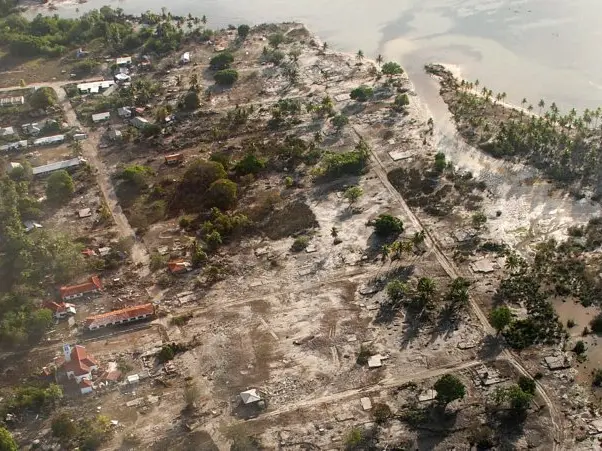
An aerial photo taken on September 30, 2009 shows tsunami devastation in the main town in Niuatoputapu, Hihifo, Tongo Photograph: (AFP)
A 7.6-magnitude quake struck near Tonga, about 150 km from Neiafu, at a depth of 237 km. The Pacific Tsunami Warning Center ruled out a tsunami. No damage reported, but residents were advised to move to higher ground.
A magnitude 7.6 earthquake struck off the Pacific island nation of Tonga on Tuesday (Mar 24), according to a report by the United States Geological Survey (USGS).The quake hit at a depth of 237 kilometres (147 miles) roughly 150 kilometres west of Tonga's second-largest town of Neiafu, the USGS said. The Pacific Tsunami Warning Center (PTWC) ruled out chances of tsunami after a deep 7.6 magnitude earthquake struck near the Tonga islands. "There is no tsunami threat because the earthquake is located too deep inside the earth," PTWC said. The earthquake on Tuesday struck closer to the Vava’u cluster. The earthquake's epicenter was over 150 km from the town of Neiafu in Tonga, the USGS added. There were no immediate reports of damage. Tonga’s National Disaster Risk Management Office warned all in the low-lying island nation to move immediately to higher ground.
Where is Tonga?
Tonga is a Pacific archipelago comprising 171 islands and a population of just over 100,000, with most residents living on the main island of Tongatapu. The country lies around 1,800 km northeast of New Zealand and sits along the Pacific Ring of Fire, a region known for frequent earthquakes and volcanic eruptions. In 2022, a tsunami triggered by a volcanic eruption in Tonga claimed three lives.
What should one do during an earthquake?
Trending Stories
)
)
)
&im=FitAndFill=(700,400))
)
)
)
)
)
&im=FitAndFill=(700,400))
&im=FitAndFill=(700,400))
&im=FitAndFill=(700,400))
)
)
&im=FitAndFill=(700,400))
)
)
)
)
)
)
)
)
)
)
&im=FitAndFill=(700,400))
)
- If you are indoors, drop to the ground, take cover under sturdy furniture, and hold on. Stay away from windows and heavy objects that could fall.
- If you are outdoors, move to an open area away from buildings, trees, and power lines.
- If you are in a vehicle, pull over safely and remain inside until the shaking stops.
- Can earthquakes cause tsunamis? Yes. Undersea earthquakes, especially those with a magnitude above 7.5, can displace large volumes of water and trigger tsunamis.
What we know about the Pacific ‘Ring of Fire’?
The Pacific “Ring of Fire” is a vast horseshoe-shaped zone encircling the Pacific Ocean, known for its intense seismic and volcanic activity. It stretches across multiple continents and includes countries like Japan, Indonesia, Chile, and the western coasts of North and South America. Places like Tonga lie along this belt, which is why they often experience earthquakes and volcanic activity.
This region is formed by the movement and interaction of tectonic plates—especially subduction zones, where one plate slides beneath another. These constant shifts make it the most geologically active area on Earth. Around 75 per cent of the world’s active volcanoes and nearly 90 per cent of all earthquakes occur along this belt.

