Delayed retirements: China's answer to pension woes

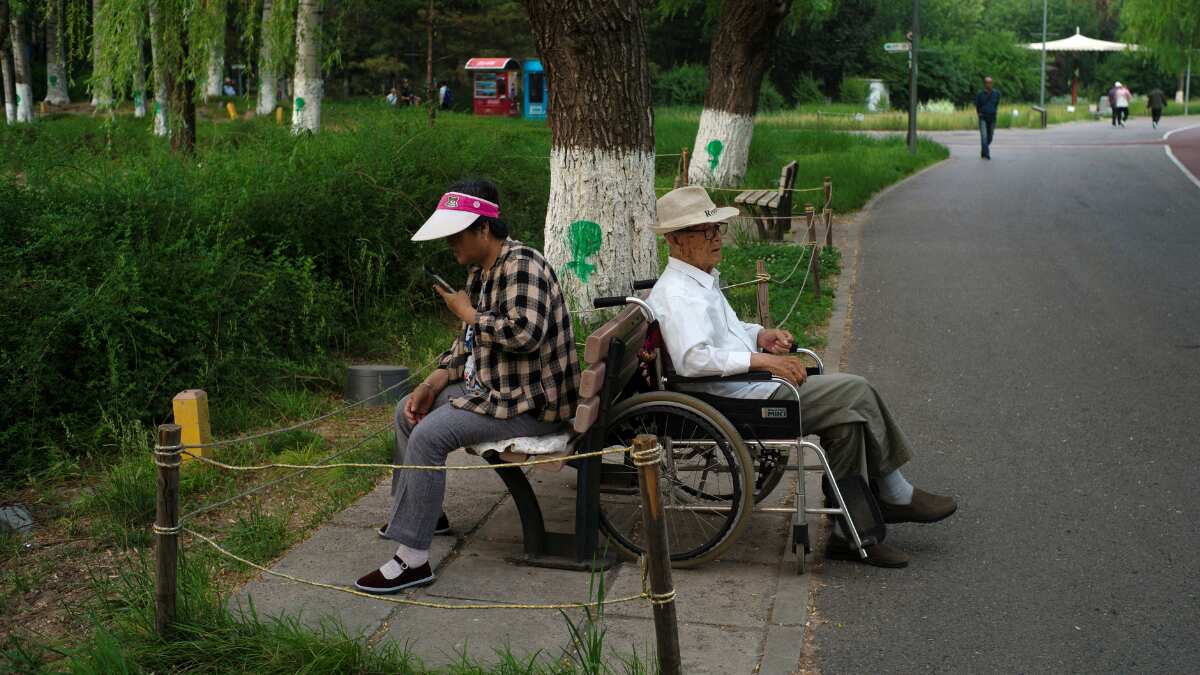
Elderly people rest at a park on a summer day in Beijing, China
Faced with a rapidly ageing population and a pension crisis, China plans to increase its extremely low retirement age, allowing people to work longer.
Presently, men in urban areas can retire at 60 and are eligible to receive a pension from state-backed funds.
While the retirement age for female urban workers is 50 or 55 depending on their occupation.

However, the rural residents in China fall under a different retirement system.
The announcement of Beijing's plans to raise the retirement age on Sunday (Jul21) has provoked strong criticism.
)
First naval drone battle? Ukraine says Sargan 3000 sank Russian unmanned boat
)
Indian importers urge Bangladesh to lift export ban on 'Hilsa' fish ahead of Durga Puja
)
Russia proposes to build 360 kmph Ivolga FG trains in India: What happened on sidelines of BRICS
)
Video of Pakistani lawmaker struggling to read English tribute to Jinnah goes viral - WATCH
)
800 million years old - Scientists discover 'fingerprints' of supercontinent Gondwana in ancient rocks
)
Orlando Bloom addresses Pirates of the Caribbean comeback and reunion with Johnny Depp
)
China discovers vast gold and silver 'mine' in the Pacific with unheard-of deposits
)
'Huge destructive power': North Korea calls its latest missile launches 'live-fire drill' even as US dismisses 'immediate threat'
)
Ganesh Chaturthi 2026: Devotees throng the iconic Lalbaugcha Raja pandal in Mumbai
)
Plane carrying prominent figure crashes at Libya’s Misrata airport: Report
)
Trump says Canada eager to reach a deal, it could come ‘fairly soon’ if Ottawa treats US farmers better
)
Humans may lose control of AI: Anthropic CEO calls for slowdown, Altman, Musk back him
)
‘Let’s go’: Newly declassified videos show dramatic rescue of US Air Force officers downed in Iran
)
‘Want to reset ties with India, have engagement based on mutual interests,’ says Bangladesh minister
)
Israeli minister calls to strip Gaza film directors of citizenship
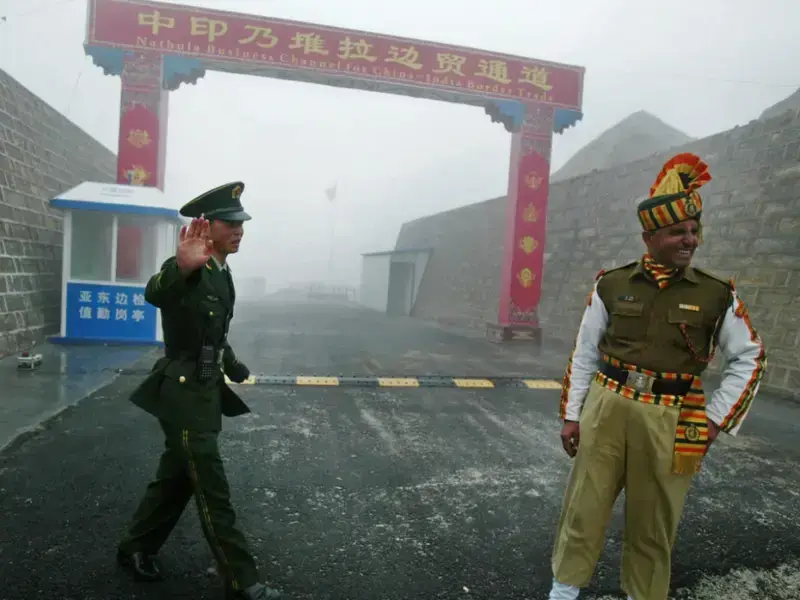)
China thinned Himalayan troop presence in 2025, India defence report says; terms border situation 'stable'
)
'Nobody knows if it can be in control': ‘Godfather’ of AI, China spy chief back AI slowdown calls, flags political threat
&im=FitAndFill=(700,400))
Why Chinese PL-15 air-to-air missiles use dual-pulse motors compared to European interceptors
)
Natural caffeine sources gain popularity; matcha & botanicals offer calm energy
&im=FitAndFill=(700,400))
Why European Meteor missiles use ramjet engines compared to standard US solid rockets
)
Women's Asia Cup 2026: India denied trophy once again despite winning the title
)
Woman removes all her clothes on American Airlines flight, performs 'indecent acts'; arrested
)
Pakistan puts Pak Rs 70 lakh bounty on UN terrorist Masood Azhar; move draws skepticism in Delhi
)
Veteran Bollywood actress Nafisa Ali shares health update as Stage 4 cancer progresses, starts targeted therapy
)
Did India risk its US trade deal despite softer stance at BRICS?
&im=FitAndFill=(700,400))
New OTT releases this week (September 14-20, 2026): Lust Stories 3, Waiting Hai, Irumudi- 5 new titles coming on Netflix, Prime Video and more
)
Russian drone hits Warsaw-bound train near Polish border, Zelensky accuses Moscow of ‘deliberate’ targeting
)
Delhi’s balancing act: BRICS serves as a stage for West Asia diplomacy
)
NEET-UG to move to computer-based test soon, NTA DG says ‘CBT is the future’
)
Liam Neeson sparks romance rumours after holding hands with Stella Stocker at TIFF 2026
)
Turkish Airlines plane flies through a storm three times, triggering severe turbulence
)
Iran, India agree to deepen humanitarian and political ties, President Pezeshkian says
)
Did China give Iran intel before US base strike that killed 3 troops? Trump says, 'You’re right...'
)
Practical Magic 2 breaks Spidey spell over North American box office
“In accord with the principles of voluntariness and flexibility, we will gradually and systematically advance the reform of progressively delaying the legal retirement age,” China’s ruling Communist Party said on Sunday.
Notably, the plan, together with crucial reforms, was officially released in a resolution which was issued three days after the conclusion of China's third plenum—a significant political conference held every five years in Beijing.
The country already struggling with a declining birth rate and an ageing population, and the policymakers have been discussing increasing the retirement age for over a decade.
At the 2013 plenum, a top decision-making body of the Communist Party said that it is now essential to come up with a policy to delay the retirement age.
Though the government did not officially announce any details over the weekend, however, according to a report by the Chinese Academy of Social Sciences released in December last year, a top government think tank estimated that the retirement age will be revised to 65 years.
Interestingly, in 2019, the same think tank predicted that China’s state pension fund would run dry by 2035 because of its declining workforce.
It may be mentioned here, that in early 2023, widespread protests erupted in several major urban centres as elderly residents rallied against significant reductions in their medical benefits.
Driven by concerns that local authorities were raiding their personal pension accounts to address state pension fund deficits, retirees expressed their outrage.
(With inputs from agencies)