Death toll in Venezuela quake climbs above 1,400 as UN estimates damage at 6% of GDP

&imwidth=600&imheight=450&format=webp&quality=medium "Death toll in Venezuela quake climbs above 1,400 as UN estimates damage at 6% of GDP")
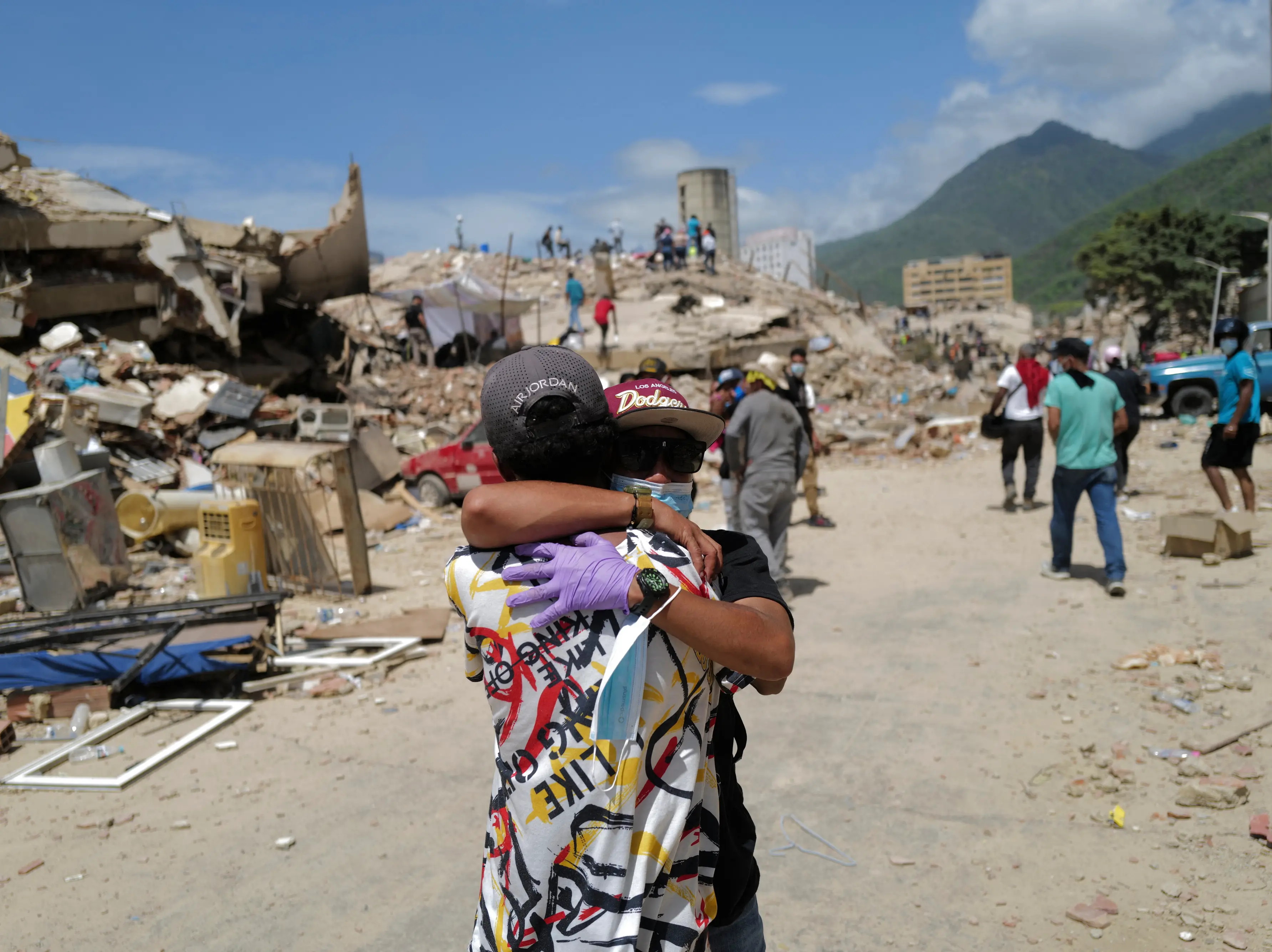
Volunteers embrace amid the rubble of collapsed buildings in Caraballeda, La Guaira state, Venezuela, on June 27, 2026, following earthquakes. Photograph: (AFP)
Another magnitude 4.7 earthquake struck off Venezuela's northern coast on Friday, days after twin powerful quakes triggered one of the country's worst natural disasters in decades.
The death toll from Venezuela's twin earthquakes climbed to 1,430 on Saturday as millions of people continued to face shortages of sanitation facilities and other essential services. With public anger mounting over the response of local authorities, US backed interim Venezuelan leader Delcy Rodriguez said the country was not alone.
The United States said one runway at Simon Bolivar International Airport had resumed operations, allowing C-17 military aircraft to land. A US naval ship had also reached the Venezuelan coast with additional assistance.
The UN Office for the Coordination of Humanitarian Affairs said search and rescue teams from at least 17 countries were being deployed to help locate survivors.
The United Nations' migration agency assessed available population and damage data and estimated that "up to 6.76 million people could be affected," and would "require emergency shelter, safe water, sanitation and hygiene services, healthcare, protection support and essential relief items."
Also Read: Israeli cabinet split on Lebanon deal; Netanyahu calls it 'historic', Ben Gvir 'big mistake'
UN estimates damage at $6.7 billion
Trending Stories
&imwidth=280&imheight=210&format=webp&quality=medium)
&imwidth=280&imheight=210&format=webp&quality=medium)
&imwidth=280&imheight=210&format=webp&quality=medium)
&imwidth=280&imheight=210&format=webp&quality=medium)
&imwidth=280&imheight=210&format=webp&quality=medium)
&im=FitAndFill=(700,400)&imwidth=280&imheight=210&format=webp&quality=medium)
&imwidth=280&imheight=210&format=webp&quality=medium)
&imwidth=280&imheight=210&format=webp&quality=medium)
&imwidth=280&imheight=210&format=webp&quality=medium)
&imwidth=280&imheight=210&format=webp&quality=medium)
&imwidth=280&imheight=210&format=webp&quality=medium)
&imwidth=280&imheight=210&format=webp&quality=medium)
&im=FitAndFill=(700,400)&imwidth=280&imheight=210&format=webp&quality=medium)
&imwidth=280&imheight=210&format=webp&quality=medium)
&imwidth=280&imheight=210&format=webp&quality=medium)
&imwidth=280&imheight=210&format=webp&quality=medium)
&imwidth=280&imheight=210&format=webp&quality=medium)
&im=FitAndFill=(700,400)&imwidth=280&imheight=210&format=webp&quality=medium)
&im=FitAndFill=(700,400)&imwidth=280&imheight=210&format=webp&quality=medium)
&imwidth=280&imheight=210&format=webp&quality=medium)
&imwidth=280&imheight=210&format=webp&quality=medium)
&imwidth=280&imheight=210&format=webp&quality=medium)
&imwidth=280&imheight=210&format=webp&quality=medium)
&imwidth=280&imheight=210&format=webp&quality=medium)
&im=FitAndFill=(700,400)&imwidth=280&imheight=210&format=webp&quality=medium)
&imwidth=280&imheight=210&format=webp&quality=medium)
&imwidth=280&imheight=210&format=webp&quality=medium)
&imwidth=280&imheight=210&format=webp&quality=medium)
&imwidth=280&imheight=210&format=webp&quality=medium)
&imwidth=280&imheight=210&format=webp&quality=medium)
&imwidth=280&imheight=210&format=webp&quality=medium)
&imwidth=280&imheight=210&format=webp&quality=medium)
&imwidth=280&imheight=210&format=webp&quality=medium)
&imwidth=280&imheight=210&format=webp&quality=medium)
The United Nations also estimated on Saturday that the twin earthquakes caused physical damage worth $6.7 billion, equivalent to about six per cent of Venezuela's gross domestic product.
According to the UN Development Programme, the preliminary estimate is based on seismic modelling, satellite imagery and population data. It includes losses to assets such as housing, but does not account for wider economic disruption caused by Wednesday's disaster.
UNDP said the back-to-back earthquakes struck major population and economic centres along Venezuela's northern coast, including Caracas and the states of La Guaira, Carabobo, Miranda, Yaracuy and Aragua.
"Direct physical damage is estimated at $6.7 billion (range of $4.7 billion to $8.7 billion), driven by losses to housing and economic assets," the statement said.
"This does not include infrastructure damage, wider economic disruption and longer-term reconstruction costs," it said, adding that the total economic impact could be between 1.5 and three times the cost of direct damage.