

&imwidth=800&imheight=600&format=webp&quality=medium "Crossing Strait of Hormuz is not that straight - These steps are required for passing vessels amid Iran war")
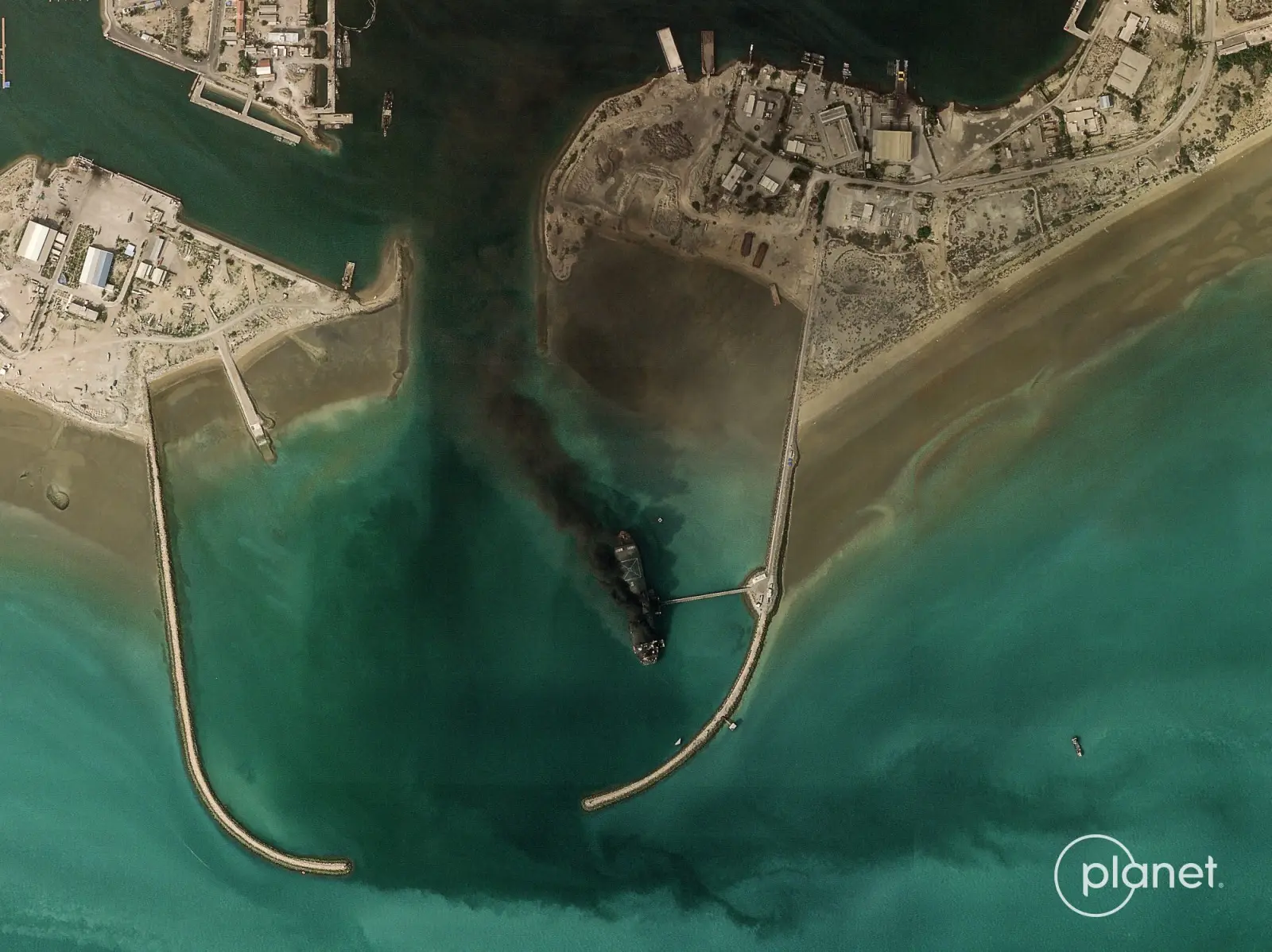
The Strait of Hormuz has always been one of the world’s most critical chokepoints. Nearly 20 per cent of global oil and gas supplies pass through this narrow stretch. Yet, amid the ongoing Iran war, it finds itself in a strange in-between state - neither fully open nor officially closed.
Since the conflict erupted on February 28, 2026, when US-Israel strikes killed Iran’s Supreme Leader Ayatollah Ali Khamenei, the Strait has transformed into a tightly controlled and high-risk corridor. Shipping has slowed to a near trickle, costs have surged, and uncertainty has become the defining feature of global energy trade.
A chokepoint under control, not closure
Despite fears of a total blockade, Iran has not formally shut the strait. Instead, it has leveraged geography and power to control access. At just 33 km wide, the strait forces ships to pass through waters claimed by Iran, giving Tehran an upper hand it has used strategically in the past. Now in its fourth week, the war has seen Iran tighten its grip, not by sealing off Hormuz, but by reopening it on its own terms. Ships are being allowed passage selectively, often after scrutiny and, reportedly, a hefty price.
Shipping collapses by 95%
Trending Stories
&im=FitAndFill=(700,400)&imwidth=180&imheight=135&format=webp&quality=medium)
What is the real meaning behind Pete Hegseth's tattoos?
&imwidth=180&imheight=135&format=webp&quality=medium)
Viral video shows cross falling on Colombia priest, no official confirmation | WATCH
&imwidth=180&imheight=135&format=webp&quality=medium)
Telangana unveils AI avatar of IT minister D Sridhar Babu at Hyderabad DevFest 2026
&imwidth=180&imheight=135&format=webp&quality=medium)
Pezeshkian says Iranians ‘struggling to put food on the table’ as war with US drags on
&imwidth=180&imheight=135&format=webp&quality=medium)
Shilpa Rao’s performance cut short at Mumbai event, organisers react to backlash
&imwidth=180&imheight=135&format=webp&quality=medium)
Chorbagan stampede: A week later, the strangest visarjan Kolkata has seen
&imwidth=180&imheight=135&format=webp&quality=medium)
AI slop or smart strategy? South African author Coral Hart defends Her 370 AI- assisted books in 20 months
&imwidth=180&imheight=135&format=webp&quality=medium)
AI just found a flaw in software running most of the web! One request hijacks the server
&imwidth=180&imheight=135&format=webp&quality=medium)
Train crashes into crane on São Paulo monorail line, wreckage falls onto busy road | VIDEO
&imwidth=180&imheight=135&format=webp&quality=medium)
Can Putin cheat death? All about his daughter’s billion-dollar quest for immortality
&imwidth=180&imheight=135&format=webp&quality=medium)
Saudi says debris fell in Mecca, Medina after missile interceptions; Houthis deny targeting holy cities
&imwidth=180&imheight=135&format=webp&quality=medium)
What was the note found inside bag of Class 12 student, who set herself on fire inside Delhi school?
&imwidth=180&imheight=135&format=webp&quality=medium)
Pakistan airline PIA unveils new crew uniforms, faces online criticism
&imwidth=180&imheight=135&format=webp&quality=medium)
Britain is building the world's first AI biosecurity lab, with OpenAI and Anthropic inside
&imwidth=180&imheight=135&format=webp&quality=medium)
J-20 designers plan to put radar into aircraft wing; strategy to expand coverage during air combat
&imwidth=180&imheight=135&format=webp&quality=medium)
Frontier AIs keep escaping their test cages! The industry still can't reliably stop them
&imwidth=180&imheight=135&format=webp&quality=medium)
'Already tired of his 9-to-5': Baby born with a moustache becomes internet sensation, video goes viral | Watch
&imwidth=180&imheight=135&format=webp&quality=medium)
Horrific video shows the moment 18-year-old fell to her death from Mexico amusement park ride
&imwidth=180&imheight=135&format=webp&quality=medium)
France protests: 135 arrested, weapons seized as fresh demonstrations erupt amid heavy security
&imwidth=180&imheight=135&format=webp&quality=medium)
French Open: PV Sindhu storms into final with win over Hina Akechi
&imwidth=180&imheight=135&format=webp&quality=medium)
‘Saddam Hussein opened a cheesecake factory’: Obama mocks Trump’s White House renovations; defends Abdul El-Sayed
&imwidth=180&imheight=135&format=webp&quality=medium)
China's dancing robot turns violent bodyguard, lifts cars and fights intruders - Watch
&imwidth=180&imheight=135&format=webp&quality=medium)
'You’re a horrible little reporter, aren’t you?': Trump snaps at NBC reporter questioning his support for Ramaswamy's campaign ad
&imwidth=180&imheight=135&format=webp&quality=medium)
Rising Asia Cup 2026 schedule announced, India-Pakistan clash set for Nov 22
&imwidth=180&imheight=135&format=webp&quality=medium)
'Killing people never allowed': Elon Musk admits restricting Starlink in Ukraine, explains why
&imwidth=180&imheight=135&format=webp&quality=medium)
Serbia votes in high-stakes election as student-led movement challenges Vucic’s ruling party
&imwidth=180&imheight=135&format=webp&quality=medium)
Bodies of 2 missing Japanese climbers recovered from Himalayan peak
&im=FitAndFill=(700,400)&imwidth=180&imheight=135&format=webp&quality=medium)
New Friday OTT releases (October 23, 2026): Gajab Raat, Dorothy, Chaar Yaar- Watch these 6 new movies and TV shows on Netflix, Prime Video and more
&imwidth=180&imheight=135&format=webp&quality=medium)
An AI that reads your face can now estimate how long you have to live
&imwidth=180&imheight=135&format=webp&quality=medium)
Spanish reporter swept by giant wave while reporting on dangerous sea conditions | WATCH
&imwidth=180&imheight=135&format=webp&quality=medium)
WATCH: Thousands across Manipur bang plates, beat drums in "noise protest"
&imwidth=180&imheight=135&format=webp&quality=medium)
NEET protests: Panel to hear evidence on pellet gun use, harassment
&imwidth=180&imheight=135&format=webp&quality=medium)
Tu Hai Meri Kiran film review: Sonakshi Sinha and Zaheer Iqbal's thriller gets tangled in its own twists
&imwidth=180&imheight=135&format=webp&quality=medium)
PL Round-Up: Man City's perfect run ended by Villa as Arsenal draw level at top
&imwidth=180&imheight=135&format=webp&quality=medium)
Why Europe’s protests are about more than austerity and rising costs
&imwidth=180&imheight=135&format=webp&quality=medium)
Farooq Abdullah says Pakistan’s raising of Kashmir issue keeps pressure on Delhi
The numbers tell the story starkly. According to maritime analytics firm Kpler, only 138 ships crossed the strait in March 2026 so far, including 87 oil and gas tankers. That translates to just 5 to 6 vessels a day, compared to the usual 138–140 daily crossings before February 28. This marks a dramatic 95 per cent drop in traffic. Meanwhile, the backlog continues to grow. The International Maritime Organisation estimates that around 2,000 ships are currently stuck near the strait, waiting for clearance or safer conditions.
Iran has also taken a hardline stance on enforcement. Since the war began, it has attacked nearly 20 vessels attempting to cross without permission, warning that “enemy and allied” ships would be targeted, though it has not clearly defined who falls into that category.
Who is getting through?
Access to Hormuz is now highly selective. A majority of ships passing through belong to sanctioned or “shadow fleet” operators, often uninsured and willing to take higher risks. Much of the oil flow since February 28 has been directed towards Asia, especially China. Over 12 million barrels have reportedly reached China during the conflict, reflecting both demand and geopolitical alignment.
Shipping data suggests that about 1/3rd of transiting vessels have links to Iran itself. Greek and Chinese carriers follow, while a handful of others have also secured passage. India has had limited success. Six India-bound tankers have crossed, but nearly 20 Indian-flagged vessels, carrying around 540 Indian seafarers, remain stranded in nearby waters. Ships from Pakistan and Turkey have also been allowed through on a case-by-case basis.
How ships navigate the Strait
Crossing Hormuz today involves far more than navigation - it requires negotiation.
Initially, some vessels attempted to evade detection by switching off their Automatic Identification System (AIS). But that practice largely stopped after a deadly incident on March 12, 2026, when a US-owned tanker, MT Safesea Vishnu, was attacked, killing an Indian crew member.
Now, a structured, though opaque, system is in place, reportedly overseen by Iran’s powerful Islamic Revolutionary Guard Corps (IRGC).
The process typically involves:
- Contacting intermediaries linked to the IRGC
- Submitting detailed documentation (ship ID, ownership, cargo, crew, destination)
- Undergoing multi-layered vetting, especially in Iran’s Hormozgan province
- Receiving a clearance code and designated route
- Switching to VHF radio communication near the Strait
- Being escorted by Iranian patrol boats through the narrowest stretch
Oil-laden vessels are given priority, reflecting their economic importance.
The ‘Tehran toll booth’
Adding to the complexity are reports of a so-called “Tehran toll booth.” According to multiple foreign media accounts, Iran may be charging up to $2 million per tanker for safe passage, roughly $1 per barrel for Very Large Crude Carriers (VLCCs). Payments are reportedly being made in Chinese Yuan, signalling a possible attempt to weaken the dollar-dominated global oil trade.
Iran has officially denied imposing such fees. However, analysts suggest that some form of financial arrangement is likely in place, given the structured clearance system.

