Court reserves decision on challenge to Canada oil pipeline

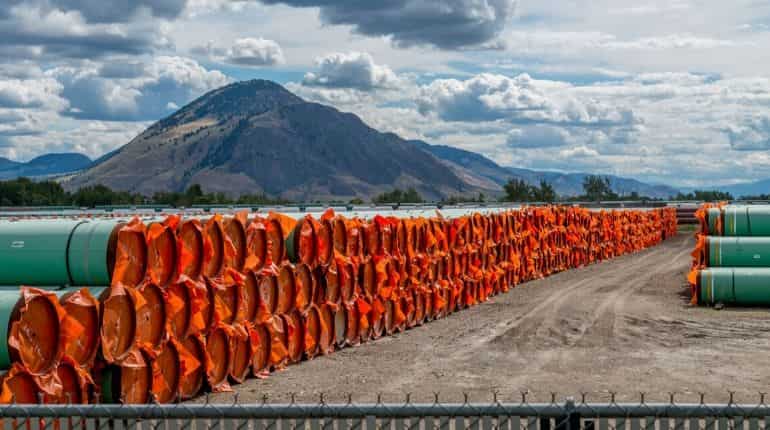
Steel pipe for Canadian Oil Pipeline construction
A panel of judges reserved itsdecisionon Wednesday after hearing arguments from indigenous groups that the Canadian government had failed to properly consult them on expanding itsoilpipeline.
Thechallengeto the FederalCourtof Appeal is the latest obstacle to tripling capacity on the Alberta-to-British Columbia Trans Mountainpipeline, which the Canadianoilindustry says is badly needed.
"It feels like an acrimonious divorce. Obviously there’s a lot of tension here,” Chief Justice Marc Noël said, before saying the judges needed time to make adecisionafter a three-day hearing.

The operator ofCanada's state-ownedoilpipelinehad asked thecourtto dismiss the legalchallengeby four indigenous groups.
Also Watch:Canada approves oil pipeline expansion, says construction should start soon
)
What’s in a name? Trump’s 'Lake America' move gets a tit-for-tat response from Canada
)
Trump gifts Xi a bald eagle sculpture at White House dinner: Here’s what it symbolises
)
‘Not just a local tragedy’: Nepal PM Shah warns UN of growing climate threat, says Nepal floods were 'a warning to the world'
)
CNN, Politico and MS NOW back in White House after judge blocks Trump’s media ban
)
US judge questions Trump’s decision to ban CNN, MS NOW and Politico from White House
)
'We would all be dead': Netanyahu defends decision to strike Iran's nuclear facilities in his UN speech
)
Mumbai Indians appoint Luke Williams as head coach for Women’s Premier League
)
IIT Bombay CCTV footage emerges: Sahil Wakode seen looking at phone in examination hall
)
Cyclone Arnab: Landfall expected before midnight tomorrow as IMD issues orange alerts across six states
)
Welcome actor Mushtaq Khan dies at 56 after battling cancer
)
Trump's welcome to Xi demonstrates 'attraction' to dictators: Chuck Schumer
)
WION Iconic Tourism Summit 2026: Union Minister Shekhawat on 'experiential travel', peace diplomacy
)
Nations League: Germany draw on Klopp debut; Portugal, Norway win
)
'AI got into my speech': Prince Harry jokes after teleprompter failure at event in New York
)
Scientists detect first radio signals directly from faraway planet
)
What’s on the menu? Inside Trump’s lavish White House state dinner for Xi
)
A seven-day roadmap? Iran proposes plan to end war, reopen Strait of Hormuz and resume nuclear talks
)
China to test supersonic jet that moves at Mach 2, double the speed of sound
)
Xi Jinping's 'special plane' vs Trump's Air Force One: What's the difference?
)
‘We’ve never gotten along better’: Trump praises Xi, jokes about White House ballroom at high-stakes state dinner
)
'Partners rather than rivals': Xi Jinping's first message after landing in US for Trump summit
)
Yemen called Trump for US military support in fight against Houthis: Official
)
WION Iconic Tourism Summit: Is India's travel boom outrunning its airports, airlines and hotels?
)
2,000-foot tube, laser tests and more: China builds towns to expand nuclear arsenal, satellite images show
)
Meet Adrian Abraham: 9-year-old Indian-origin guitar prodigy aiming for a Guinness World Record
)
US faces fresh cost crunch as mortgage rates hit 7%, oil tops $107 and gas prices surge
)
Trump-Xi state dinner 2026: Who is invited? Full guest list of tech CEOs, business leaders and officials
)
'Making history': Xi Jinping praises Trump as US-China leaders dine at White House
)
Australian PM Anthony Albanese calls OpenAI AI incident 'unacceptable' after restricted data access
)
'What kind of confession is this?': Pakistan PM Shehbaz Sharif’s 'terrorists would be roaming New York' remark goes viral, raises alarm online. Watch
&im=FitAndFill=(700,400))
Netanyahu at UN: Mass walkout, attack on Mamdani and Iran threats | In Pics
)
'We do not wish to continue. It's America that must choose': Iran president Pezeshkian calls on US to end war
)
WION Iconic Tourism Summit: How local tourism MSMEs must upskill for AI integration
)
Russia likely to target Spain, France and Italy in drone attacks, warns CIA: Report
)
Trump’s Board of Peace unveils $2.45bn Gaza plan,66 projects: But where’s the money?
)
EC appointment law: Why is the 2023 act controversial, and what happens next? WION explains
)
Ram Mandir donation theft case: Trust gets clean chit, Champat Rai made prosecution witness; 70,000-page charge sheet filed
)
Who is Lt-Gen Nauman Mahmood, Pakistan's first secretary general of Makkah Defence Alliance?
)
Israeli envoy to US Yechiel Leiter’s son critically injured in West Bank ramming attack
)
'Fund people, not bombs': Hundreds take to New York streets as Netanyahu delivers speech at UN; dozens arrested
)
WATCH | China President Xi Jinping lands in US as Trump greets him ahead of high-stakes summit
The indigenous groups "did not negotiate in good faith, or at all," Trans Mountain Corplawyer Maureen Killoran said. Effectively, the groups are attempting to hold a veto over the C$10 billion project despite the government's best attempts to address their concerns, she said.
"This was not a drive-by consultation," Killoran said.
Coldwater Indian Band, one of the four groups, refused to allow drilling for a hydro-geological study to determine risks to its aquifer, she said. The band said earlier this week that protecting its drinking water was its main concern.
The indigenous groups alleged that the Canadian government shared key reports on the project's impact late, or even after the consultation period and that it revised documents. Their concerns include possibleoilspills and threats to endangered southern resident killer whales.
Ottawa bought thepipelinelast year to ensure expansion proceeded, offering a lifeline to Alberta's strugglingoilpatch. Congestedpipelines have forced the Alberta provincial government to curtail production.
Acourtruled in August 2018 that Ottawa had failed to properly consult indigenous people, prompting the government to redo the consultation process before reapproving the expansion in June. But in September, theCourtof Appeal agreed to hear fresh concerns that the government fell short again.
In a written submission, Alberta's government said consultation for Trans Mountain was more extensive than that of any other Canadian infrastructure project, and federal approval should remain in place.
"Regulatory instability and legal uncertainty negatively affect reliable planning and put a chill on investor confidence," lawyers for Alberta's attorney general wrote.
"Consultation is unworkable when, as in this case, it appears the only compromise acceptable to an indigenous group is the abandonment of the project," they added.