Climate change threatens ancient Chinese artwork and statues, warn researchers

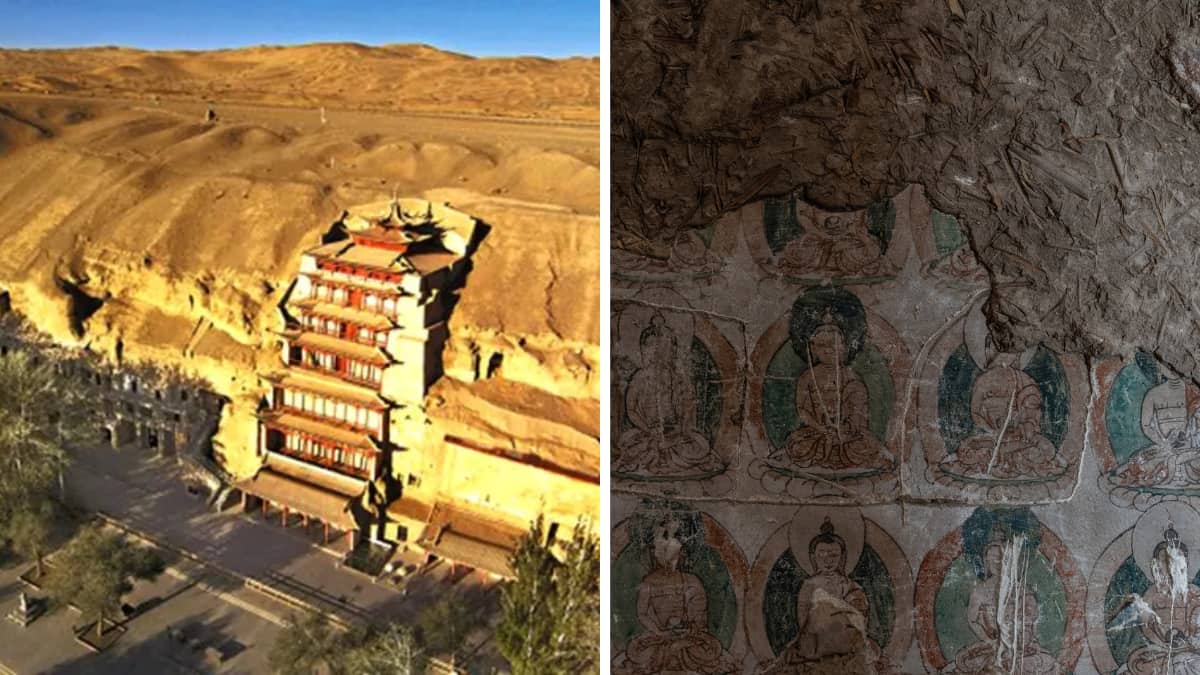
Chinese ancient artwork under threat
Ancient Chinese artwork and statues in northwestern China’s Dunhuang caves which have survived more than a millennium through wars, political upheavals, and even millions of tourists over the years, may not be able to live through climate change, researchers from Greenpeace warned on Monday (July 17).
Extreme weather, climate change pose threat to ancient artefacts
According to environmental group Greenpeace, extreme weather has brought heavy rainfall and moisture to the deserts of China’s Gansu province which now poses a further threat to the caves and their artwork which date back to the 4th century.

The group said that while the total precipitation in the Chinese province has increased since 2000, the number of rainy days has dropped which has led to more bouts of intense downpours.
For centuries now, Gansu’s desert conditions had helped preserve these paintings and statues. However, in recent decades, the Chinese province has witnessed a change in weather patterns with a rise of 0.3 degree Celsius in temperature every decade, faster than the global average.
What’s the damage?
)
Nigeria: Protesters take to the streets, police fire shots
)
US-Iran war: Tehran draws red lines — seven demands before any peace talks
)
Russia-Europe tensions: Polish PM warns Russian attacks could test NATO's unity
&im=FitAndFill=(700,400))
‘Not the US or China’: These are the countries leading the world in arable land
)
Mark Carney mimics Trump in hilarious moment over C$70 billion clean-energy investment; room erupts in laughter
)
Delhi voter roll shake-up: 3.31 million electors flagged in SIR review
)
‘End of my career...’: NSA Doval recalls tense Sikkim mission when China captured Indian intelligence team
)
Report: Iran rebuilding Taleghan 2, nuclear site tied to past weapons research, hit twice by Israel
)
Trump defends AI amid growing alarm, announces new 'AI force' and promises an 'AI czar'
)
Iran sets 7 conditions to end war with US: What are Tehran’s demands?
)
Trump announces ‘AI Force’ as debate grows over AI risks and regulation
)
China may have gained access to US's classified F-35 jets; parts meant for repairs diverted to Hong Kong, sparking Pentagon inquiry
)
Gaza under attack: Health chief's son killed in IDF strikes
)
Arvind Kejriwal, family members, Delhi CM Rekha Gupta get SIR notices
)
Cochin shipyard starts building Indian Navy's next-gen missile vessels
)
Saudi vs Houthis: Houthis claim missiles & drones used in attack on key Saudi sites
)
Ed Sheeran addresses Macklemore's removal, Gaza conflict during Philadelphia concert: 'I cannot hide how I feel'
)
‘Will go to any extent’: Pakistan vows to defend Saudi Arabia amid Houthi attacks
66 years of the Indus Waters Treaty: How India and Pakistan settled a bitter river dispute
)
The Verdict | When precision fails: US commits war crime in Minab school strike, UN finds
Russia attacks Ukraine with 174 drones, kills 8; 2 vessels hit in Black Sea
)
9 women found dead near Johannesburg: South Africans rally, demand 'enough' to femicide
)
Kampala-Ankara rift deepens: Uganda suspends military ties, seeks Fred Lumbuye's extradition
)
Trump wants to rename ‘Artificial Intelligence’, gives 3 options: Which one would you pick?
)
US-Iran war: Tehran sets seven conditions to re-engage in talks with US
)
Reacher star Alan Ritchson opens up about alleged blackmail, suicide attempt during difficult period
)
Africa is splitting, and a lot sooner than estimated, giving way to a new ocean
)
Flying cars in UAE: Ras Al Khaimah signs deal with Chinese company to test new transport
)
Trump bans CNN, MS NOW and Politico from White House over ‘FAKE NEWS’
)
Trump 2.0: Dark days ahead for America’s ‘imperial presidency’
&im=FitAndFill=(700,400))
How many F-35s does Britain, Japan and Israel have?
)
Harry Brook targets long reign at top of T20I rankings after Sri Lanka sweep
)
Russia's deadly Ukraine strikes kill 2 in Sumy, hit Dnipro mall
)
Russia holds first parliamentary elections since the beginning of the Ukraine war
&im=FitAndFill=(700,400))
Meet top 5 Indian batters with fastest T20I centuries
)
Raphinha hat-trick powers Barcelona to 3-1 win over Sevilla in La Liga
)
)
According to the environmental group, delicate paintings have begun flaking and peeling with cracks emerging in different parts of the UNESCO-listed world heritage site that could also over time undermine the structural integrity of the caves.
“Spikes in humidity, flash floods, and cave-ins are already happening,” said Li Zhao, a senior researcher in Greenpeace East Asia’s Beijing office. Li also spoke about how the “increased bouts” of rainfall “pose an acute risk”.
“While we’re still working to document, understand, and conserve these pieces of our history, they’re dissolved before our very eyes. This is a painful reality of the impact of climate change,” said the senior researcher, in a statement.
Li expressed concerns as he said that this is happening to UNESCO-listed caves which are among the best-funded and closely monitored heritage sites in China, but there are hundreds of others which are “less-funded, less-studied sites all around China that are facing these same risks.”
Thiscomes at a time when China is in the midst of conducting a nationwide cultural heritage survey but the Greenpeace researcher has said the process might take years and by then some of the country’s treasures could already be lost.
Not a unique case
Friends of Nature, a Beijing environmental group, last month said that higher levels of rainfall in China’s northern province of Shanxi have caused damage to ancient buildings, some of which are more than 1,000 years old.
Two national heritage sites in the Chinese province, Jinci Temple and Tianlongshan grottoes, collapsed, while old towers and walls in Shanxi have suffered damage due to unusually heavy rain, said the environmental group, according to Reuters.
A report by Bloomberg citing researchers from several countries from France to Namibia and Indonesia to Australia, said that there is evidence that climate change had accelerated the degradation of some of the ancient cave and rock art in their countries.
This has been attributed to floods eroding the artwork while salt crystallisation can cause flaking and peeling and the combination of moisture and heat can even sometimes cause rocks with ancient paintings to explode.
About Mogao Caves in Dunhuang
According to UNESCO, the site is one the largest and longest-used treasure houses of Buddhist art in the world. The first cave was constructed in 366 AD and currently, the site’s 492 caves are home to about 45,000 square metres of murals and more than 2,000 painted sculptures.
Dunhuang has also been described as an oasis in the desert which would be a frequent stop for traders travelling the Silk Road route between China and Central Asia and over the next 1,000 years became a repository of “unmatched historical value”.
WATCH WION LIVE HERE
You can now write for wionews.com and be a part of the community. Share your stories and opinions with us here.