China tests world’s largest floating wind turbine, a 17 MW giant that could power 6,300 homes a year

&imwidth=600&imheight=450&format=webp&quality=medium "China tests world’s largest floating wind turbine, a 17 MW giant that could power 6,300 homes a year")
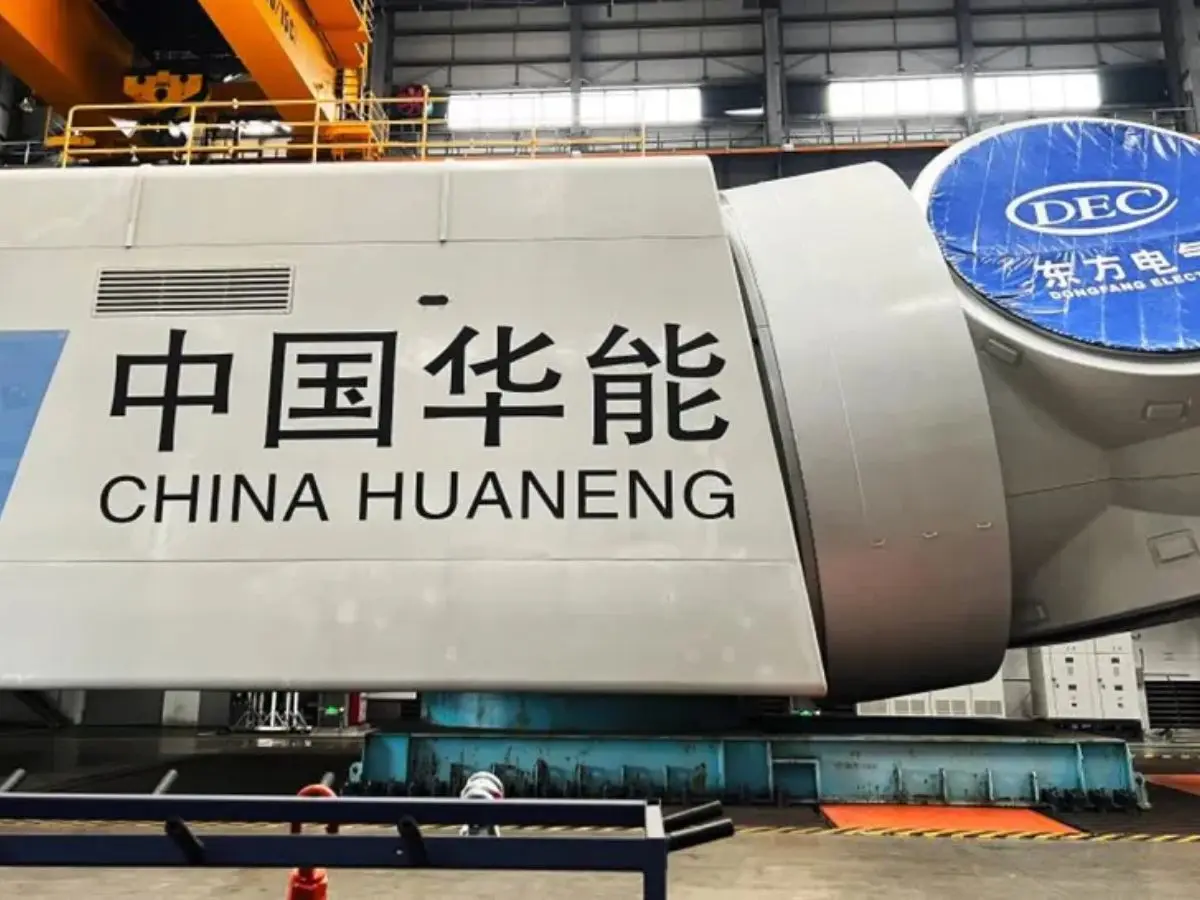
China’s floating wind turbine smashes power records Photograph: (China Huaneng Group)
The introduction of record-breaking floating turbines could be transformative for nations with deep coastal waters.
Chinese engineers have revealed a prototype floating wind turbine that has set new records in power generation, potentially reshaping the future of renewable energy. Developed by state-owned enterprises China Huaneng Group and Dongfang Electric Corporation, the turbine is designed to produce 17 megawatts (MW) of clean electricity, or around 68 million kilowatt hours (kWh) annually. According to the US Energy Information Administration, this is sufficient to power approximately 6,300 American households.
The turbine’s nacelle, the housing that contains the generator, is mounted on a 152-metre tower, topped with blades that span 262 metres in diameter. Each full rotation sweeps an area of 53,000 square metres, equivalent to nearly eight football pitches.
Testing extreme engineering at sea
The project’s developers emphasise that offshore conditions present considerable challenges, with turbines required to withstand high winds and powerful waves. The new prototype has been engineered to survive waves more than 24 metres high and winds exceeding 73 miles per hour, equivalent to typhoon-force conditions.
Later this year, the turbine will undergo testing off the coast of Yangjiang in southern China. If successful, it could mark a breakthrough in offshore renewable energy by demonstrating that floating turbines can reliably generate large-scale electricity in deep waters, where traditional fixed-bottom structures are not viable.
Expanding wind power into deeper waters
Trending Stories
&imwidth=280&imheight=210&format=webp&quality=medium)
&im=FitAndFill=(700,400)&imwidth=280&imheight=210&format=webp&quality=medium)
&im=FitAndFill=(700,400)&imwidth=280&imheight=210&format=webp&quality=medium)
&imwidth=280&imheight=210&format=webp&quality=medium)
&imwidth=280&imheight=210&format=webp&quality=medium)
&imwidth=280&imheight=210&format=webp&quality=medium)
&imwidth=280&imheight=210&format=webp&quality=medium)
&imwidth=280&imheight=210&format=webp&quality=medium)
&imwidth=280&imheight=210&format=webp&quality=medium)
&imwidth=280&imheight=210&format=webp&quality=medium)
&imwidth=280&imheight=210&format=webp&quality=medium)
&imwidth=280&imheight=210&format=webp&quality=medium)
&imwidth=280&imheight=210&format=webp&quality=medium)
&imwidth=280&imheight=210&format=webp&quality=medium)
&imwidth=280&imheight=210&format=webp&quality=medium)
&imwidth=280&imheight=210&format=webp&quality=medium)
&imwidth=280&imheight=210&format=webp&quality=medium)
&imwidth=280&imheight=210&format=webp&quality=medium)
&imwidth=280&imheight=210&format=webp&quality=medium)
&imwidth=280&imheight=210&format=webp&quality=medium)
&imwidth=280&imheight=210&format=webp&quality=medium)
&imwidth=280&imheight=210&format=webp&quality=medium)
&im=FitAndFill=(700,400)&imwidth=280&imheight=210&format=webp&quality=medium)
&imwidth=280&imheight=210&format=webp&quality=medium)
&imwidth=280&imheight=210&format=webp&quality=medium)
&imwidth=280&imheight=210&format=webp&quality=medium)
&imwidth=280&imheight=210&format=webp&quality=medium)
&imwidth=280&imheight=210&format=webp&quality=medium)
&imwidth=280&imheight=210&format=webp&quality=medium)
&imwidth=280&imheight=210&format=webp&quality=medium)
&imwidth=280&imheight=210&format=webp&quality=medium)
&imwidth=280&imheight=210&format=webp&quality=medium)
&imwidth=280&imheight=210&format=webp&quality=medium)
&imwidth=280&imheight=210&format=webp&quality=medium)
While fixed-bottom offshore wind turbines dominate current installations, their use is limited to relatively shallow waters. The North Sea, for instance, averages a depth of 90 metres, making it suitable for fixed-bottom systems. However, with much of the world’s oceans far deeper, averaging 3,682 metres according to the National Oceanic and Atmospheric Administration (NOAA), floating systems are essential for tapping into global offshore wind potential.
Current market leaders include the GE Vernova Haliade-X, which produces 13 MW and is deployed at the UK’s Dogger Bank Wind Farm, and Siemens Gamesa’s 11 MW turbines in the US South Fork Wind Farm. Dongfang Electric also tested a 26 MW fixed-bottom turbine in June 2025. Yet, as the Global Wind Energy Council (GWEC) estimates, around 80 per cent of the world’s offshore wind resources lie in waters deeper than 60 metres, too deep for fixed foundations.
The introduction of record-breaking floating turbines could be transformative for nations with deep coastal waters. Japan, for example, has limited potential for fixed-bottom wind projects but has set a goal of producing 30–45 gigawatts (GW) of offshore wind by 2040, with floating turbines expected to play a crucial role.