China launches JL-1 missile: How will it strengthen Red Dragon's 'second strike capability'

&imwidth=600&imheight=450&format=webp&quality=medium "China launches JL-1 missile: How will it strengthen Red Dragon's 'second strike capability'")
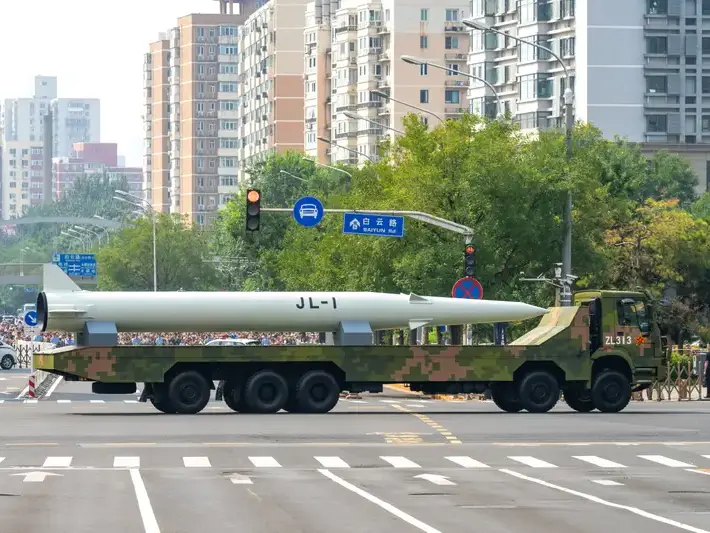
China's JL-1 missile Photograph: (AFP)
China, on the occasion of its Victory Parade, launched a new ballistic missile named JL-1. The weapon is way more advanced than traditional gravity weapons, and it can change the Red Dragon's military game.
While demonstrating its military power at the Victory Parade on September 3, China launched a new ballistic missile called JL-1. Experts said this addition may significantly enhance the country’s strategic arsenal.
The nuclear-capable weapon is designed in a way that makes it easy to deploy from the H-6N strategic bomber. As per reports, the JL-1 missile can strike targets at a distance of 3,000 to 4,000 kilometres. This new missile has a special ability that traditional gravity bombs do not have. JL-1 can be fired directly from the air, allowing an attack without requiring the bomber to enter hostile airspace.
Until now, only the US and Russia were capable of such a comprehensive strike. Now, JL-1 has added China as well to that list.
One of the catchy features of the JL-1 missile is that it can strengthen China's “second strike capability". This means that even after any of China's nuclear weapons were destroyed in a first strike, the JL-1-equipped weapons would still be able to retaliate.
Trending Stories
&imwidth=280&imheight=210&format=webp&quality=medium)
&imwidth=280&imheight=210&format=webp&quality=medium)
&imwidth=280&imheight=210&format=webp&quality=medium)
&imwidth=280&imheight=210&format=webp&quality=medium)
&imwidth=280&imheight=210&format=webp&quality=medium)
&imwidth=280&imheight=210&format=webp&quality=medium)
&imwidth=280&imheight=210&format=webp&quality=medium)
&imwidth=280&imheight=210&format=webp&quality=medium)
&imwidth=280&imheight=210&format=webp&quality=medium)
&imwidth=280&imheight=210&format=webp&quality=medium)
&imwidth=280&imheight=210&format=webp&quality=medium)
&im=FitAndFill=(700,400)&imwidth=280&imheight=210&format=webp&quality=medium)
&imwidth=280&imheight=210&format=webp&quality=medium)
&imwidth=280&imheight=210&format=webp&quality=medium)
&imwidth=280&imheight=210&format=webp&quality=medium)
&imwidth=280&imheight=210&format=webp&quality=medium)
&imwidth=280&imheight=210&format=webp&quality=medium)
&im=FitAndFill=(700,400)&imwidth=280&imheight=210&format=webp&quality=medium)
&imwidth=280&imheight=210&format=webp&quality=medium)
&imwidth=280&imheight=210&format=webp&quality=medium)
&imwidth=280&imheight=210&format=webp&quality=medium)
&imwidth=280&imheight=210&format=webp&quality=medium)
&imwidth=280&imheight=210&format=webp&quality=medium)
&imwidth=280&imheight=210&format=webp&quality=medium)
&imwidth=280&imheight=210&format=webp&quality=medium)
&imwidth=280&imheight=210&format=webp&quality=medium)
&imwidth=280&imheight=210&format=webp&quality=medium)
&imwidth=280&imheight=210&format=webp&quality=medium)
&imwidth=280&imheight=210&format=webp&quality=medium)
&im=FitAndFill=(700,400)&imwidth=280&imheight=210&format=webp&quality=medium)
&imwidth=280&imheight=210&format=webp&quality=medium)
&imwidth=280&imheight=210&format=webp&quality=medium)
&imwidth=280&imheight=210&format=webp&quality=medium)
&imwidth=280&imheight=210&format=webp&quality=medium)
&imwidth=280&imheight=210&format=webp&quality=medium)
Nuclear-capable, hypersonic and cruise missiles
China revealed nuclear-capable missiles that can be launched from sea, land, and air, the first time it has shown off its “triad” of nuclear-ready capabilities, including air-based, long-range missile Jinglei-1, submarine-launched intercontinental missile Julang-3, and land-based intercontinental missiles Dongfeng-61 (DF-61) and Dongfeng-31.
Dongfeng-5C (DF-5C), the latest version, is liquid-fuelled and capable of releasing multiple, independent warheads on a single target and has the entire globe under its strike range.
Hypersonic anti-ship missiles included the Yingji-19, Yingji-17, and Yingji-20. Other featured missiles included cruise missiles, the Changjian-20A, Yingji-18C, Changjian-1000, Yingji-21, Dongfeng-17, and Dongfeng-26D.

