

&imwidth=800&imheight=600&format=webp&quality=medium "Artemis II mission: Why NASA’s 189-Item menu omits bread, salt & pepper. How these everyday foods become hazardous in space")
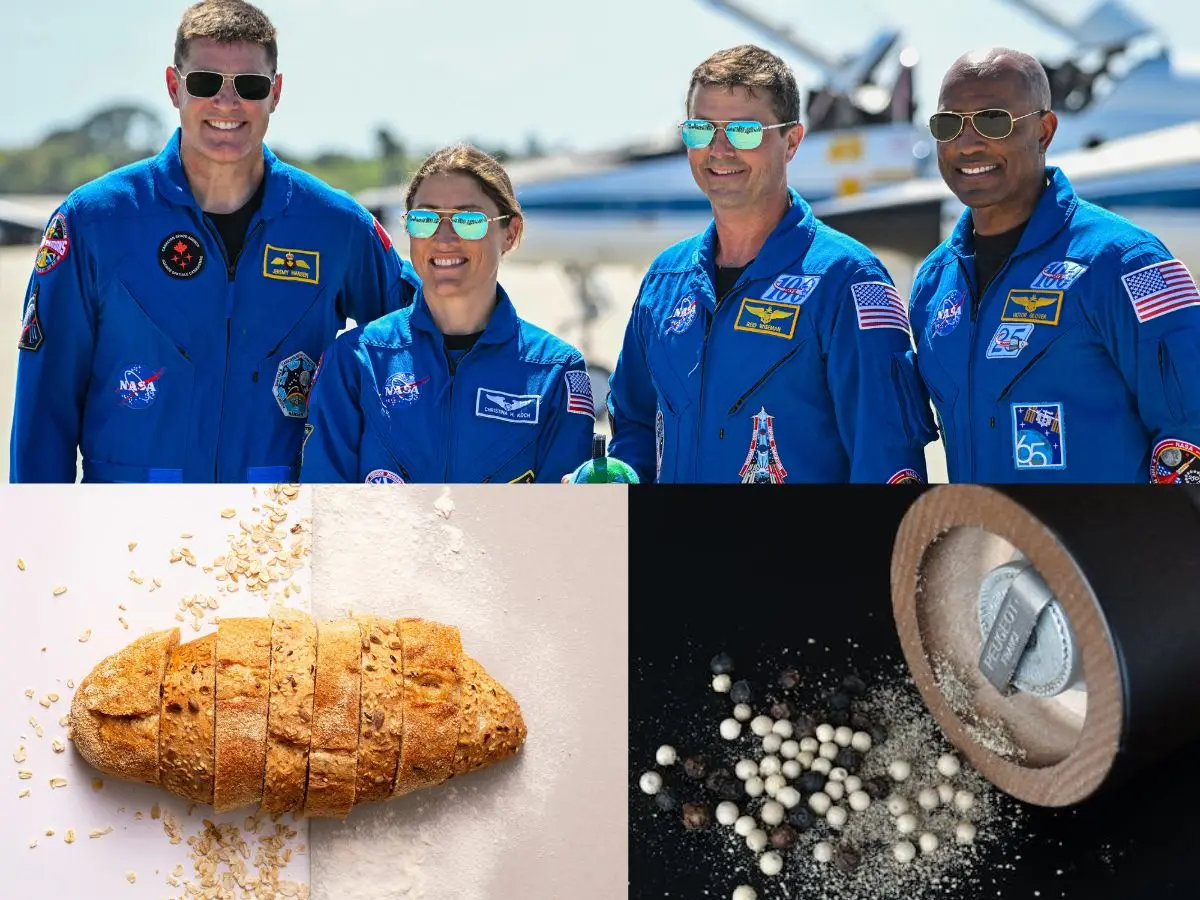
Artemis II, NASA’s first crewed mission of the Artemis programme, marks humanity’s return to deep space nearly 55 years after the Apollo missions. The 10-day journey, launched from Kennedy Space Center aboard the Space Launch System (SLS) and Orion spacecraft, carries astronauts Reid Wiseman, Victor Glover, Christina Koch, and Canadian astronaut Jeremy Hansen on a lunar flyby. Unlike missions to the International Space Station, Artemis II cannot receive fresh provisions, making its food system essential.
Unlike missions to the International Space Station, Artemis II has no option for resupply or fresh food, so every item aboard must be shelf-stable, safe, and compatible with microgravity. To meet these constraints, NASA designed a menu that balances nutritional requirements, morale, and operational practicality. Each astronaut has carefully selected meals tested during preflight to ensure ease of preparation, proper calorie intake, and suitability for life beyond Earth orbit.
ALSO READ: Cake, cookies, BBQ brisket in space? Inside NASA’s 189-item menu for Artemis II’s 10-day mission
The crew participated in preflight testing to help select meals, ensuring that calorie needs, hydration, and nutrient intake were all carefully balanced. Main entrées consist of tortillas, wheat flatbread, vegetable quiche, breakfast sausage, couscous with nuts, mango salad, granola with blueberries, almonds, cashews, barbecued beef brisket, broccoli au gratin, spicy green beans, macaroni and cheese, tropical fruit salad, butternut squash, and cauliflower. Desserts feature chocolate pudding cake, maple cream cookies, cobbler, and candy-coated almonds. Yet, despite the carefully curated menu of 189 items, some common food staples, like breads, salt, and pepper, are intentionally excluded, reflecting the unique challenges of preparing and consuming food in microgravity.
Why Bread, Salt and Pepper Are Banned
Flour tortillas have long replaced traditional bread in space, first introduced on shuttle missions in 1985. Their low crumb count prevents particles from floating freely in microgravity, which could interfere with instruments or clog ventilation systems. Similarly, salt and pepper are excluded, as loose grains would not settle on food and could contaminate cabin air, posing safety risks. Polyethylene dropper bottles provide bulk supplies of liquid seasonings: pepper suspended in oil and salt dissolved in water.
Trending Stories
&imwidth=180&imheight=135&format=webp&quality=medium)
Brendan Taylor overtakes Andy Flower to become Zimbabwe’s leading ODI run-scorer
&imwidth=180&imheight=135&format=webp&quality=medium)
No Kings' Instagram suspended during early-voting campaign
&imwidth=180&imheight=135&format=webp&quality=medium)
'Those who have destroyed must pay': Macron says France feels 'anger and shame' over protest violence
&imwidth=180&imheight=135&format=webp&quality=medium)
Lawrence Bishnoi gang claims responsibility for firing at Tiger Shroff over ties to Salman Khan
&imwidth=180&imheight=135&format=webp&quality=medium)
Flying car race: Alef Aeronautics welcomes Tesla Roadster '11 years' later, but are the two models the same?
&imwidth=180&imheight=135&format=webp&quality=medium)
2.5 lakh cap, 4-passenger limit: What is Delhi's new e-rickshaw draft policy
&imwidth=180&imheight=135&format=webp&quality=medium)
'We are not sitting in ivory towers, we are aware': SC issues notice to Rahul Gandhi, Akhilesh Yadav
&imwidth=180&imheight=135&format=webp&quality=medium)
WATCH | Flames engulf St Petersburg oil sites as Ukraine launches 1,000 drones at Russia
&imwidth=180&imheight=135&format=webp&quality=medium)
Tiger Shroff shows injuries after Juhu firing incident; Eknath Shinde says Mumbai won’t tolerate gang wars
&imwidth=180&imheight=135&format=webp&quality=medium)
Lizard people? Ex-US Army sniper claims soldier killed by 'reptilian beings' in battle near Area 51
&imwidth=180&imheight=135&format=webp&quality=medium)
NFl 2026/27 - Saints vs Steelers to go ahead in Paris next week despite protest
&imwidth=180&imheight=135&format=webp&quality=medium)
Nobel laureate Machado, who dedicated prize to Trump, confirmed as Venezuela opposition leader
&imwidth=180&imheight=135&format=webp&quality=medium)
After Kennedy Center and reflecting pool disputes, Trump turns to Washington golf course plan amid legal battle
&imwidth=180&imheight=135&format=webp&quality=medium)
Why France looks the most fragile in the G7 amid protests and budget deadlock
&imwidth=180&imheight=135&format=webp&quality=medium)
Bessent accuses Europe of refusing secondary tariffs on India, China
&imwidth=180&imheight=135&format=webp&quality=medium)
Tel Aviv-Vienna flight makes emergency landing after bomb threat; Bulgarian Air Force scrambles MiG-29 fighter jet
&imwidth=180&imheight=135&format=webp&quality=medium)
‘My president, I mean my husband’: Trump's new press secretary Katie Zacharia's first briefing goes off the rails in 14 minutes
&imwidth=180&imheight=135&format=webp&quality=medium)
China responds to Trump's Press Secretary Katie Zacharia after toilet remark: 'Visit China more often'
&imwidth=180&imheight=135&format=webp&quality=medium)
UAE agrees with Saudi Arabia to rejoin Yemen fight as Houthi strikes rattle Riyadh
&imwidth=180&imheight=135&format=webp&quality=medium)
Iran says Hormuz reopening plan remains on table as Trump predicts quick war end
&imwidth=180&imheight=135&format=webp&quality=medium)
Anthropic’s public benefit plan: What its 5% share commitment means for AI’s future
&imwidth=180&imheight=135&format=webp&quality=medium)
MI5 is opening an AI threat centre, and OpenAI just told MPs the worst isn't over
&imwidth=180&imheight=135&format=webp&quality=medium)
WATCH | iPhones, luxury perfumes floating in Hormuz? Iranian fishermen make bizarre discovery
&imwidth=180&imheight=135&format=webp&quality=medium)
Elon Musk features on Lucknow's 'anti-India' Ravan poster alongside Rahul Gandhi, Akhilesh
&imwidth=180&imheight=135&format=webp&quality=medium)
Putin seeks Trump-Xi summit on Ukraine war, proposes talks alongside APEC: Report
&imwidth=180&imheight=135&format=webp&quality=medium)
No Ravindra Jadeja, Yashasvi Jaiswal in India’s 2027 ODI World Cup plans: Report
&imwidth=180&imheight=135&format=webp&quality=medium)
India moves to buy 10,000 more AI chips for a national compute pool open to startups
&imwidth=180&imheight=135&format=webp&quality=medium)
Tiger Shroff attacked by three gunmen in Mumbai, actor safe, two injured
&imwidth=180&imheight=135&format=webp&quality=medium)
Anirudh Ravichander-Kavya Maran wedding: Telangana CM reveals Chennai reception date
&im=FitAndFill=(700,400)&imwidth=180&imheight=135&format=webp&quality=medium)
Tesla Roadster engineering: The hidden hardware behind its flying demonstration
&imwidth=180&imheight=135&format=webp&quality=medium)
US to review Russia sanctions waiver within 60 days as Rubio cites India’s ‘substantial’ Russian energy imports
&imwidth=180&imheight=135&format=webp&quality=medium)
'We feel like Mr India': Gujarat’s undercover SHE team guard garba nights at Navratri
&imwidth=180&imheight=135&format=webp&quality=medium)
Cattle-feed bran in biscuits, detergent in milk: FSSAI acts against 3 companies
&im=FitAndFill=(700,400)&imwidth=180&imheight=135&format=webp&quality=medium)
5 technologies that could make the Tesla Roadster one of the most unusual cars ever built
&imwidth=180&imheight=135&format=webp&quality=medium)
'It's a joy to see the makers bring it on such a grand scale': SS Rajamouli on Ramayana
Additionally, carbonated drinks are banned as bubbles don’t separate in microgravity, causing ‘wet burps,’ while alcohol is prohibited due to impairment risks and potential damage to water recycling systems.
NASA uses freeze-dried, thermostabilised, and irradiated foods, combined with pre-measured powdered seasonings and beverages for precise, safe consumption. Drinks, including coffee, tea, orange juice, lemonade, and apple cider arrive in foil-sealed pouches with septum adapters that interface with Orion’s potable water dispenser. This allows astronauts to rehydrate beverages directly without spillage. Each meal is carefully portioned and packaged to maintain nutritional balance, ensure ease of handling, and prevent contamination, enabling the crew to consume all items safely throughout the 10-day Artemis II mission.
Eating in Orbit: Trays, Utensils and Cleanup
Astronauts use meal trays strapped to their laps or fixed to the wall to manage multiple dishes simultaneously. This replicates a conventional dining experience while preventing food containers from floating away. After meals, containers are disposed of in the trash compartment beneath the middeck floor. Utensils and trays are cleaned using premoistened sanitising towelettes. This careful orchestration of meal planning, preparation, and cleanup allows the Artemis II crew to enjoy 189 menu items safely, maintaining nutrition and comfort throughout their 10-day lunar journey.

