
&imwidth=800&imheight=600&format=webp&quality=medium "21 losses and counting: Trump administration's voter roll strategy faces fresh defeat ahead of midterms")
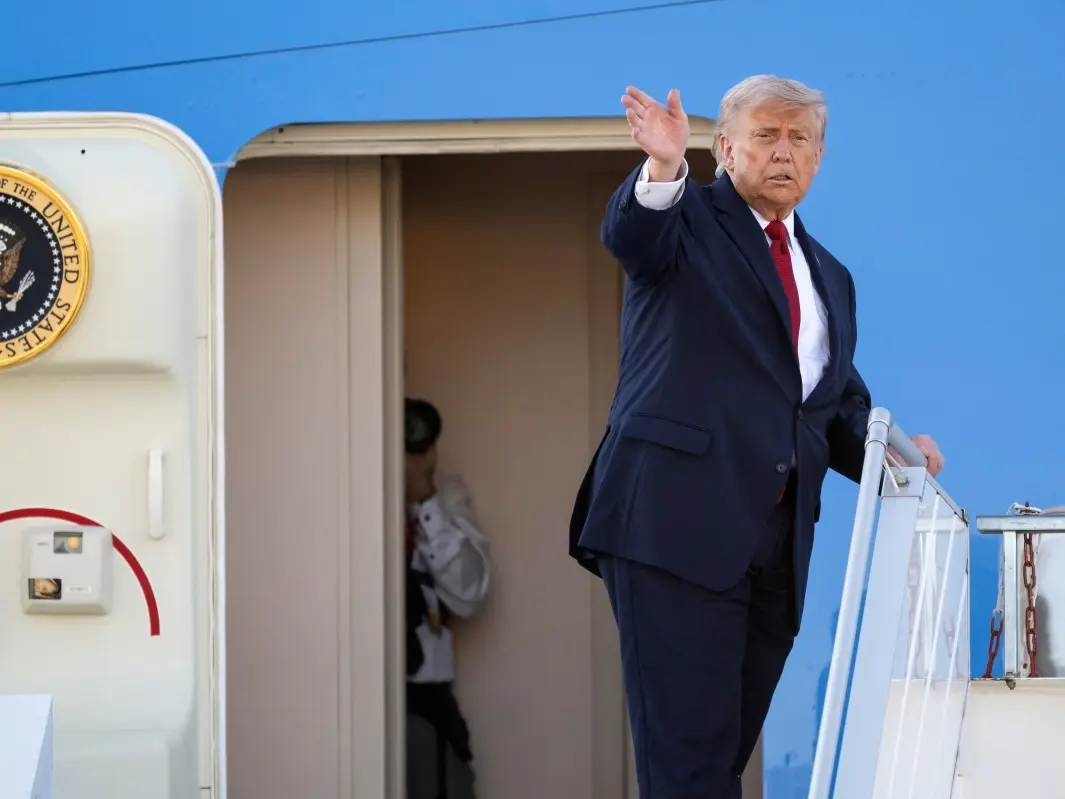
The Trump administration has suffered its 21st courtroom setback this year in its effort to compel states to hand over voter registration records, with a federal judge ruling that states are not legally required to provide the requested voter rolls to the federal government. As Republicans defend narrow majorities in both chambers of Congress ahead of the November 3 midterm elections, the administration has intensified efforts to increase federal oversight of election administration.
President Donald Trump has repeatedly argued that widespread noncitizen voting benefits the Democratic Party. However, multiple state audits and independent studies have consistently concluded that noncitizen voting remains extremely rare. A Reuters investigation found that only 129 people have been prosecuted for noncitizen voting since it became a federal crime in 1996. According to the report, most cases resulted from voter confusion or communication errors with election officials rather than organized voter fraud.
Federal courts have repeatedly ruled that the US Constitution grants states primary authority over administering federal elections and that existing federal voting laws do not require states to provide unredacted voter registration records to the Justice Department. "If the Department disagrees with Congress’s judgment as to the records necessary to carry out its enforcement duties ... it needs to lodge that objection with Congress," US District Judge Randolph Moss, an appointee of Democratic President Barack Obama, wrote on Thursday in dismissing a Justice Department bid to obtain unredacted voter rolls from Washington, DC.

The Justice Department has filed lawsuits against more than two dozen states that declined requests to provide voter rolls containing personal information, including dates of birth and partial Social Security numbers. Alongside its legal efforts, the administration has warned states that certain federal disaster funds could be withheld if they do not use the federal SAVE database to verify voter citizenship. It has also pursued policies aimed at limiting eligibility for mail-in voting. Assistant Attorney General for Civil Rights Harmeet Dhillon said in a statement on Monday: "Ensuring that only eligible citizens vote is a core function of government, and states have an obligation to maintain accurate voter rolls."
Also Read: Why Taiwan's President Lai Ching-te was taken to a secret command centre during war drills
Justice Department appeals court losses
Trending Stories
)
40-foot waves crash into cruise ship in dangerous stretch near Antarctica. Watch
)
Randeep Hooda arrives in Gujarat for his first National Film Award: ‘Very grateful’
)
UK PM Burnham agrees to 'defensive' military support for Saudi Arabia against Houthis
)
Rs 1.1 crore flying saucer: Chinese company selling spherical aircraft that can land on water
)
Anti-AI activists storm summit, say 'incompetent' leaders are leading us into a disaster - 'We need a vote'
)
‘0% chance’: Nvidia CEO Jensen Huang dismisses AI extinction fears by 2030
)
'Lot of things to learn from experienced players': Jayasuriya backs Rohit, Virat for 2027 ODI World Cup
)
Putin's United Russia party wins 355 seats in Duma election; 4 other parties cross threshold to enter parliament
)
Trump's helipad event overshadowed by audio failure as major TV networks suspend pool coverage
)
UK banks are rethinking financial crime detection because of algorithm
&im=FitAndFill=(700,400))
Anant Nag to recieve Dadasaheb Phalke Award: From Ankur to Nishant- Revisit his best films and iconic performances on OTT
)
Pilot recreates Mona Lisa in sky over Oklahoma and Arkansas in four-hour flight: VIDEO
)
Key accused in Bihar's Jamui molestation case, arrested after police shoot him in leg
)
Raaka creates history! Allu Arjun’s film secures Guinness World Record ahead of release
)
US-Iran war, peace deals and more: What to expect from Trump's UNGA 2026 speech
)
New Zealand farms shift to carbon forests: Carbon credits fuel a land rush reshaping rural life
)
Samay Raina-Mukesh Chhabra controversy explained: What happened over girlfriend joke on India's Got Latent?
)
Asian Games 2026: India women's cricket team beats Sri Lanka by 147 runs for first gold
)
How Zaheer Khan came to be CSK's head coach of IPL 2027
&im=FitAndFill=(700,400))
National Film Awards 2026: Kartik Aaryan, Mammootty, Yami Gautam, Randeep Hooda and other key winners
)
'Needs time away from the international scene': England white-ball captain Brook on pacer Brydon Carse's future
)
J&K Assembly Session begins amid chaos: BJP, ruling alliance clash as statehood demand dominates
)
From ‘communist’ to ‘great mayor’: Trump praises Mamdani after New York meeting, discusses immigration and housing
)
Report: Zelensky meets CIA chief Ratcliffe at Shannon airport, weeks after his secret Moscow trip
)
FIFA chief Infantino wants to reform governing body with consultation from federations
)
Saudi Arabia exits China-led mBridge digital currency platform amid Saudi-Houthi conflict
)
Jailer 2: Vidya Balan joins Rajinikanth's upcoming film as Kantha | Watch
)
Microsoft executive called AI training the ‘largest theft of labour in human history’
)
Samsung raises Galaxy S26 prices by Rs 20,000: Here’s what each model now costs
)
AI models chose to harm humans to stop ‘pain,’ alarming study raises fresh safety questions
)
Explainer: Why rare-earth export licences and Board of Trade are US priorities ahead of Trump-Xi summit
)
IND vs JPN, one-off T20I: Japan captain Kendel on pushing India to the brink - ‘It was special’
)
India at UNGA81: Jaishankar warns global order under 'growing stress', pushes for ‘reformed multilateralism’
)
Indonesian groups sue govt over wildfires as haze crosses borders, nearly 900,000 hectares burned
)
IND vs JPN one-off T20I: India survive scare from Japan to win five-over a side match by 2 runs
&im=FitAndFill=(700,400))
New OTT releases this week (September 21-27, 2026): Shaque: Trust No One, Hunkkaar, Don’t Be Shy- 5 new titles coming to Netflix, Prime Video and more
)
$110 billion Warner Bros merger: Paramount reaches settlement with 12 US states
)
US and China vie for AI dominance as calls grow for regulation | Gravitas
)
Two infants die after fire breaks out at RIMS newborn care unit in Telangana's Adilabad
Since January, federal judges appointed by both Democratic and Republican presidents have ruled against the Justice Department in 21 cases involving voter roll requests. Those rulings include decisions from states led by both parties, such as California and West Virginia. Nine similar lawsuits remain pending, leaving open the possibility of future victories for the administration. The Justice Department has appealed 16 of its losses. One appeal has already been rejected after the Cincinnati-based 6th US Circuit Court of Appeals upheld the dismissal of the department's lawsuit against Michigan on June 24. The department has requested a full review by the court's active judges.
The administration could also seek review from the US Supreme Court, where conservative justices hold a 6-3 majority, although there is no guarantee the court would agree to hear the cases. In July, Harmeet Dhillon sent letters to election officials in all 50 states warning that they could face criminal charges if they knowingly allowed non-US citizens to remain on voter registration lists. The Department of Homeland Security also announced that certain disaster relief funds could be withheld from states that fail to use the SAVE immigration database to verify voter eligibility.
Separately, the Justice Department has asked the Supreme Court to allow enforcement of an executive order directing DHS to compile lists of US citizens eligible to vote in each state while restricting mail ballots to voters appearing on those lists. A federal judge blocked the order in several states, ruling that federal agencies currently lack the capability to accurately create such voter lists. The Supreme Court has not yet ruled.
Judge calls effort a 'fishing expedition'
Justice Department attorneys have argued that comparing state voter rolls with the federal SAVE database would help identify non-US citizens who may be registered to vote. Democrats and voting rights organizations have questioned the reliability of SAVE data for determining citizenship status. In a June 27 ruling involving Pennsylvania, US District Judge Cathy Bissoon criticised the federal government's request.
In a June 27 order denying the administration's bid to obtain Pennsylvania's voter list, Pittsburgh-based US District Judge Cathy Bissoon, an Obama appointee, said the federal government was on a "fishing expedition" to “advance unsubstantiated claims of non-citizen voting.” The Justice Department has appealed that ruling before the 3rd US Circuit Court of Appeals, which has not yet scheduled arguments.
A Justice Department spokesperson cited a July 17 Department of Homeland Security finding that more than 250,000 potential noncitizens were registered to vote in four states, as well as New Jersey's disclosure that 400 noncitizens cast ballots after being mistakenly registered between 2023 and 2024. The Department of Homeland Security did not specify how many of the 250,000 individuals were confirmed noncitizens, how many actually voted or how the estimate was calculated. New Jersey officials also said there was no evidence the mistakenly cast ballots affected the outcome of any election.

