'Will cooperate in matters of national interest': Bangladesh's Tarique Rahman meets Jamaat chief Shafiqur Rahman ahead of swearing-in

&imwidth=600&imheight=450&format=webp&quality=medium "'Will cooperate in matters of national interest': Bangladesh's Tarique Rahman meets Jamaat chief Shafiqur Rahman ahead of swearing-in")
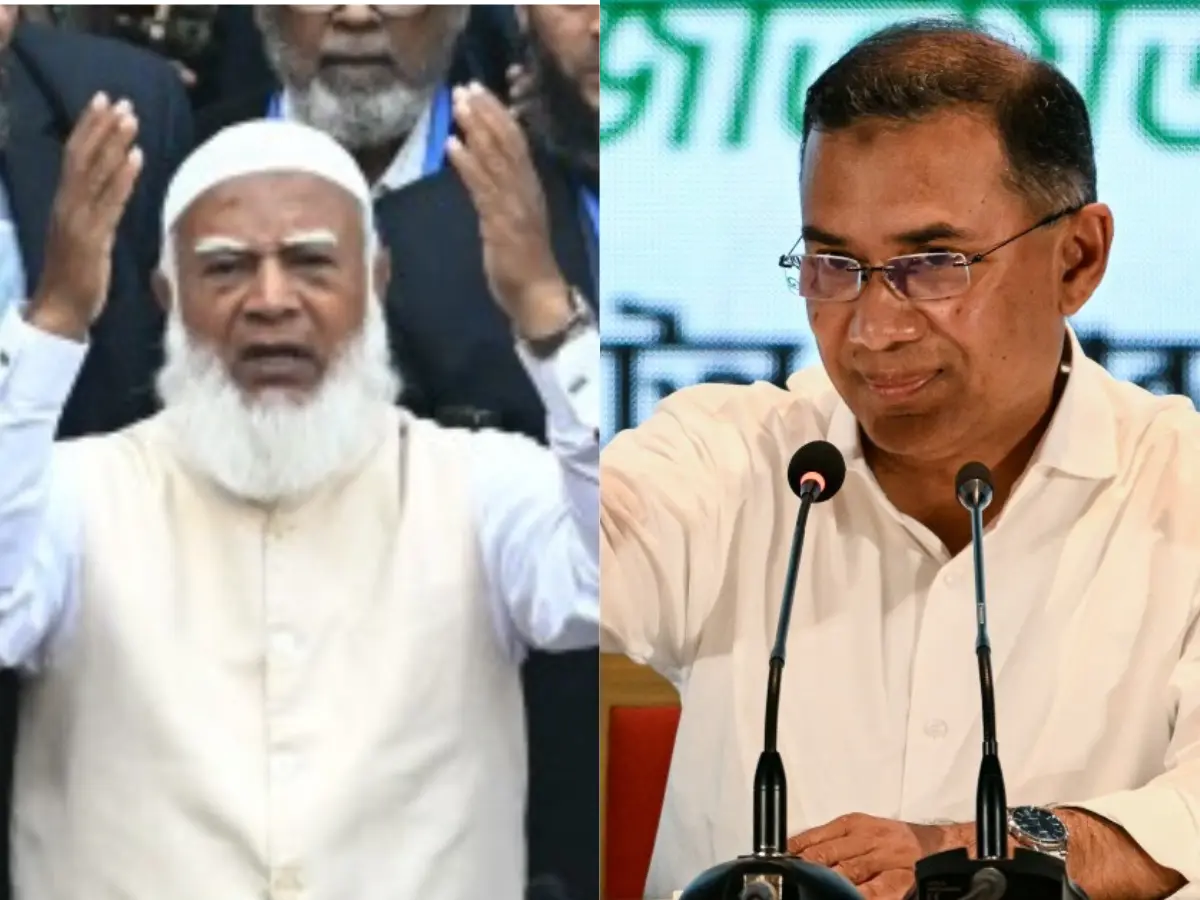
Jamaat chief Shafiqur Rahman and BNP chief Tarique Rahman Photograph: (AFP)
After a landslide election win, Tarique Rahman met rival leaders including Jamaat and NCP in a conciliatory move ahead of forming Bangladesh’s new government. While opposition raised concerns over poll irregularities and violence, both sides signaled cooperation and political stability.
Ahead of swearing-in as the first male prime minister of Bangladesh after 35 years, BNP chief Tarique Rahman reached out to the Opposition in his country. On Sunday (Feb 15), he met Jamaat-e-Islami chief Shafiqur Rahman and National Citizen Party leader Nahid Islam as part of a “positive political beginning.” In the recently concluded polls, the Jamaat-e-Islami registered its best ever performance with 31.76 per cent votes and 68 seats. The National Citizen Party (NCP) secured the third-highest number of seats, six, and 3.05 per cent votes.
Tarique Rahman's reaches out to Opposition
Tarique Rahman visited Jamaat chief at his residence along with party’s secretary general Mirza Fakhrul Islam Alamigir. Soon after, the BNP’s media wing released a photograph showing the two rival party leaders standing side by side with Shafiqur Rahman seen holding a bouquet to be handed over to Tarique Rahman and terming the meeting as “courtesy visit.” The BNP leader also met Jamaat-ally National Citizen Party’s (NCP) convenor Nahid Islam later.
How Jamaat reacted?
After the visit, Jamaat said that the visit by the prime minister-in waiting “marks an important moment in our national political journey.” Stating that the Jamaat welcomes “this engagement in a spirit of dialogue and responsibility,” the party said in a post on X that it hopes it signals “a new chapter of institutional maturity and mutual respect.” The party also said that the BNP chief reaffirmed that steps are being taken regarding incidents of post-election violence, including actions to address harm against opposition supporters and minority communities. “We will cooperate fully on matters of national interest, yet we will discharge our constitutional duty as a firm and principled opposition. Where the government acts in the public interest, we will support. Where accountability is required, we will speak,” the Jamaat added.
Trending Stories
&imwidth=280&imheight=210&format=webp&quality=medium)
&imwidth=280&imheight=210&format=webp&quality=medium)
&imwidth=280&imheight=210&format=webp&quality=medium)
&imwidth=280&imheight=210&format=webp&quality=medium)
&imwidth=280&imheight=210&format=webp&quality=medium)
&imwidth=280&imheight=210&format=webp&quality=medium)
&imwidth=280&imheight=210&format=webp&quality=medium)
&imwidth=280&imheight=210&format=webp&quality=medium)
&imwidth=280&imheight=210&format=webp&quality=medium)
&imwidth=280&imheight=210&format=webp&quality=medium)
&imwidth=280&imheight=210&format=webp&quality=medium)
&imwidth=280&imheight=210&format=webp&quality=medium)
&imwidth=280&imheight=210&format=webp&quality=medium)
&imwidth=280&imheight=210&format=webp&quality=medium)
&imwidth=280&imheight=210&format=webp&quality=medium)
&imwidth=280&imheight=210&format=webp&quality=medium)
&imwidth=280&imheight=210&format=webp&quality=medium)
&imwidth=280&imheight=210&format=webp&quality=medium)
&imwidth=280&imheight=210&format=webp&quality=medium)
&im=FitAndFill=(700,400)&imwidth=280&imheight=210&format=webp&quality=medium)
&imwidth=280&imheight=210&format=webp&quality=medium)
&imwidth=280&imheight=210&format=webp&quality=medium)
&imwidth=280&imheight=210&format=webp&quality=medium)
&imwidth=280&imheight=210&format=webp&quality=medium)
&imwidth=280&imheight=210&format=webp&quality=medium)
&imwidth=280&imheight=210&format=webp&quality=medium)
&imwidth=280&imheight=210&format=webp&quality=medium)
&imwidth=280&imheight=210&format=webp&quality=medium)
&imwidth=280&imheight=210&format=webp&quality=medium)
&imwidth=280&imheight=210&format=webp&quality=medium)
&imwidth=280&imheight=210&format=webp&quality=medium)
&imwidth=280&imheight=210&format=webp&quality=medium)
&imwidth=280&imheight=210&format=webp&quality=medium)
&imwidth=280&imheight=210&format=webp&quality=medium)
&imwidth=280&imheight=210&format=webp&quality=medium)
&imwidth=280&imheight=210&format=webp&quality=medium)
Jamaat and allies allege poll violation
This comes even as Jammat and its allies submitted complaints to the Election Commission, challenging results in 32 constituencies. "We have identified 32 constituencies where our candidates were unfairly defeated. The election day began smoothly, but the ending was not what we had expected. Fake votes, the circulation of black money (bribes), threats, assaults, and attacks marred the atmosphere.," said senior Jamaat official Hamidur Rahman Azad in complaint to the EC. Police records show that political clashes during the campaign period left five people dead and more than 600 injured.
What we know about recently concluded Bangladesh elections?
Bangladesh Nationalist Party (BNP) registered an impressive victory in the recently concluded elections. BNP's chief and son of former PM late Khaleda Zia - Tarique Rahman - is set to become the first male PM of the country in 35 years. Rahman has reiterated that his government's approach will 'Bangladesh first' but it will maintain a balanced relations with India, China and other South Asian nations. The elections took place in the country after former PM Sheikh Hasina was ousted after a violent uprising in 2024. In this elections, Awami League was banned and Hasina dismissed the polls as a “sham.” Meanwhile, Bangladeshis also voted for referendum on the July National Charter 2025. The "Yes" vote won a decisive mandate with 68.59 per cent support. It will approve 84 reform points out of which 47 require constitutional amendments.

