

&imwidth=800&imheight=600&format=webp&quality=medium "What safeguards should companies put in place before using AI for workforce decisions?")
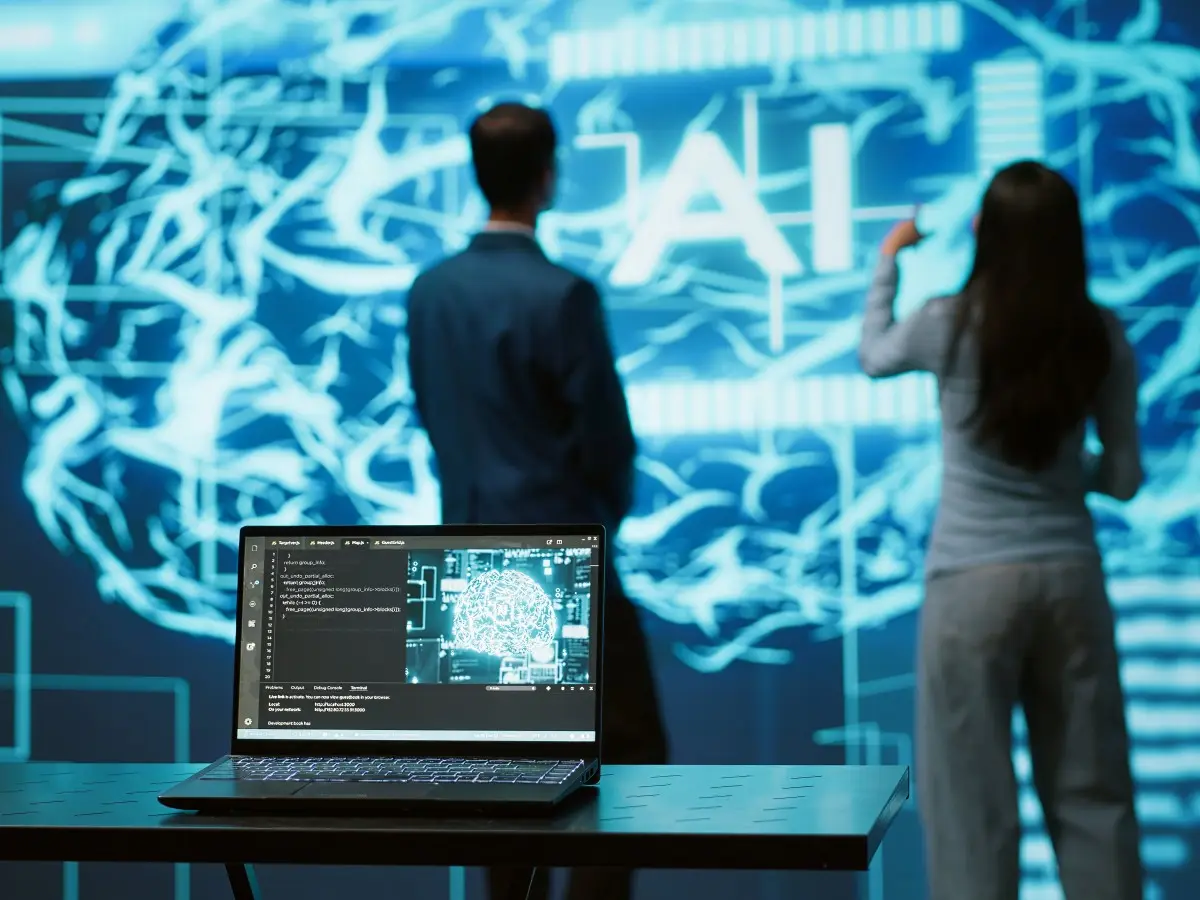
Artificial intelligence (AI) is rapidly making a wider and significant transformation for companies in terms of its use at the workstation for different roles. Alongside technical use, the AI is also being highly utilised in several academic and administrative workforces, while solving business problems using human skills along with other tech.
In terms of use, the first approach focuses on using it to automate tasks carried out by employees, while the second involves applying AI-driven analytics and algorithms to automate managerial responsibilities, a practice commonly known as "algorithmic management." Automating specific tasks with AI does not automatically result in job losses, as the technology can also enhance human work by supporting employees in areas where certain functions have been automated.
Whether the adoption of AI leads to workforce reduction or strengthens human roles depends on several factors, including how essential the automated task is to a particular occupation, the way the technology is incorporated into workplace processes, and whether management chooses to retain employees to perform or supervise certain tasks even when automation is technically feasible.
Safeguards to put before using AI
In terms of legality and safeguards while using AI in the workforce, an expert indicated that companies should establish strong governance frameworks before deploying artificial intelligence (AI) for workforce-related decisions.
Trending Stories
&imwidth=180&imheight=135&format=webp&quality=medium)
China's counter-surveillance industry booms amid heightened espionage fears | Gravitas
&im=FitAndFill=(700,400)&imwidth=180&imheight=135&format=webp&quality=medium)
Navratri 2026: 9 days, 9 forms of Goddess Durga and 9 colours- Check the complete list
&imwidth=180&imheight=135&format=webp&quality=medium)
Trump accuses Houthis of driving up oil prices before US midterms, warns of consequences
&imwidth=180&imheight=135&format=webp&quality=medium)
Russian woman and Bihar boy's love story goes viral after she reaches India to marry him
&imwidth=180&imheight=135&format=webp&quality=medium)
Arijit Singh 9-city India stadium tour to start from January: Check venue and ticket prices
&imwidth=180&imheight=135&format=webp&quality=medium)
US Midterms 2026: In Alaska, cost-of-living anxiety meets strangest ballot in high-stakes Senate race
&imwidth=180&imheight=135&format=webp&quality=medium)
F1 set to return to Africa for first time since 1993
&imwidth=180&imheight=135&format=webp&quality=medium)
'Don't ever mess with nature!': Trump’s tiger attack post triggers social media backlash as victim's family issues heartbreaking tribute
&imwidth=180&imheight=135&format=webp&quality=medium)
CMs Vijay-Naidu meet in Vijayawada, discuss water sharing, river-linking
&imwidth=180&imheight=135&format=webp&quality=medium)
Air India Flight from Frankfurt diverted to Jaipur after hijack alert, probe on
&imwidth=180&imheight=135&format=webp&quality=medium)
1,500 drones illuminate Mumbai sky as Cordelia Cruises unveils second ship, Cordelia Sky
&imwidth=180&imheight=135&format=webp&quality=medium)
Delhi Police arrest Cockroach Janta Party's Saurav Das, Ashutosh Ranka, Ajinkya Shinde in Jantar Mantar case, to be produced before court
&imwidth=180&imheight=135&format=webp&quality=medium)
‘Rise up, young patriots!’: American singer Mary Millben says US donors funding CJP, backs Modi govt
&imwidth=180&imheight=135&format=webp&quality=medium)
Nobel Peace Prize winner Navi Pillay calls on US to 'get back to' being defender of human rights
&imwidth=180&imheight=135&format=webp&quality=medium)
France accuses Musk of ‘online harassment’ of European leaders, warns of poll interference
&imwidth=180&imheight=135&format=webp&quality=medium)
'Turn approver, resign, we'll forgive you': Rahul Gandhi claims receiving messages from CEC Gyanesh Kumar
&imwidth=180&imheight=135&format=webp&quality=medium)
MI5 chief warns Russia is UK’s ‘aggressor number one’ as Iran and AI threats grow
&imwidth=180&imheight=135&format=webp&quality=medium)
Trump reconsidering calling off Nidal Hasan's execution livestream. Here's why
&imwidth=180&imheight=135&format=webp&quality=medium)
‘My president, I mean my husband’: Trump's new press secretary Katie Zacharia's first briefing goes off the rails in 14 minutes
&imwidth=180&imheight=135&format=webp&quality=medium)
‘How many people did she illegally bring from Somalia?’ Trump targets Ilhan Omar, questions her net worth
&imwidth=180&imheight=135&format=webp&quality=medium)
Marco Rubio to visit India next week, focus on energy cooperation and strategic ties
&imwidth=180&imheight=135&format=webp&quality=medium)
US politicians mistakenly use Indian, Russian warship images for Navy's birthday posts
&imwidth=180&imheight=135&format=webp&quality=medium)
'Ouch!!! That must hurt': Kangana Ranaut hails Kamal Haasan's sharp reply to Elon Musk over Starlink row
&imwidth=180&imheight=135&format=webp&quality=medium)
Girl 'dead' for 8 hours wakes up at her own funeral, dad insists she wasn't breathing
&imwidth=180&imheight=135&format=webp&quality=medium)
Sidhu Moose Wala’s younger brother wins hearts by recreating late singer’s signature move at Toronto Hologram Show
&imwidth=180&imheight=135&format=webp&quality=medium)
UK school ditches technology, shifts from screen to pen and paper for learning
&imwidth=180&imheight=135&format=webp&quality=medium)
Durga Puja 2026: Kolkata roads get a splash of colours
&im=FitAndFill=(700,400)&imwidth=180&imheight=135&format=webp&quality=medium)
New OTT releases this week (October 12-18, 2026): Sacrifice, Koffee with Karan S9, Roadies Rebirth- 6 titles coming on Netflix, JioHotstar and more
&imwidth=180&imheight=135&format=webp&quality=medium)
Inside Aneet Padda's 24th birthday bash with rumoured boyfriend Ahaan Panday and Alia Bhatt
&imwidth=180&imheight=135&format=webp&quality=medium)
New Cold War: Why is China buying more gold? Explained
&imwidth=180&imheight=135&format=webp&quality=medium)
Netanyahu wants to join Saudi's war on Houthis, but Crown Prince denies: Report
&imwidth=180&imheight=135&format=webp&quality=medium)
Anupam Kher joins Ranbir Kapoor's Ramayana as Jatayu, new poster unveiled
&imwidth=180&imheight=135&format=webp&quality=medium)
Measles kills again: 6 dead in Pennsylvania as America faces its worst outbreak in decades | Gravitas
&imwidth=180&imheight=135&format=webp&quality=medium)
Cornell University suspends fraternity parties over 2024 gang rape allegations
Prasad Rai, CEO of DAAS LABS, emphasised that organisations should not rely solely on technology when using AI for functions such as hiring, promotions, performance reviews and workforce planning. Instead, he stressed the need for safeguards to ensure fairness, accountability and transparency.
"Before AI is entrusted with workforce decisions, companies need to establish strong governance rather than relying solely on technology. The first safeguard is ensuring that the data used to train AI models is accurate, representative, and regularly audited for bias, because AI will inevitably replicate flaws in historical decisions. Equally important is explainability; every AI-driven recommendation should be transparent, auditable, and easy for leaders to justify. Human oversight must remain central, with AI serving as a decision-support tool rather than the final decision-maker for hiring, promotions, performance reviews, or workforce planning," he said.
According to Rai, companies that earn long-term employee trust will not necessarily be those that adopt AI the fastest, but those that implement it responsibly by placing fairness, accountability and transparency at the centre of their AI strategy.
"Organisations should also implement regular model reviews, clear accountability frameworks, and transparent communication with employees about how AI is being used. The companies that will build lasting employee trust are not those adopting AI the fastest, but those deploying it responsibly, with fairness, accountability, and transparency at the core," he added.

