

&imwidth=800&imheight=600&format=webp&quality=medium "What is H-1B Visa? Know history, rules, and latest news for Indian applicants")
The H-1B visa is a non-immigrant visa policy allowing US employers to temporarily hire foreign workers in 'speciality occupations'. A speciality occupation is defined as a position that requires a bachelor's degree or is specified in the field, such as engineering, technology, medicine, or business. There are 65,000 H1B visas allocated per year, plus 20,000 additional visas for those with advanced US degrees (US master's and up).
What is the history of the H-1B Visa?
The H-1B visa program began with the Immigration Act of 1990 (IMMACT90), which formalised the process for highly skilled foreign workers in "speciality occupations" to enter the US. The program allows businesses to temporarily hire workers in fields requiring specialised knowledge and at least a bachelor's degree.
The policy was signed by then-President George H. W. Bush on November 20, 1990. During this time, the H-1 visa was split into the H-1A visa for nurses, and the H-1B visa for workers in speciality occupations.
Over the years, the program's annual cap has been adjusted and has created an additional 20,000 visas for individuals with advanced U.S. degrees, which has become a critical pathway for several immigrants coming from multiple nations, especially from India, to work in US tech and other specialised fields.
What are the eligibility and rules for the H-1B Visa?
Trending Stories
&imwidth=180&imheight=135&format=webp&quality=medium)
IND-W vs ZIM-W, 2nd ODI: Harmanpreet Kaur, Vaishnavi Sharma star in India's 121-run win
&im=FitAndFill=(700,400)&imwidth=180&imheight=135&format=webp&quality=medium)
What is the real meaning behind Pete Hegseth's tattoos?
&imwidth=180&imheight=135&format=webp&quality=medium)
Telangana unveils AI avatar of IT minister D Sridhar Babu at Hyderabad DevFest 2026
&imwidth=180&imheight=135&format=webp&quality=medium)
'This is humiliation': Vijay Deverakonda under fire over controversial marriage proposal remark on Koffee With Karan 9
&imwidth=180&imheight=135&format=webp&quality=medium)
Pahalgam, Gulmarg record season’s first sub-zero temperatures as winter chill intensifies in Kashmir
&imwidth=180&imheight=135&format=webp&quality=medium)
Govinda breaks silence on divorce rumours with Sunita Ahuja, calls her his first love
&imwidth=180&imheight=135&format=webp&quality=medium)
Indian embassy warns nationals in Saudi Arabia against filming missile strikes
&imwidth=180&imheight=135&format=webp&quality=medium)
Can Putin cheat death? All about his daughter’s billion-dollar quest for immortality
&imwidth=180&imheight=135&format=webp&quality=medium)
Saudi says debris fell in Mecca, Medina after missile interceptions; Houthis deny targeting holy cities
&imwidth=180&imheight=135&format=webp&quality=medium)
Netanyahu warns Israelis of ‘existential threat’ from Iran, posts AI image of nuclear strike
&imwidth=180&imheight=135&format=webp&quality=medium)
Trump revives ‘shithouse countries’ slur, targets Abdul El-Sayed and Ilhan Omar at Georgia rally
&imwidth=180&imheight=135&format=webp&quality=medium)
Pakistan airline PIA unveils new crew uniforms, faces online criticism
&imwidth=180&imheight=135&format=webp&quality=medium)
Kerala judge's 17-year-old son allegedly driving Mercedes kills scooter rider
&imwidth=180&imheight=135&format=webp&quality=medium)
'Already tired of his 9-to-5': Baby born with a moustache becomes internet sensation, video goes viral | Watch
&imwidth=180&imheight=135&format=webp&quality=medium)
Bigg Boss 20: Rohit Shetty indirectly reacts to firing at his Mumbai home
&imwidth=180&imheight=135&format=webp&quality=medium)
Tiger Shroff’s team calls report on actor’s reaction to Mumbai attack ‘completely untrue’
&imwidth=180&imheight=135&format=webp&quality=medium)
Russia-Ukraine drone attacks kill 6, injure 31 across both countries
&imwidth=180&imheight=135&format=webp&quality=medium)
'I promised Gautam & Kotak Sir that...': Tilak Varma opens up on match-winning mindset against NZ
&imwidth=180&imheight=135&format=webp&quality=medium)
‘Saddam Hussein opened a cheesecake factory’: Obama mocks Trump’s White House renovations; defends Abdul El-Sayed
&imwidth=180&imheight=135&format=webp&quality=medium)
Anthropic's leaked AI bill would act only at 50 deaths or $1bn in harm
&imwidth=180&imheight=135&format=webp&quality=medium)
China's dancing robot turns violent bodyguard, lifts cars and fights intruders - Watch
&im=FitAndFill=(700,400)&imwidth=180&imheight=135&format=webp&quality=medium)
Why do some fighter jets have two engines while others use one?
&imwidth=180&imheight=135&format=webp&quality=medium)
Byeon Woo Seok makes first public appearance as Sung Jin Woo for Solo Leveling at Netflix Korea’s 10th anniversary event
&im=FitAndFill=(700,400)&imwidth=180&imheight=135&format=webp&quality=medium)
New Friday OTT releases (October 23, 2026): Gajab Raat, Dorothy, Chaar Yaar- Watch these 6 new movies and TV shows on Netflix, Prime Video and more
&imwidth=180&imheight=135&format=webp&quality=medium)
'Clear overkill': Putin rejects claims Russia is behind mass protests in Europe
&imwidth=180&imheight=135&format=webp&quality=medium)
'If it was up to me, it wouldn't have ended like this': James Anderson opens up on Lancashire exit
&imwidth=180&imheight=135&format=webp&quality=medium)
‘Do I make a deal or finish them off’: What Trump said on resuming Iran strikes
&imwidth=180&imheight=135&format=webp&quality=medium)
Javed Akhtar backs Rashmika Mandanna after Koffee With Karan 9 accent trolling, calls out ‘linguistic superiority’
&imwidth=180&imheight=135&format=webp&quality=medium)
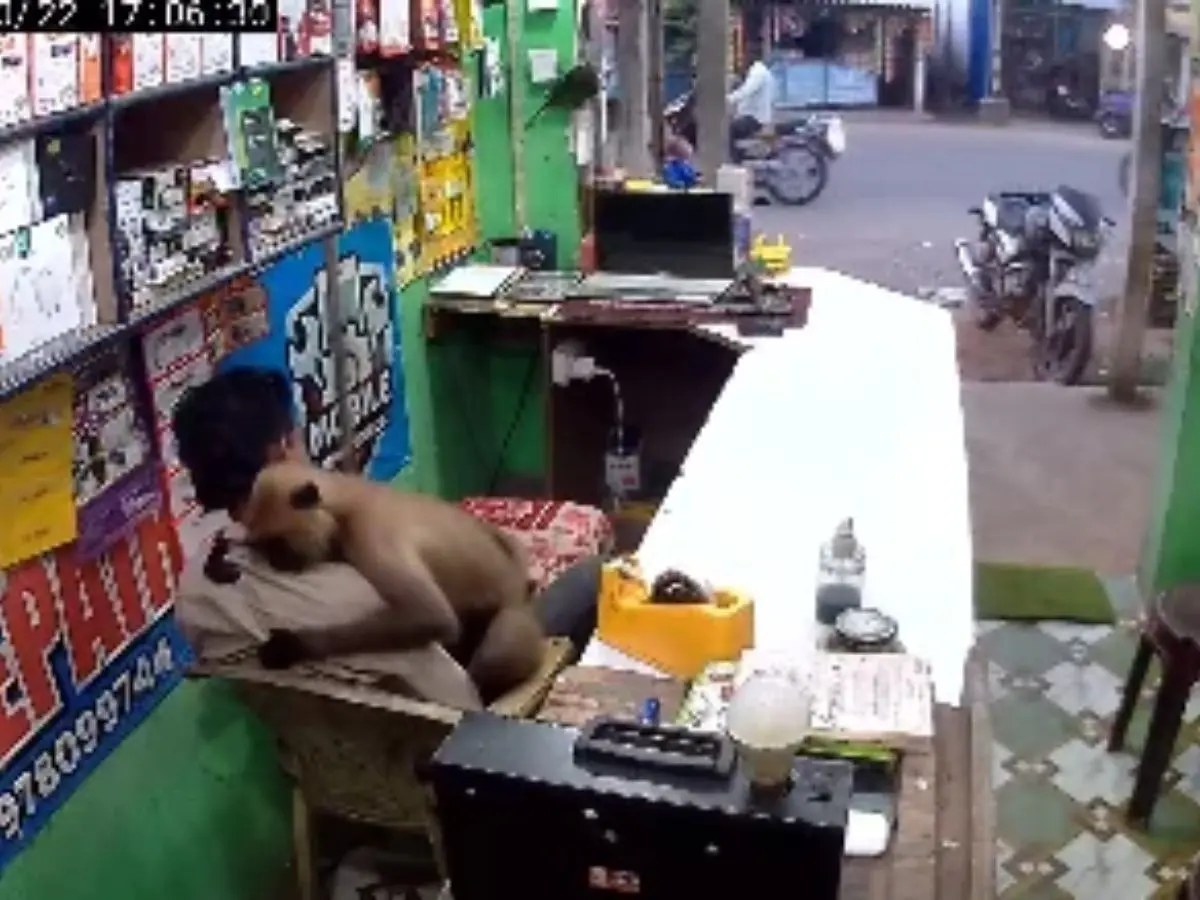
WATCH | Langur walks into Odisha repair shop, hugs shopkeeper; internet reacts to heartwarming video
&imwidth=180&imheight=135&format=webp&quality=medium)
Nagpur man fails to pay rent, allegedly prints fake Rs 500 notes worth Rs 37 lakh
&imwidth=180&imheight=135&format=webp&quality=medium)
Venezuelan opposition leader María Machado returns home after over 10 months in exile
&imwidth=180&imheight=135&format=webp&quality=medium)
‘Modi ka baap bhi jayega,’ Kharge loses cool at party event in Patna; BJP slams him
&imwidth=180&imheight=135&format=webp&quality=medium)
Why Europe’s protests are about more than austerity and rising costs
&imwidth=180&imheight=135&format=webp&quality=medium)
Kim Kardashian, Kris Jenner turn heads with Bold looks at All’s Fair season 2 premiere in Rome
To be eligible for an H-1B visa, you must have a job offer for a "speciality occupation" from a US employer, possess a bachelor's degree or equivalent in the field of the speciality, and the employer must agree to pay the prevailing wage for the job.
The employer files a Labour Condition Application (LCA) with the Department of Labour, attesting to wages and working conditions, and then petitions the USCIS on your behalf. The job must require specialised knowledge and a degree or equivalent experience, and you must meet the required qualifications for the position.
What is the H-1B Visa application process?
Step 1: Employer registers for the lottery
Create USCIS account: The sponsoring employer or their attorney must create an organisational account with USCIS.
Submit registration: For a limited period, typically in March, the employer submits an electronic registration for each prospective employee (beneficiary). The registration requires basic information about both the employer and the beneficiary, including the beneficiary's passport details.
Pay the registration fee: A non-refundable fee of $215 per beneficiary must be paid during the registration period.
Step 2: USCIS conducts the lottery
Random selection: If the number of registrations exceeds the annual H-1B cap, USCIS conducts a random, computer-generated lottery. The selection is "beneficiary-centric," meaning each prospective employee has an equal chance of being selected, regardless of how many registrations are submitted on their behalf.
Receive results: By the end of March, USCIS notifies employers of the lottery results through their online accounts. Only those with a "Selected" status can proceed with the full petition.
Step 3: Employer files Labour Condition Application (LCA)
Obtain certification: If selected, the employer submits a Labour Condition Application (LCA), Form ETA-9035, to the Department of Labour (DOL).
Meet wage and working conditions: The LCA requires the employer to attest that they will pay the H-1B worker at least the prevailing wage for the occupation in the intended area of employment and that the employment will not adversely affect U.S. workers.
Post the LCA: The employer must post the certified LCA at the worksite for a period of 10 business days.
Wait for approval: The DOL typically certifies the LCA within 7–10 days.
Step 4: Employer files Form I-129 with USCIS
Assemble the petition: Within a specific filing window (usually 90 days after selection), the employer files Form I-129, Petition for a Nonimmigrant Worker, with USCIS. The packet must include the certified LCA and other required supporting documentation, such as the job offer letter and the employee's educational credentials.
Choose processing type:
Regular processing: Takes several months, often 4 to 8 months or more.
Premium processing: For an additional fee, USCIS guarantees a response within 15 business days. This option can also be used to expedite a petition already in progress.
Step 5: USCIS adjudication
Review and request evidence: USCIS reviews the complete petition. The agency may issue a Request for Evidence (RFE) if it needs more information to make a decision.
Approve or deny: If the petition is approved, USCIS sends an I-797 Approval Notice. If denied, the process ends.
Step 6: Employee attends visa interview (for applicants abroad)
Complete DS-160: Foreign workers outside the U.S. complete the online visa application, Form DS-160, and pay the visa fee.
Schedule appointment: They schedule and attend an interview at a U.S. embassy or consulate in their home country.
Receive visa stamp: A consular officer reviews the application and, upon approval, places an H-1B visa stamp in the applicant's passport.
Step 7: Employee enters the U.S. and begins work
Travel and admission: With the approved visa, the employee can travel to the U.S. no more than 10 days before the employment start date.
Work authorisation: The employee can begin working for the sponsoring employer on the approved start date, which is usually October 1 of the new fiscal year.
What are the H-1B visa fees?
Before the recent change, the overall H-1B cost for employers was complex and typically ranged from $2,000 to over $8,000 per worker, depending on factors such as the employer's size, processing time, and visa type. The core fees included:
H-1B Registration Fee: $215.
Base Form I-129 Petition Fee: $460, increasing to $780 starting April 1, 2024.
Fraud Prevention and Detection Fee: $500. This fee was not required for extensions.
American Competitiveness and Workforce Improvement Act (ACWIA) Fee: $750 for employers with 1 to 25 full-time equivalent employees, and $1,500 for those with 26 or more employees.
Public Law 114-113 Fee: An additional $4,000 for certain companies that employ 50 or more employees, with over 50% on H-1B or L-1 status.
Premium Processing (Optional): For an additional $2,805, employers could request 15-day expedited processing.
Latest News for Indian Applicants
In a recent development, Donald Trump’s decided to impose a $100,000 (£74,096) fee on H1-B visas for skilled foreign workers, which will be applied annually. However, later, the White House clarified on Saturday that the new H-1B visa policy will impose a $100,000 fee will be a "one-time" payment imposed only on new applicants, according to a report in AFP.

