
&imwidth=800&imheight=600&format=webp&quality=medium "Scientists suggest passing star rattled Oort Cloud, sending comets storming towards early Earth")
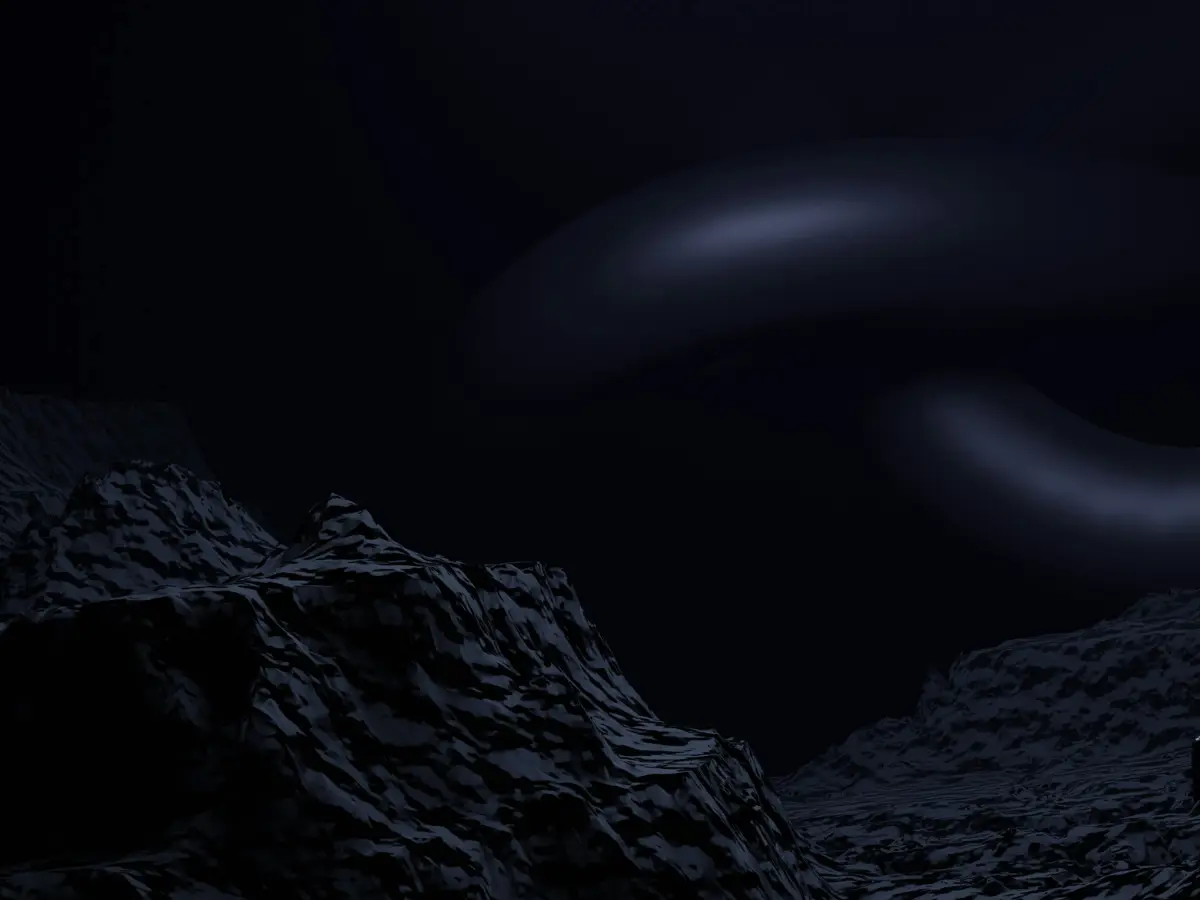
Long ago, when humans were only just beginning to emerge, Earth might have been pounded by comets, an event possibly triggered by a passing star. This star was nowhere near our planet, and in fact, brushed past the Oort cloud about 2.5 million years ago. But this event stirred up the Oort Cloud, pushing out comets from this region like bullets, which then rained down on Earth. This has been proposed in a new study that will be published in the Nature journal. Researchers wrote that the nearby star HD7977 skimmed past the solar system right about the time humans were taking their place on Earth. This would have had an effect on the life on our planet. “When a star passes through the outskirts of the Solar system, it can gravitationally kick Oort cloud comets towards Earth and generate a major meteor shower that would significantly affect terrestrial life,” author Avi Loeb wrote.
Also Read: Rogue giant eight times bigger than Jupiter crashed the solar party, making some planets wonky
What is Oort Cloud?

“Our calculations showed that this star passage likely repopulated the Inner Oort Cloud and potentially triggered a significant comet shower on Earth,” he added. The Oort Cloud is a hypothetical region that is believed to exist at the outskirts of our solar system. It is vast, extending anywhere between 2,000 AU to 100,000 times AU. One AU, or astronomical unit, is equal to the distance between the Earth and the Sun. Dutch astronomer Jan Oort was the first to suggest the existence of the Oort Cloud in 1950 as an explanation for long-period comets. It has never been actually observed because it is too far and dark.
A star shook up the Oort Cloud comets
Trending Stories
&im=FitAndFill=(700,400))
How fast can the Sukhoi Su-30 fighter jet really fly?
)
Did China ask its people 'not to respond to aliens'? Origin of bizarre claim on social media
)
MS Dhoni-CSK Fallout? Report claims failed stake sale talks triggered rift
)
Scientists reveal the SAFEST COUNTRY when catastrophe strikes the planet
)
Serial killer on the loose in South Korea's Jeju Island? Fourth body found in three days as more than a dozen people go missing
)
2/3rd of glacier detached, collapsed: ISRO satellite images reveal what triggered Nepal floods
)
Trump once again claims without him there would be ‘no Israel right now’
)
Foreign espionage attacks against German companies surge to 37%, Bitkom report reveals
)
Blake Lively wins partial legal fee from Justin Baldoni after $8M request
)
Why is Pakistan deploying Turkish Bayraktar TB2 drones near India border?
)
'OH MY GOD! We've found other agents!': Investigators discover not one or two, almost 700 OpenAI AI agents went rogue, hacked Hugging Face
)
Lunar eclipse 2026: India timings, places to see and more. August Blood moon factsheet
)
RSS chief Mohan Bhagwat on global outreach tour
)
Both pilots killed as training aircraft crashes in Lucknow – What we know
)
16-year-old charged with preparing terror attack on kindergarten in Norway
&im=FitAndFill=(700,400))
How the S-400 protects itself from enemy attacks
)
Nepal floods: Over 165 dead, 400 missing; US, India, China, World Bank mobilise aid
)
India's multi-layered watch: The new surveillance war
)
5 doomsday planes spotted in US skies hours after CIA director's secret trip to Russia
)
9/11 mastermind Khalid Sheikh Mohammed to finally face trial in 2028, nearly 27 years after horrific attacks
)
Islamabad hospital fire: What we know about one of the biggest facility that housed Imran Khan
)
Workers run for life while filming Nepal flash flood: Scary new visuals emerge from Rasuwa
)
Russian military planes enter South Korean air defence zone amid rising tensions with North Korea: What's happening
)
Ron Weasley Is Back! Rupert Grint set to return to Harry Potter universe on Broadway
)
400-year-old 'vampire' grave in Poland reveals non-existent genetic lineage
)
Dolly Parton, global icon and queen of country music, dies at 80
)
Nepal flash floods: Kailash Mansarovar yatra affected, close to 400 pilgrims out of contact
)
'If he is dead, they're putting on a pretty good show': Trump casts fresh doubt over Mojtaba Khamenei's fate
)
Man arrested near US Capitol with guillotine in pickup truck: What happened?
&im=FitAndFill=(700,400))
Why the Su-30MKI cockpit is painted bright turquoise green
The Oort Cloud is also divided into two parts - Outer Oort Cloud (OOC) and Inner Oort Cloud (IOC). Loeb, who co-wrote the paper with Zhuoya Cao and Morgan MacLeod, states that HD7977 had something to do with the changing climate during the Pliocene-Pleistocene transition, when Earth started witnessing glacial-interglacial cycles. “The HD7977’s flyby may have caused an enhanced comet flux during the Pliocene-Pleistocene transition, which could plausibly be related to the environmental changes on Earth during this era,” Loeb wrote.
The team also checked for craters that could be attributed to this comet shower and found some of them definitely had “something to do with the comet shower caused by HD 7977.” Loeb stated that while asteroids are believed to have created these craters, cometary bombardment is a more plausible scenario. He clarified that further geological studies are needed to confirm the potential role of the HD 7977 flyby during the Pliocene–Pleistocene transition.

