CRASH INCOMING! Mathematical equation predicts human population will be halved by 2064

&imwidth=600&imheight=450&format=webp&quality=medium "CRASH INCOMING! Mathematical equation predicts human population will be halved by 2064")
Human population crash incoming
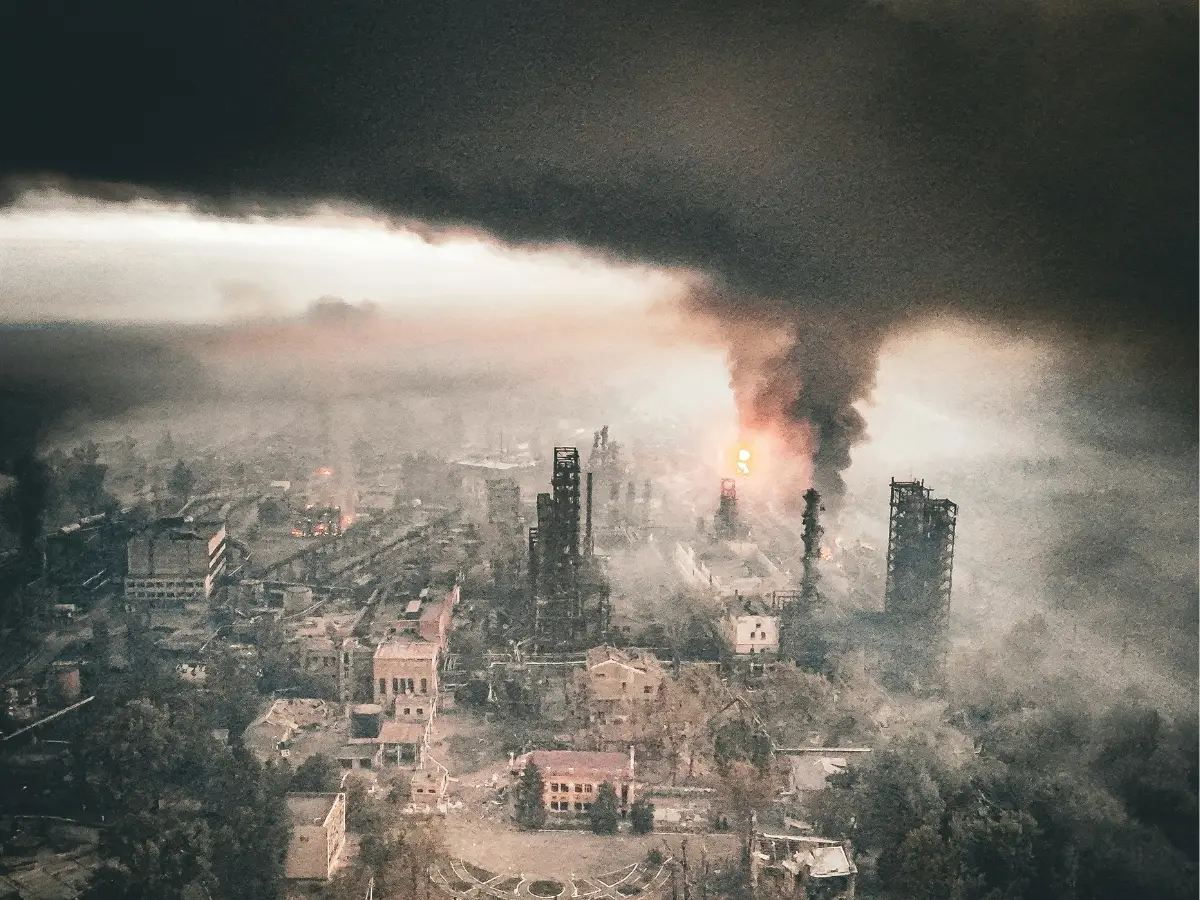
A study has noted that the human population could fall to half its current number in the next 38 years. This is based on a mathematical equation and is not a prediction. They have cited four factors for this scenario occurring in the near future.
Experts have predicted that the world's population will crash in the next 40 years. Currently, there are an estimated 8.3 billion people on Earth, but this number is in danger of being halved by the year 2064. Scientists say this could happen because of any of the four reasons - climate collapse, a pandemic, global conflict or resource shortages. Certain portions of a new paper "explore hypothetical future scenarios" as the researchers "modelled what could happen if major environmental crises abruptly imposed severe carrying–capacity limits on Earth." Scientists from the University of Milan said, "Under a deliberately conservative worst–case assumption that Earth's sustainable carrying capacity suddenly dropped to around two billion people, our model predicts a rapid global population decline, with humanity potentially halving by around the year 2064."
Also Read: Scientist says humans will have to build 'Noah's Ark' to escape extinction — ‘Fail to discover...’
The researchers stated that they are not predicting anything, and this is merely an "illustrative mathematical scenario" which explores how abrupt changes can affect the population dynamics of the world. The study was published in the journal Chaos, Solitons & Fractals and analysed 12,000 years of human population growth. A mathematical equation was devised which accurately reproduced the population growth patterns from the Neolithic era to the modern age. They took into account slow growth in some periods and accelerated growth in others. The calculations showed that the current trajectory is stable.
Also Read: Physicist's 66-year-old prediction of exact day in 2026 humans will be 'squeezed to death' surfaces
Doomsday scenario predicted for November 2026
However, in the worst-case scenario, Earth could sustain only about two billion people, only a quarter of the current population. The number of people would dramatically plummet, with half the population gone. "In a scenario where carrying–capacity constraints suddenly become abruptly active, (our equation) predicts a rapid population decline," the researchers wrote. The paper also analysed the "doomsday" scenario proposed in 1960, according to which there would be such an explosion of people that humanity would go extinct on November 13, 2026, a Friday. The researchers wrote that since fertility rates declined globally, we avoided this scenario. But, "the underlying mathematics of runaway growth can still reappear under certain conditions."
&imwidth=280&imheight=210&format=webp&quality=medium)
&imwidth=280&imheight=210&format=webp&quality=medium)
&imwidth=280&imheight=210&format=webp&quality=medium)
&imwidth=280&imheight=210&format=webp&quality=medium)
&imwidth=280&imheight=210&format=webp&quality=medium)
&imwidth=280&imheight=210&format=webp&quality=medium)
&imwidth=280&imheight=210&format=webp&quality=medium)
&imwidth=280&imheight=210&format=webp&quality=medium)
&imwidth=280&imheight=210&format=webp&quality=medium)
&imwidth=280&imheight=210&format=webp&quality=medium)
&im=FitAndFill=(700,400)&imwidth=280&imheight=210&format=webp&quality=medium)
&imwidth=280&imheight=210&format=webp&quality=medium)
&im=FitAndFill=(700,400)&imwidth=280&imheight=210&format=webp&quality=medium)
&imwidth=280&imheight=210&format=webp&quality=medium)
&imwidth=280&imheight=210&format=webp&quality=medium)
&imwidth=280&imheight=210&format=webp&quality=medium)
&im=FitAndFill=(700,400)&imwidth=280&imheight=210&format=webp&quality=medium)
&imwidth=280&imheight=210&format=webp&quality=medium)
&imwidth=280&imheight=210&format=webp&quality=medium)
&imwidth=280&imheight=210&format=webp&quality=medium)
&imwidth=280&imheight=210&format=webp&quality=medium)
&imwidth=280&imheight=210&format=webp&quality=medium)
&imwidth=280&imheight=210&format=webp&quality=medium)
&imwidth=280&imheight=210&format=webp&quality=medium)
&imwidth=280&imheight=210&format=webp&quality=medium)
&imwidth=280&imheight=210&format=webp&quality=medium)
&imwidth=280&imheight=210&format=webp&quality=medium)
&imwidth=280&imheight=210&format=webp&quality=medium)
&imwidth=280&imheight=210&format=webp&quality=medium)
&imwidth=280&imheight=210&format=webp&quality=medium)
&imwidth=280&imheight=210&format=webp&quality=medium)
&imwidth=280&imheight=210&format=webp&quality=medium)
&imwidth=280&imheight=210&format=webp&quality=medium)
&imwidth=280&imheight=210&format=webp&quality=medium)
&imwidth=280&imheight=210&format=webp&quality=medium)

