

&imwidth=800&imheight=600&format=webp&quality=medium "Leap second could go by 2027. What it means, as timekeepers gather in Versailles")
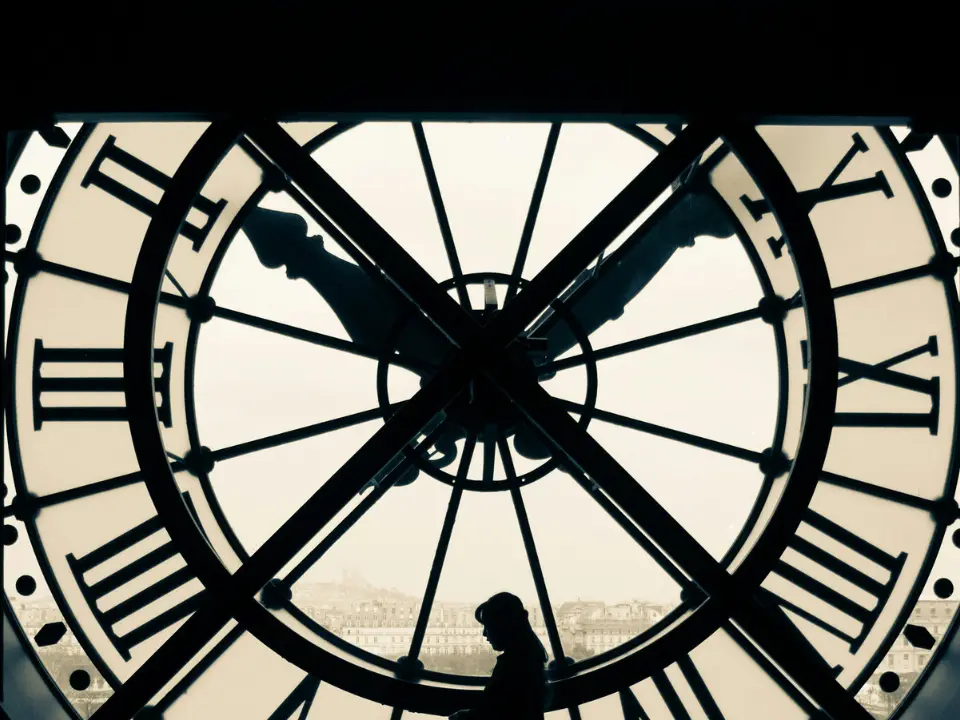
A timekeeping meeting on Thursday in Versailles near Paris could change how time works on Earth forever. The agenda is a decision on whether to scrap the "leap second". If that happens, then it would mean that the time we follow will be disconnected from Earth’s rotation and realign timescales.
Earth completes one rotation in 24 hours, and this is how the world's clocks are set. However, it occasionally wobbles, and the rotation is also slowing down gradually. This led the world's timekeepers to add a leap second every few years to ensure the clocks and Earth's rotation remain synchronised. The last time it happened was in 2016. But certain industries that rely on precise timing, as minute as milliseconds, argue it creates problems for them.
How time works right now
Coordinated Universal Time (UTC) is the global standard time based on high-precision atomic clocks that observe the vibration of atoms to mark the time. However, this is different from Earth's rotation. A leap second balances this gap. The first time this was done was in 1972. Since then, a total of 27 leap seconds have been added, with the last one on December 31, 2016. Leap seconds occur at the end of December or the end of June.
National Institute of Standards and Technology (NIST) has justified the need for leap seconds, saying, “The speed of the Earth’s rotation is not constant. …. This gradual decrease in the rotational rate is causing the duration of the mean solar second to gradually increase with respect to the atomic second.”
The problem with leap second
Trending Stories
&im=FitAndFill=(700,400)&imwidth=180&imheight=135&format=webp&quality=medium)
Navratri 2026: 9 days, 9 forms of Goddess Durga and 9 colours- Check the complete list
&imwidth=180&imheight=135&format=webp&quality=medium)
Is America trying to ‘destabilise’ India or change its regime? How influence operations became a recurring theme in political rhetoric
&imwidth=180&imheight=135&format=webp&quality=medium)
Researchers believe AI could cure cancer patients around the world
&imwidth=180&imheight=135&format=webp&quality=medium)
US considering use of ‘mother of all bombs’ in its war with Iran: Report
&imwidth=180&imheight=135&format=webp&quality=medium)
Russian woman and Bihar boy's love story goes viral after she reaches India to marry him
&imwidth=180&imheight=135&format=webp&quality=medium)
Arijit Singh 9-city India stadium tour to start from January: Check venue and ticket prices
&imwidth=180&imheight=135&format=webp&quality=medium)
'Don't ever mess with nature!': Trump’s tiger attack post triggers social media backlash as victim's family issues heartbreaking tribute
&imwidth=180&imheight=135&format=webp&quality=medium)
Ankita Bhandari’s parents detained after overnight India Gate protest; released later: Why are they protesting
&imwidth=180&imheight=135&format=webp&quality=medium)
US judge blocks Trump administration sanctions on human rights groups supporting Gaza war crimes investigation
&imwidth=180&imheight=135&format=webp&quality=medium)
Washington calls for 'de-escalation' as Ethiopia-Eritrea tensions fuel war fears
&imwidth=180&imheight=135&format=webp&quality=medium)
US midterms: Trump rallies behind Husted as Brown mounts challenge in crucial Ohio race
&imwidth=180&imheight=135&format=webp&quality=medium)
US police foil alleged mass shooting plot targeting Illinois Hindu temple during Navratri; 19-year-old’s manifesto called Indians ‘subhumans’
&imwidth=180&imheight=135&format=webp&quality=medium)
Group of men cheered and asked 'when’s it my turn?' as woman was assaulted inside bathroom at University of Chicago frat party
&imwidth=180&imheight=135&format=webp&quality=medium)
‘Rise up, young patriots!’: American singer Mary Millben says US donors funding CJP, backs Modi govt
&imwidth=180&imheight=135&format=webp&quality=medium)
Nobel Peace Prize winner Navi Pillay calls on US to 'get back to' being defender of human rights
&imwidth=180&imheight=135&format=webp&quality=medium)
Who is Abu Dhabi royal Mahrah Al Nahyan, found unconscious on London street with toddler after cocaine use
&imwidth=180&imheight=135&format=webp&quality=medium)
Iranian woman, 23, handed death sentence for ‘blasphemy’ in social media post; appeals for help
&imwidth=180&imheight=135&format=webp&quality=medium)
'Turn approver, resign, we'll forgive you': Rahul Gandhi claims receiving messages from CEC Gyanesh Kumar
&imwidth=180&imheight=135&format=webp&quality=medium)
'Leakers should be shot': Trump rages over leak of US military plans to attack Iran, slams media
&imwidth=180&imheight=135&format=webp&quality=medium)
Bangladesh man killed after mob storms hospital, drags him away over blasphemy allegations
&imwidth=180&imheight=135&format=webp&quality=medium)
‘My president, I mean my husband’: Trump's new press secretary Katie Zacharia's first briefing goes off the rails in 14 minutes
&imwidth=180&imheight=135&format=webp&quality=medium)
Mars is not for man: Human heart is too weak to survive the trip, study shows
&imwidth=180&imheight=135&format=webp&quality=medium)
Girl 'dead' for 8 hours wakes up at her own funeral, dad insists she wasn't breathing
&imwidth=180&imheight=135&format=webp&quality=medium)
India-Afghanistan relations: Growing India-Kabul ties to rattle Islamabad?
&im=FitAndFill=(700,400)&imwidth=180&imheight=135&format=webp&quality=medium)
New OTT releases this week (October 12-18, 2026): Sacrifice, Koffee with Karan S9, Roadies Rebirth- 6 titles coming on Netflix, JioHotstar and more
&imwidth=180&imheight=135&format=webp&quality=medium)
Actor Imran Khan asked to leave India by the Mumbai Police days after participating in CJP-led protest
&imwidth=180&imheight=135&format=webp&quality=medium)
Did the US withhold missile warnings? Ukraine questions Washington's 'bad weather' explanation after Russian strikes kill six, cut power to 600,000
&imwidth=180&imheight=135&format=webp&quality=medium)
'Troubling pattern of threats': Hindu groups issue advisory after man arrested for alleged plot to target Illinois temple
&imwidth=180&imheight=135&format=webp&quality=medium)
Global energy crisis hits Indian economy
&imwidth=180&imheight=135&format=webp&quality=medium)
Hidden video recording device found on Australian Navy ship amid claims of secret filming
&imwidth=180&imheight=135&format=webp&quality=medium)
'White supremacist' terror plot against Illinois Hindu temple foiled by jammed gun: Who is Alexandros Paporakis?
&imwidth=180&imheight=135&format=webp&quality=medium)
Zelensky feels betrayed by Trump, urges Musk to restore Starlink in Ukraine; Musk responds
&imwidth=180&imheight=135&format=webp&quality=medium)
'Girls are uncomfortable': Salman Khan calls out paparazzi for bad angles, speaks on PR on Koffee With Karan
&imwidth=180&imheight=135&format=webp&quality=medium)
After flydubai co-pilot attack, Air France bans Pakistani, Muslim-majority crew on Israel flights
&imwidth=180&imheight=135&format=webp&quality=medium)
Indonesia Wildfires: Thousands deployed to fight massive wildfire
&imwidth=180&imheight=135&format=webp&quality=medium)
US midterms 2026: Trump under election watch? Democrats deploy 100 observers across nine states
Certain industries depend on precise timings, and there have been instances in the past where the leap second created major problems. In 2012, LinkedIn and Reddit crashed because of it, followed by a collapse in ticket bookings for Qantas airline the same year. Australian Securities and Investments Commission warned against it in 2015. Meta also said in 2022 that each leap second is a "major source of pain for people who manage hardware infrastructures."
The International Bureau of Weights and Measures decided in 2022 that the leap second will be scrapped by 2035. However, Russia wants the timeline pushed to 2040 since it incorporates it into its GLONASS satellite-navigation system, and needs time to update its satellite systems.
Sixty-nine member countries are meeting to vote on scrapping the leap second by 2027.
Discussions will centre around three points. First, whether atomic clocks are still the most accurate device since optical frequencies are now more precise. Second, whether the leap second should be scrapped. And third, synchronising how time is measured on Earth with a new time standard being developed by NASA for the moon.
Will everyday life be affected if the leap second is ended?
NIST says that " adjustments would have to be made to time stamps and legacy equipment and software which synchronise to UTC for astronomical observations.” Our everyday lives would not be impacted. Instead, it would remove software glitches and crashes in technical systems. But a long-term impact will begin. By 2100, clocks will be ahead of the Earth by 54 seconds. In 2,000 years, there would be a huge gap between Earth's movement and our clocks. Sunset and sunrise will be significantly different compared to the body's natural rhythm.

