&imwidth=800&imheight=600&format=webp&quality=medium "Creator economy sham: MrBeast feels AI slop will kill small creators on YouTube. Truth is, 94 per cent of channels are not monetised")
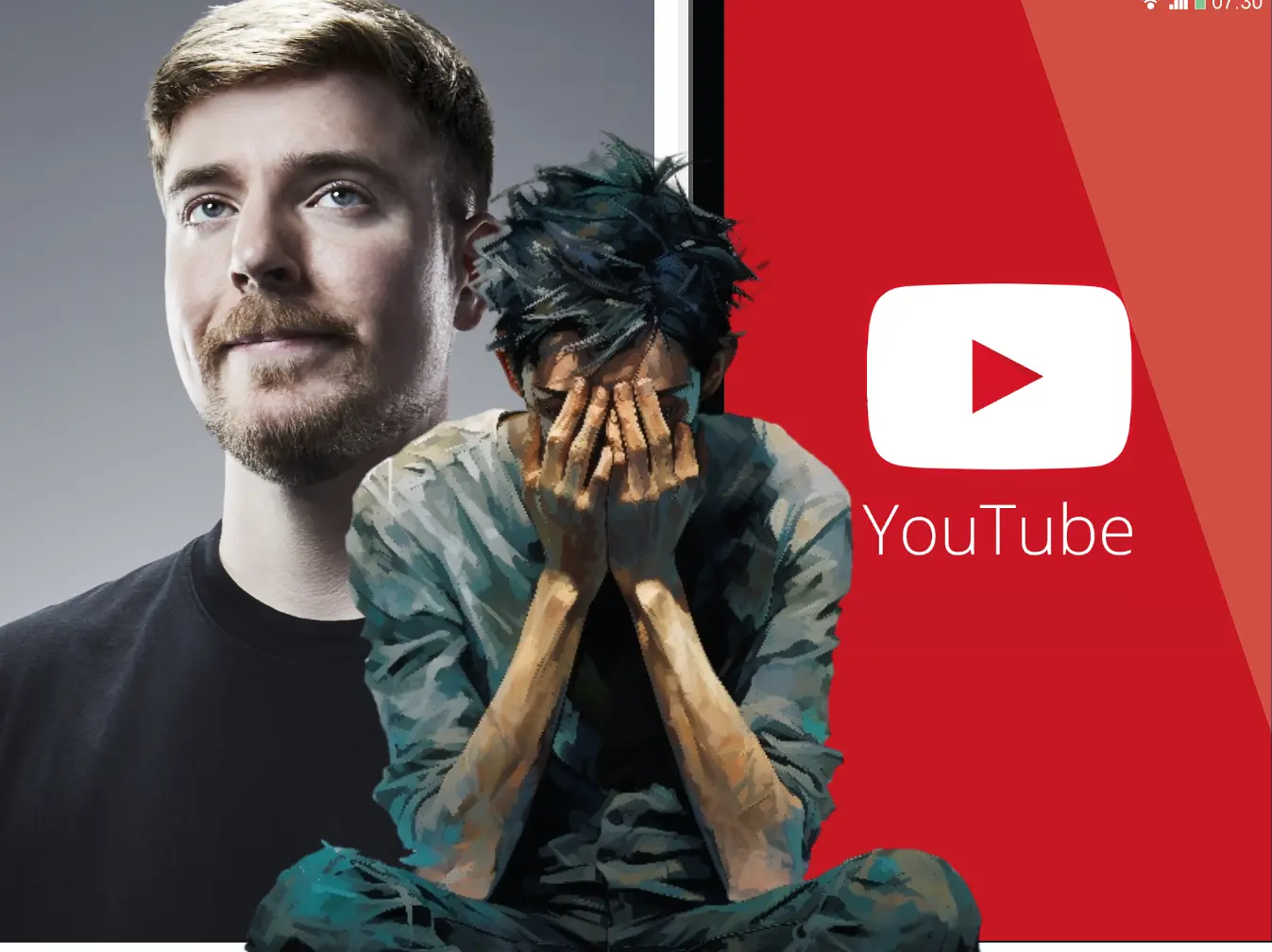
Isn't it ironic that MrBeast – the man who inspires many youth to become YouTubers through his success story as the most-subscribed channel– worries that artificial intelligence flooding the American video-sharing platform could kill small creators? What many don’t tell you is that 94 per cent of YouTube channels are never monetised. The hype around the so-called "creator economy" is almost essential for platforms like YouTube, which survive and thrive on other people’s content, running billions of dollars’ worth of ads on videos made by small creators – while giving many of them nothing in return. Here’s why MrBeast’s recent statement should be a cautionary tale for anyone hoping to make money on YouTube.
What did MrBeast say?
MrBeast, real name Jimmy Donaldson, is currently the most-subscribed YouTuber in the world. In a recent X post, he said: "When AI videos are just as good as normal videos, I wonder what that will do to YouTube and how it will impact the millions of creators currently making content for a living… scary times."

His post, viewed more than 6.3 million times, came as new tools like OpenAI’s Sora 2 are now capable of generating cinematic-quality video from simple text prompts.
MrBeast’s concern is also partially hypocritical. Earlier this year, he faced backlash for launching an AI-powered thumbnail generator via his analytics platform, Viewstats. After creators criticised the move for displacing human artists, MrBeast pulled the tool and instead added a directory for hiring real thumbnail designers. In a follow-up, he stated: “I care more than any of you could ever imagine about the YouTube community… I missed the mark.”
Trending Stories
)
Putin rambles in TV speech after cancelling Navy Day parade fearing an attack by Ukraine
)
US says Turkey still barred from F-35 program until it gives up Russian S-400 system: Report
)
'Agitation cannot justify lathi-charge': CJI Surya Kant's BIG response to police brutality against protesting students
)
Spain: Fresh wildfires break out in Valencia
&im=FitAndFill=(700,400))
New OTT releases this week (July 27-August 2, 2026): The Devil Wears Prada 2, Batman, Demon Slayer- 5 titles coming on Netflix, Prime Video and more
)
'We didn't stop them...: Union Finance Minister Nirmala Sitharaman's first reaction on student protests
)
ChatGPT invoked God, told pastor not to worry about his symptoms. Then pulmonary embolism hit
)
Trump says Iranian school bombing photos could be AI-generated - 'I don’t think...'
)
Delhi Police issues BIG statement on viral 'don't leave national capital without permission' notice | FACT CHECK
)
'House raided, father picked up': UP man Mohd Junaid alleges crackdown after CJP protest; Police deny claims
)
Hidden in British archives: Scientists decode 200-year-old Indian scroll that helped sailors cross one of the world's toughest seas
)
India's foreign ministry debunks viral claim made during last week's protests
)
Bihar wants 'backless Saturday’ in govt schools as official notice misspells 'bagless'
)
'Broader struggle for democracy...': Greta Thunberg joins Indian students protest in London - What she said
)
'They’re afraid right now...': Netanyahu reacts for first time after Mamdani threatens arrest over ICC warrant
)
RSS backed Jantar Mantar student protest? Mohan Bhagwat's 'question authority' remark resurfaces
)
Will Iran war last months or even years? Here's what new poll shows about what most Americans think
)
Google ends Play Services Support, likely to stop these Android phones from downloading apps & games
)
Oil tanker explodes in the Strait of Hormuz after hitting a naval mine
&im=FitAndFill=(700,400))
Why the specialized paint on an S-400 costs thousands of dollars per truck
)
NEET Protests riddled with misinformation? Delhi Police blocks 480 Pakistan-based handles spreading 'fake news' since Operation Sindoor
)
India avoids higher US tariff, secures lower 10% rate. Here's how
)
What we know about Seattle mass shooting: 3 dead, suspect arrested and one at large
)
Trump's latest rant is about a 'massive television outage' that never happened
)
The Royals enter the Doctor Who universe: King Charles and Queen Camilla beam into Commonwealth Games in TARDIS
)
What does the Gen Z protest and Pradhan's resignation as education minister mean for India's ruling BJP, and four other questions, answered
)
He predicted COVID-19 and 2008 economic crisis, was labeled fearmonger. Now he has another dire warning
The sad reality of the creator economy on YouTube: You've been warned
YouTube’s creator economy is already deeply unequal. AI-generated video – heavily promoted by YouTube’s parent companies Google and Alphabet – has added another layer of disruption. Mass-produced, algorithm-friendly videos (sometimes derided as “AI slop”) are increasingly crowding the platform, making it harder than ever for small creators to gain visibility, let alone earn money.
Many of these videos are now being produced by Google-backed systems like Veo and NanoBanana, which can churn out synthetic content at scale. This arms race in content production is eroding the space that was once available to human creators.
Gone are the days when amateur-looking videos filmed on smartphones could reliably generate income. Video production – from hardware to editing software – has become so sophisticated that many uploads now rival Netflix-quality. Smaller creators are left scrambling to keep up, while AI-generated shorts and clickbait content rack up millions of views with minimal effort or cost.
How many channels are really monetised on YouTube? Only 6 per cent
As of March 2025, YouTube had an estimated 114 million active channels. Only around 6 per cent of these are accepted into the YouTube Partner Programme (YPP), which allows monetisation. That leaves 94 per cent – over 100 million channels – unmonetised, either because they fail to meet eligibility thresholds or are inactive.
Given MrBeast’s position at the top of the platform (No. 1 on Forbes’ 2025 Top Creators list, with $85 million in earnings), his warnings carry weight. They reflect a broader anxiety: that the future of YouTube – and content creation more generally – may belong not to passionate individuals, but to cheap, fast, AI-generated noise.