
&imwidth=800&imheight=600&format=webp&quality=medium "Can AI replace traditional coaching notes for UPSC and NEET aspirants? Experts reveal shocking reality")
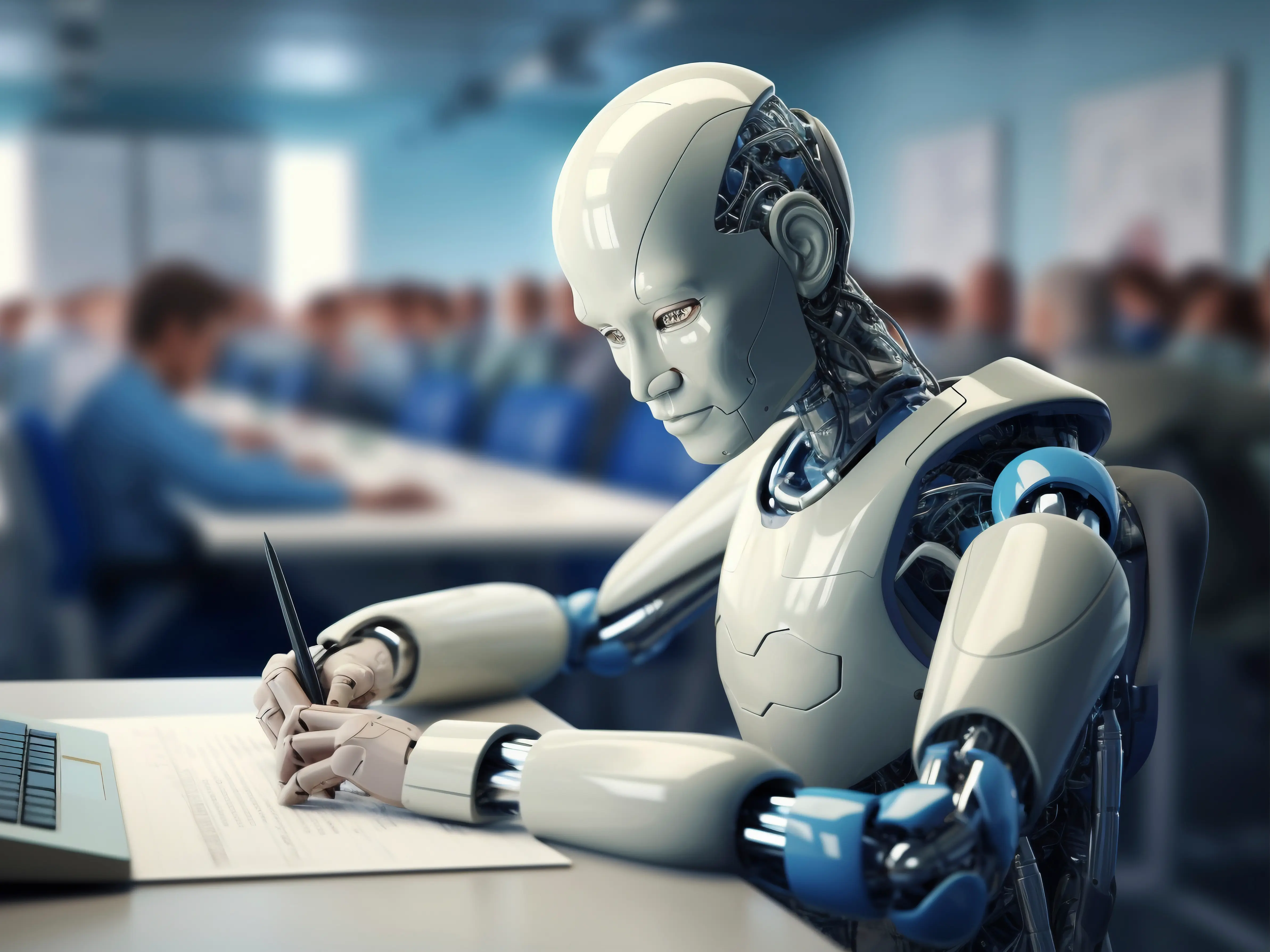
Other than professional services, finance, technology, and medical sectors, artificial intelligence tools have increasingly entered the educational sector, reshaping classrooms and study notes. In relation to the emerging technology, a debate is also emerging over whether AI can or should replace the traditional coaching notes that have long formed the backbone of competitive exam preparation like NEET, UPSC and other competitive exams.
Several educational institutions are also adding features of Chat-native learning concepts for exams like UPSC and NEET using AI, which offer bite-sized micro-lessons, instant 24/7 doubt resolution, and work on familiar messaging apps without heavy app downloads. This type of facility offers effective use of study materials to make consistent practice.
Industry experts argue that the real issue facing students today isn't a shortage of study material, but rather how effectively that material is used, practised, and reinforced. According to those working closely with exam aspirants, the future of preparation likely lies not in eliminating notes, but in transforming passive study habits into active, consistent practice, supported by AI, but still guided by human mentorship.

What is Chat-native learning?
Chat-native learning is an educational method that delivers lessons, quizzes, and concepts directly through messaging apps like WhatsApp instead of traditional video lectures or learning portals. It cuts out extra logins and app downloads, making study time feel like a regular text conversation.
This feature works inside everyday apps we already use without needing a separate website login and breaks concepts into short lines of text rather than long 45-minute classes. In addition, it asks a quick question, waits for our response similar to AI apps, and gives instant feedback.
Trending Stories
)
Emmys 2026: Matthew Rhys wins Best Actor twice, sets historic 78-year record
)
3 Italians fly from Delhi to Munich without immigration clearance; Air India gets notice on major security lapse
)
Did India risk its US trade deal despite softer stance at BRICS?
)
Pakistan puts Pak Rs 70 lakh bounty on UN terrorist Masood Azhar; move draws skepticism in Delhi
)
‘US ensuring global energy supplies’: Trump demands reimbursement for securing Strait of Hormuz
)
'She married her brother': Ilhan Omar faces criminal probe over immigration fraud claims
)
Ukraine strikes Syzran Oil Refinery deep inside Russia, fires erupt
)
Emmy Awards 2026: Widow's Bay and The Pitt win in lead categories- check out the complete list of winners
)
Indian-origin woman, Nepali-American friend crushed to death by subway train in New York
)
Emmys 2026: Michael J Fox honoured with Bob Hope Humanitarian Award for Parkinson’s advocacy
)
Emmys 2026 In Memoriam: Catherine O’Hara honoured by on-screen children Macaulay Culkin, Annie Murphy, Dan Levy; Dolly Parton, Rob Reiner remembered
)
Iran, India agree to deepen humanitarian and political ties, President Pezeshkian says
&im=FitAndFill=(700,400))
Emmys 2026 Red Carpet: Zendaya, Nicole Kidman and Julia Garner lead the glamour peak
)
Turkish Airlines plane flies through a storm three times, triggering severe turbulence
&im=FitAndFill=(700,400))
Why Chinese PL-15 air-to-air missiles use dual-pulse motors compared to European interceptors
)
What is Hyrox, in news for athlete who soiled herself, but kept running and using common equipment?
)
Russia proposes to build 360 kmph Ivolga FG trains in India: What happened on sidelines of BRICS
)
800 million years old - Scientists discover 'fingerprints' of supercontinent Gondwana in ancient rocks
)
471 years ago, a prophecy warned of 'immortal lone brain'. Some think it was about AI
)
Former Pak PM Imran Khan's ex-wife Jemima Goldsmith marries Australian financier: Who is Cameron O'Reilly
)
UPI payments up to Rs 2,000 to stays free, but bigger transactions may soon cost you: Govt
)
Gurugram hit and run case: Police arrest car driver Kalyan Bainsla, book him for attempt to murder
&im=FitAndFill=(700,400))
New OTT releases this week (September 14-20, 2026): Lust Stories 3, Waiting Hai, Irumudi- 5 new titles coming on Netflix, Prime Video and more
)
Sent home midway from UK tour, Pakistan's Salman Agha hits 300* in domestic return
)
Who is Kalyan Bainsla, accused in the Gurugram hit-and-run case involving woman biker?
)
Nigerian Navy seizes 10,000 litres of suspected illegal fuel in Rivers State crackdown
)
Saudi Arabia discovers 110 million tonnes of Uranium-rich ore in Madinah region
)
Dodgers beat Reds for playoff berth in bid for third consecutive World Series
)
Ecstasy tablets are rage in 'drug haven' Libya | Gravitas
)
'Now Trump is copying us': Shivakumar links US $5,000 plan to Congress guarantees
)
Video of Pakistani lawmaker struggling to read English tribute to Jinnah goes viral - WATCH
)
Trump downplays China's alleged 'help' to Iran in strike on Jordan base | Gravitas
)
Trump loses Supreme Court battle over mail ballots ahead of US midterms: What happened?
)
BCCI VP Rajeev Shukla says Mohsin Naqvi 'did not object' India refusing trophy from ACC chief
)
Legendary costume designer Bob Mackie dies at 87: A look back at his iconic legacy
)
Delhi govt to roll out ₹13,820 crore development projects under Seva Sankalp Abhiyan: CM Rekha Gupta
)
UK man admits drugging, raping wife for 20 years in shocking abuse case
)
Extreme warming in Indian Ocean added 695 billion tons of ice to Antarctica ice sheet
)
China thinned Himalayan troop presence in 2025, India defence report says; terms border situation 'stable'
Also read: Can RAF use pellet guns to control crowd during protests? What Indian law states | WION Decodes
Experts call notes a passive item
Prempreet Singh, Founder & CEO, SkillBytes, said," Ask any UPSC or NEET aspirant what they lack, and it is never material. They are drowning in it. Coaching notes, printed handouts, PDFs, recorded lectures. The average serious aspirant has more content than they could finish in the years they have. So the honest question is not whether AI can produce better notes. It is whether notes were ever the thing holding students back. They were not. Notes are passive. You read them, you highlight them, you tell yourself you will revise them later, and most of the time later never comes. What actually builds mastery for a high-stakes exam is practice done daily, with feedback, until recall becomes automatic. That is the part traditional preparation has always struggled to deliver at scale, because it demands a habit, not a document."
"This is where chat-native learning is quietly changing the equation. Instead of asking a student to open another app or sit through another lecture, it delivers practice in five-minute units inside the messaging platform they already live on. No download, no login, no fresh block of time to defend. A question, an answer, instant feedback, and the loop closes while attention is still warm," he added.
He added that at SkillBytes, the pattern is consistent over 7.5 lakh students. Students tend to stick with practice that seamlessly fits into their daily routine, but abandon it when it feels like a competing demand on their time. AI doesn't take over the aspirant's effort; instead, it eliminates the friction that once wasted it. Going ahead, he added that the real transformation in exam preparation won't come from bulkier notes. It will come in the form of a daily habit, built five minutes at a time, woven into a conversation the student was already having.
Dr Kanishk Agrawal, Chief Technology Officer at Judge Group, India, said, "It’s very rare that AI is going to replace traditional coaching entirely, but it’s certainly changing the way aspirants learn. When it comes to UPSC and NEET candidates, the challenge they have in the present situation is not the access to knowledge anymore but its filtering, processing, and application. With the help of chat-enabled AI, learners can pose relevant questions any time, receive instant explanations, get complicated things simplified, get individual studying plans, and practice writing answers or solving MCQs whenever they need it. This enables a very interactive learning situation, which is impossible for orthodox coaching materials to provide. However, it should be said that AI cannot replace a mentor. Exams need a systematic approach, clear understanding of what is going on, and the ability to think critically, and it is something that teachers can give better than AI. Most probably, the future mode of preparation for exams is going to be the hybrid one where AI stimulates study processes and gives personal assistance, while teachers give strategy and motivation."
Meanwhile, expressing concern about the role of AI for notes of competitive exams, Avinash Tyagi, Founder & Managing Director, Gyanic, stated that AI should support competitive-exam preparation, without disrupting the role of teachers, mentors or structured notes. He said the traditional coaching notes for UPSC and NEET aspirants still give a significant foundation for preparation.
He said, "What is changing is how students use them. With AI tools, digital libraries and online lectures, aspirants now have access to far more information. As access has widened, examiner expectations have also risen. Students are expected to cover broader themes, connect subjects, analyse issues and apply knowledge rather than reproduce memorised material. This is where chat-native learning adds value. It allows students to question a concept, seek another explanation, revise through conversation and practise immediately."
He added that chat-native learning can also break linguistic barriers as it provides accessibility to a Hindi-medium aspirant, providing research papers and expert commentary through translation, and then seeking to have difficult ideas explained in simpler language. He noted that this can increase access to material without restricting language. However, translated academic content must still be cross-checked for context and technical accuracy.
"However, more information does not automatically lead to better preparation. When knowledge is everywhere, expert guidance becomes more important. Students still need mentors to decide what matters, what can be ignored, how topics should be prioritised and how an examination may test them. AI also has limits. It can process large volumes quickly, but it may misread context, produce inaccurate responses or draw weak conclusions from data. In education, data becomes useful only when interpreted against a student’s behaviour, preparation stage and examination requirements. The reliability of AI-assisted learning therefore depends on expert verification and human oversight. AI will not replace coaching notes; it will make them more interactive, personalised and accessible. But in an age of abundant information, the real advantage will come from knowing what to trust, what to prioritise and how to apply it. That is where experts will remain indispensable," he added.

