
&imwidth=800&imheight=600&format=webp&quality=medium "Can AI deliver human-like customer experience at scale? Experts weigh in")
After the technology integrated with AI, multiple businesses and giant organisations have begun to increasingly deploy it to handle customer interactions, increasing the efficiency of the firm. A debate is also emerging over what truly defines good customer experience: the ability to mimic human conversation, or the ability to consistently solve problems efficiently.
The human-like customer experiences from AI at scale come through conversational natural language processing, real-time sentiment analysis, and predictive personalisation engines. These tools automate routine support while empowering human teams. The integration of technological progress and heightened customer expectations has created an ideal opportunity for revolutionising customer engagement.
The next dimension of the customer experience, along with the next best experience approach, is generally led by front-runners who can effectively use AI and gen AI to enhance predictive capabilities and gain a competitive edge, unlocking multiple potential. Reacting to the development, Industry experts argue that while AI has made remarkable strides in communicating naturally, true customer satisfaction hinges less on conversational polish and more on speed, accuracy, and the strength of the underlying data systems powering these interactions.

Combine automation
According to experts, the real transformation lies not in AI sounding more human, but in how effectively organisations can combine automation with human judgment for complex, high-stakes situations, a balance that will define the next phase of customer experience strategy.
Prasad Rai, CEO, DAAS LABS, said, "The conversation shouldn't be whether AI can sound like a human, but whether it can consistently make people feel heard, and those are completely different goals. Organisations often confuse the ability to conduct a conversation well with providing good customer experience, when in reality, people care far more about speed, accuracy, and resolution than about how their question was answered. AI can certainly provide a human-like experience, but only when it's built on the right data foundation: proper context, high-quality data, and a clear understanding of what the customer is trying to do."
Trending Stories
)
Why asking questions could be more important than memorising answers
)
BRICS Summit 2026 full schedule: Day-wise agenda, timings and key issues - All you need to know
)
BRICS Summit 2026: Iran's Pezeshkian praises PM Modi at BRICS
)
Osama Bin Laden ‘planned’ to target India, CIA reveals dozens of declassified documents
)
BRICS rejects EU carbon tax as ‘punitive’, ‘discriminatory’; warns of burden on Global South
)
BRICS Summit 2026: Global leaders of BRICS nations attend main open session
)
Why dehydration is the hidden cause of travel fatigue on long flights
)
Top 5 places to visit in Goa beyond its famous beaches
)
'He is popular...': Malaysian PM Anwar Ibrahim's praise for PM Modi during bilateral meeting | WATCH
)
BRICS Summit 2026: 30+ countries seek BRICS membership
)
Frustrated man demolishes his kitchen after thousands flock to see Mother Mary his wife spotted on the wall
)
BRICS Summit 2026: PM Modi, Xi reach key consensus on ties, China to assume BRICS chairmanship in 2027
)
Trump says Canada eager to reach a deal, it could come ‘fairly soon’ if Ottawa treats US farmers better
)
From drones to KAAN fighters: Turkey outlines 229% surge in defence spending amid regional shifts
)
‘Partners, not rivals’: Xi outlines four point plan for stronger India-China ties
&im=FitAndFill=(700,400))
Why Chinese PL-15 air-to-air missiles use dual-pulse motors compared to European interceptors
)
Could staying indoors all day affect your health?
)
Why going digital does not always mean becoming more efficient
)
800 million years old - Scientists discover 'fingerprints' of supercontinent Gondwana in ancient rocks
&im=FitAndFill=(700,400))
Why do air defence missiles explode near their target instead of hitting it?
)
Israel spent nearly $470,000 on PM's hair, makeup since 2019, data shows
)
From severe mobility problems to recovery: Madhuri the elephant’s journey of wildlife care
)
BRICS Summit day 1: New Delhi declaration adopted with full consensus, big diplomatic win for India
)
From India, Putin warns Europe against sending troops to Ukraine, Zelensky expresses willingness to meet him at G20 Summit
)
Did Iran President Pezeshkian touch feet of Hindu spiritual leader at Delhi event as shown in viral video?
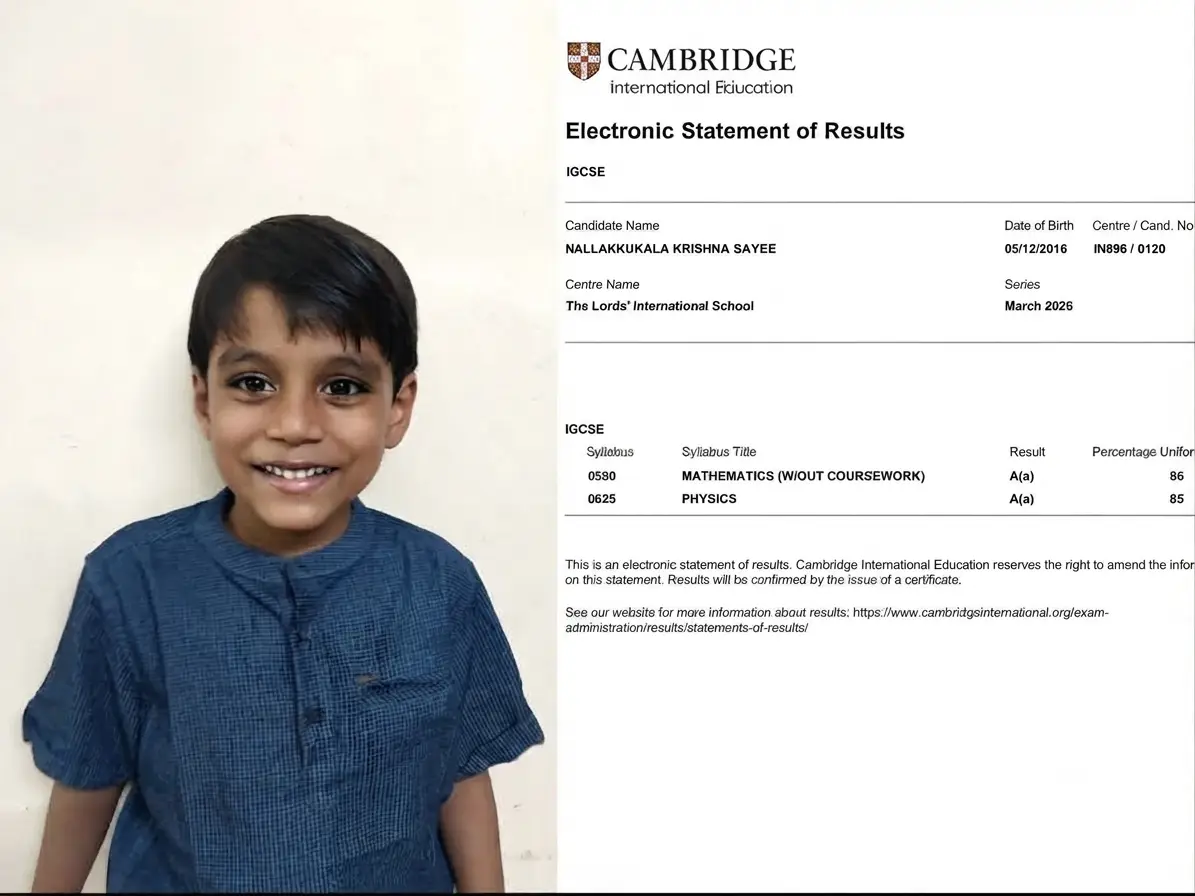)
9-year-old Chennai prodigy clears Cambridge IGCSE grade 10 exams
)
Why does your body need time to adjust after a long journey?
)
Baba Vanga's first prophecy for 2027 is out, and straight out of science fiction
)
Why does your skin need protection from UV rays?
)
How does the loss of forests affect the way wildlife lives and moves?
)
IND vs AFG, 1st T20I: When and where to watch live streaming in India?
)
BRICS Summit: China resumes Guangzhou-New Delhi flight, issues 'good-neighbourliness' remark ahead of Xi-Modi meet
)
Why do wild animals need quiet places to survive?
)
Humans may lose control of AI: Anthropic CEO calls for slowdown, Altman, Musk back him
He noted that several organisations fall short because their data is disjointed, their working processes were never designed and developed this way, and no amount of conversational polish can compensate for that. "What AI should really be doing is taking care of the mundane, well-structured decisions and helping teams move faster and smarter, so that people are freed up for the complex, sensitive conversations that genuinely require trust, judgment, and empathy. The companies that succeed in customer experience won't be the ones with the most human-like AI, but the ones with the strongest data foundation underneath it, because that's ultimately what makes everything easier," he added.
Highlighting the real customer experience after integration of AI, Sri Mookiah, Founder & CEO, LOWCODEMINDS, stated that for a long time, businesses assumed personalised customer service and scalability were mutually exclusive. AI is now disproving that notion. Moving ahead, competitive advantage won't hinge on which company has the largest AI model, but on which one delivers the superior customer experience.
He said, "AI can now understand context, analyse customer history, interpret documents, communicate naturally across voice and chat, and resolve many issues without human intervention. What once required thousands of service agents can increasingly be delivered by intelligent AI systems operating 24/7. But businesses should be careful not to confuse conversation with experience."
"Customers do not remember how quickly an answer was generated. They remember whether their problem was understood, resolved fairly, and whether they felt valued. Empathy, accountability, and judgment remain uniquely human strengths, particularly in complex or emotionally charged situations. The organisations that succeed will not replace humans with AI. They will redesign customer journeys where AI handles routine interactions at scale while people focus on trust, relationships, and high-value decisions. The future of customer experience is not artificial or human. It is augmented, where AI provides the speed, and humans provide the judgment that earns lasting customer loyalty," Mookiah added.
Giving reality about the customer experience, Hitesh Agrawal, Founder & Managing Director, Them Consulting, stated that the real question is not whether AI can make a difference in customer experience. It has already started. He noted that the real question comes when it actually makes things better for people, and when it quietly makes them worse.
"In big banks, the pattern is clear. AI systems now take care of a huge chunk of incoming requests on their own, often 40 to 60 per cent, and in some well‑run setups that climbs to around 80 per cent for simple, routine queries. That shift has completely changed the maths on service speed. First responses that used to take hours now land in minutes. Average query handling times have now been cut to a fraction of what they used to be. For simple things like checking the account balance or confirming a credit card limit, this new speed is genuinely impacting customers positively. Where it gets tricky is what happens beyond those routine moments. When you compare pure AI journeys with human agents, the satisfaction scores are now surprisingly close. On paper, the gap is small. But when you ask people what they actually want when they call in the customer care line in distress, most still will say something similar. If the issue is complex or involves money they are worried about, they would rather talk to a person," he said.
"The setups that seem to work best accept that reality instead of fighting it. They use AI to clear out the repetitive work, give agents better context, and then make sure the difficult conversations get to a human quickly, with all the history on the screen. That is what “human‑like at scale” really looks like in practice: machines doing the heavy lifting so people can focus on the moments that actually need them," he added.
Sukesh Shetty, Founder & CEO at Away.ai, said, "Most of the AI that got built into customer service last year was built to sound more human. Warmer chatbots. Friendlier scripts with a name and a little personality bolted on. None of that fixed what was actually broken, which is why people still don't trust it. Good customer experience runs on two layers: empathy and information. People are naturally good at empathy. It's the information layer, whether you get the right answer without having to ask twice, that decides if an experience is actually good. Go back and read the complaints people write; nobody's upset about tone; they're upset because someone told them the wrong thing, or told them too late, and that's actually the part AI needs to get right, not how kind it sounds doing it. At Away, our AI doesn't try to be warm with you. It just goes and does the boring part, negotiating with our own supplier network for a better fare. And better isn't always cheaper. Sometimes it's a refundable ticket instead of a locked one, or a lower cancellation fee, and we say so, because most companies would rather imply they found you the cheapest seat than admit they found you a different kind of good deal, and that habit is a big part of why people stopped trusting this stuff. I don't think AI was ever going to earn anyone's trust by sounding more like us. It earns it by being something we can actually rely on when we're not the ones checking."

